10 September 2021

The Expositor’s Bible Commentary.

Years ago my mom was taking a college course in bible, and one of her texts was The Expositor’s Bible Commentary. Full 13-volume set; they didn’t want people getting the two-volume abridged edition. I don’t remember how much it was at the time, but it was way more than she was willing to spend. So she figured, “Well my son’s a big bible nerd,” and asked me, “Wanna go halves on a commentary set?” It was easy to talk her into the Accordance version, which was a lot cheaper, a lot easier to search… and I could stash it on a laptop instead of having it hog a whole shelf.

I’ve known pastors who had the whole 13-volume set in their offices. I don’t know how regularly they flipped through it for their sermon prep. From the many out-of-context scriptures they used, sounds like they really didn’t. But displaying full commentary sets in your office, preferably without a thick layer of dust on top, certainly makes you look like you study the bible in depth.

The EBC began as The Expositor’s Bible, produced in 1903 in Scotland by Sir William Robertson Nicoll of the Scottish Free Church. Many Scottish churches at the time were big on expository sermons and writing—in which you go through a passage and analyze each individual verse, one at a time. (And hopefully don’t go on wild tangents, or use them as jumping-off points for your own rants, like some “expositors” I could mention.) Bible commentaries usually do this very same thing, but not always; Nicholl’s commentary certainly did. Many of the volume authors are the same guys who helped produce the Scottish volumes of the Early Church Fathers.

Did you want a copy? StudyLight.org hosts the entire thing on their site. And here are links to every volume on Project Gutenberg. Yeah, they lack the past century of archaeological discoveries, and redevelopments in Christian thought, but they still have plenty to chew on. So here you go.

09 September 2021

Timekeeping in ancient Israel.

The calendar most of the planet uses, called either the western calendar or the Gregorian calendar, originated in 1582 when Pope Gregory 13 introduced it as an update of the Roman calendar adopted by Julius Caesar in 45BC. Since Gregory introduced it right after the Protestant split, it took a while before all Protestant countries adopted it. Various Orthodox churches still haven’t adopted it, preferring to stick with Caesar’s calendar, ’cause it’s not Catholic. Meanwhile nations which aren’t even predominantly Christian—’cause of western influences or trade—do use it. As well as their own local calendars. Japan, fr’instance.

Israel likewise uses the western calendar. And its local calendar, the one which predates the western calendar by centuries: The Hebrew calendar.

That’s the calendar we find in the bible. It’s what we call a lunisolar calendar: It’s lunar, in that months start on the new moon. But it’s adjusted to sync up with solar years, so that the year always begins in spring, round the time of the vernal equinox, and doesn’t drift too far away from it.

The Hebrew calendar actually predates the Hebrews. It was used all over the ancient middle east, including by the Assyrians and Babylonians who conquered Israel. The Hebrew calendar’s months all have Assyrian names—although a few of the original Canaanite names slipped into the bible:

  1. אָבִיב/Avív (“green”), the first month. Ex 12.2, 13.4 Tel Aviv (KJV “Telabib”) in Babylon Ek 3.15 was named for it; Tel Aviv in Israel is named for that.
  2. זִֽו/Ziv (“bright”), the second month. 1Ki 6.1
  3. אֵיתָניִם/Eytaním (“strong ones”), the seventh month. 1Ki 8.2
  4. בּוּל/Bul (“produce”), the eighth month. 1Ki 6.38

Otherwise the scriptures simply called the months “third month,” “fifth month,” and so forth. (Like September/seventh month, October/eighth month, and so on… and yeah they aren’t the seventh and eighth month, but blame Gregory for that.) We don’t know what the ancient Canaanite names were. No doubt many months were named for pagan gods, just like the Roman calendar, so the Hebrews didn’t care to use or record them.

In any event here are the current names.

MONTHDAYSWHENBIBLE HOLIDAYS
ניִסָן
Nisán
30Spring:
Mid-March to mid-April
Passover
אִיָּר
Iyyár
29Mid-spring:
Mid-April to mid-May
סִיוָן
Siván
30Late spring:
Mid-May to mid-June
Shavuót (Pentecost)
תַּמּוּז
Tammúz
29Summer:
Mid-June to mid-July
אָב
Av
30Mid-summer:
Mid-July to mid-August
אֱלוּל
Elúl
29Late summer:
Mid-August to mid-September
תִּשׁרִי
Tišreí
30Fall:
Mid-September to mid-October
Yom Kippur, Sukkot
מַרְחֶשְׁוָן
Markhéšvan
29/30Mid-fall:
Mid-October to mid-November
כִּסְלֵו
Khislév
29/30Late fall:
Mid-November to mid-December
Hanukkah
טֵבֶת
Tevét
29Winter:
Mid-December to mid-January
שְׁבָט
Ševát
30Mid-winter:
Mid-January to mid-February
אֲדָר
Adár
29/30Late winter:
Mid-February to mid-March
Purim

08 September 2021

Keep (most of) your prayers private.

Matthew 6.5-6.

In his Sermon on the Mount, Jesus taught,

Matthew 6.5-6 KJV
5 And when thou prayest, thou shalt not be as the hypocrites are: for they love to pray standing in the synagogues and in the corners of the streets, that they may be seen of men. Verily I say unto you, They have their reward. 6 But thou, when thou prayest, enter into thy closet, and when thou hast shut thy door, pray to thy Father which is in secret; and thy Father which seeth in secret shall reward thee openly.

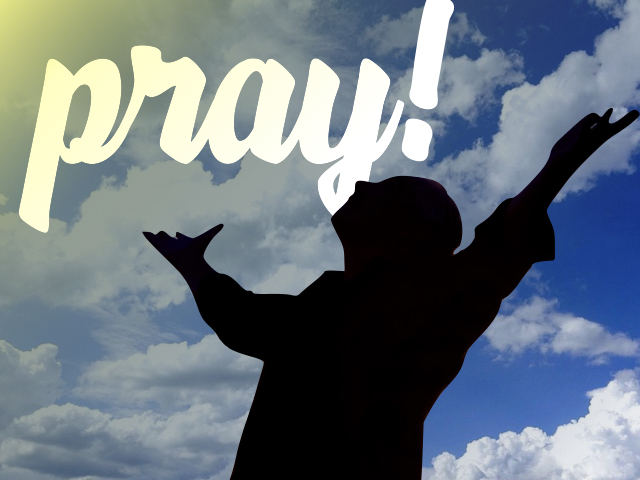
Which is why we don’t see the streets of our nation lined with Christians, their arms raised and heads to the sky, praying as loud as possible so as to let everyone know we’re devout, and that we’re praying for our land.

Well… we don’t usually see this. Although I remember this one trip I made to Washington D.C. where we saw it all the time. I was chaperoning some kids on a civics tour, where we went to the Capitol, the Washington Monument, the Lincoln Memorial, the Smithsonian, and all sorts of public buildings. And wouldn’t you know it: In every last one of these places, there were Christian groups, praying good ’n loud for the United States. If you didn’t know they were Christian by their behavior, you’d definitely know it by their very public prayers.

Various Christian organizations also put together days of prayer, or prayer breakfasts, or get high schoolers to gather at the flagpole to pray, or get concerned citizens to show up at all the city halls to pray. Sometimes they’re protesting something; sometimes they’re in favor of something; either way they pray. Publicly. Loudly. For all to see and hear.

There’s the occasional athlete who takes a knee every time he scores a goal. And there are the folks who pitch a fit because public schoolteachers can’t lead the kids in prayer. As someone who grew up in the San Francisco Bay Area in the 1970s, I should point out this is more of a blessing than you realize: I’d’ve been exposed to all sorts of weird pagan prayers had my teachers been required to lead prayer time. It’s not at all like the Bible Belt, where the pagans have way more practice at pretending to be Christian.

Back in 2008, during a major economic recession, Texas prophet Cindy Jacobs led a prayer team to New York City to lead a Day of Prayer for the World’s Economies. They were gonna pray for the financial institutions who caused suffered from the recession, and pray for God to take ’em over. Which is fine, but here’s what happened.


I recall the Hebrews got in big trouble for doing something like this. Wonkette

On Wall Street there’s a statue of a bull, meant to represent an active, “bullish” economy. The prayer team chose to lay their hands upon it and pray. My very first thought upon seeing this photo: “Good Lord, they’re praying over a golden calf. Um… didn’t the LORD smite the Hebrews for that?” Ex 32.35

Okay, they meant well. But the prayer team didn’t bother to think about how their actions looked—or didn’t care, figuring their good intentions outweighed how foolish they looked. ’Cause pagans have seen The Ten Commandments, and know that golden calf story. And sure had a lot of fun with it.

07 September 2021

Hatred’s a work of the flesh.

Galatians 5.19-21 KJV
19 Now the works of the flesh are manifest, which are these; Adultery, fornication, uncleanness, lasciviousness, 20 idolatry, witchcraft, hatred, variance, emulations, wrath, strife, seditions, heresies, 21 envyings, murders, drunkenness, revellings, and such like: of the which I tell you before, as I have also told you in time past, that they which do such things shall not inherit the kingdom of God.

Hatred gets listed in verse 20 as one of the works of the flesh. The original-language word is ἔχθραι/ékhthre, “hostility” or “opposition” or “enmity”: Someone who’s decided in advance they’re not gonna be friendly. In fact, they’re looking for enemies.

In his first letter, John pointed out how those who hate their sisters or brothers are murderers. In their hearts, such people are dead to them. And those who “murder” in this way have nothing to do with eternal life. 1Jn 3.15 They won’t inherit God’s kingdom—same as those who exhibit the fleshly works which Paul listed.

Yeah, you know we’ve got a lot of such people all over Christianity. I follow a few of their blogs. They claim they’re all about Christian holiness and sanctification; about Christians following Jesus instead of the rest of the world, and becoming a pure, sinless, spotless church, ready and eager to greet Jesus at his second coming. But the way they go about doing it is to bring up the latest popular sin (typically one committed by members of the opposition party), then pound away at it like a carpenter trying to put thin nails into thick wood.

Yes, Christians oughta resist temptation and stop sinning. Of course. Duh. But these guys’ fixation on dirty, dirty sins? It’s not healthy. Much as these guys love to quote this memory verse—

Philippians 4.8 KJV
Finally, brethren, whatsoever things are true, whatsoever things are honest, whatsoever things are just, whatsoever things are pure, whatsoever things are lovely, whatsoever things are of good report; if there be any virtue, and if there be any praise, think on these things.

—the amount of time they spend digging through the news to find new things to be horrified by, the length of time they spend denouncing these travesties, and the angst and tears and hand-wringing and stress they suffer just thinking about how these evils damage our good Christian nation…

Yep, these guys aren’t actually avoiding sin. They may not be committing it, nor even be tempted to try it, but their minds are nonetheless stewing in it like shrimp in a gumbo. Because what they’re doing instead is hating it. Hating it with every fiber of their being. In so doing their minds are wholly fixated on whatsoever things are false, dishonest, unfair, impure, ugly, disturbing, useless, and wrong.

Hopefully they’re not doing this 24 hours a day, like pundits who are desperately looking for new content with which they can outrage their TV audience. But y’know, some of them are. You can tell whenever you talk with them: The first thing they want to talk about is the latest outrage. And they’re hoping it’ll outrage you too. Bad fruit likes to spread its seeds widely.

06 September 2021

The Equal-Pay Vineyard Story.

Matthew 20.1-16.

Jesus tells more than one parable about vineyards, and sometimes Christians mix ’em up. Whenever I refer to “the parable of the vineyard,” people sometimes assume I mean the two sons sent to work in the vineyard, or the tenant farmers who murder the vineyard owner’s son. I’ve tried to call this the Generous Employer Story, but if you don’t put “vineyard” in the title people don’t know what you mean—“Wait, is this a new parable?” No it’s not.

So I call it the Equal-Pay Vineyard Story. Because everybody gets paid a denarius at the end of the story, even though some of ’em didn’t work all that hard. The punchline is about how the landowner does this because he’s generous, so maybe it oughta be called the Generous Equal-Pay Vineyard Story. But instead of making the title longer and longer, till it winds up telling the story for us, Jesus may as well tell the story, right?

Matthew 20.1-16 KWL
1 “For heaven’s kingdom is like a person, a landowner,
who comes out first thing in the morning [6AM] to hire workers for his vineyard.
2 Once the workers agree to a denarius for the day,
he sends them to his vineyard.
3 Going out the third hour, [9AM] he sees others loitering in the square
4 and tells them, ‘You can also go to the vineyard,
and I’ll give you whatever might be fair.’
5 He goes away again, and comes back out at the sixth [12PM] and ninth hour, [3PM]
and does the same thing.
6 Around the 11th hour, [5PM] he comes out to find others standing around,
and tells them, ‘Why are you standing here idle all day?’
7 They tell him this: ‘Nobody has hired us.’
He tells them, ‘You can also go to the vineyard.’
8 When evening comes, [6PM] the vineyard’s master tells his vineyard manager,
‘Call the workers, to give them their pay—
starting with the last, till you get to the first.’
9 Each of those who came at the 11th hour gets a denarius.
10 So the first to come, thought they would get more—
and each of them also gets a denarius.
11 Those who got paid last grumble against the landowner,
12 saying, ‘These last-hired worked one hour, and were paid as much as we?
Those who bore the weight of the day, and the heat?’
13 In reply, the landowner says to one of them,
‘Friend, I’ve not wronged you. Didn’t you agree with me to work for a denarius?
14 Take your denarius and go.
I want to give this last-hired what I also gave you.
15 Or is this not allowed me?—to do as I want with what’s mine?
Or is your eye evil, because I am good?’
16 In this way the last will be first,
and the first, last.”

I translated “is your eye evil” Mt 20.15 literally. But just to remind you, the “evil eye” has nothing to do with cursing anyone, like our culture has it. To ancient Hebrews it was an idiom meaning “greedy person.” And there are a lot of greedy people, both back then and now, whose Mammonism gets triggered every time they see generosity. They rage whenever someone gets a massive paycheck, whether it be a CEO who gets an outrageous bonus, or an entry-level employee who makes way more than minimum wage: “He doesn’t deserve that,” or “Why are you paying your people so much?” or “Any moron could do that job; how dare you overpay morons?” They’re as enraged as if it personally harms them for others to prosper. It’s karmic thinking, and wholly inappropriate behavior for Christians. And Jews. But it’s everywhere, so Jesus includes it in his story.