17 May 2022

The “Forgive me” prayer.

Part of the Lord’s Prayer is the line, “Forgive us our sins.” Or “Forgive us our debts,” or “Forgive us our trespasses”; it all depends on the translation. Jesus goes on: “As we forgive those who sin against/trespass against/are indebted to us.” It’s one line in the whole of the prayer.

But there’s a whole category of prayer which consists of begging God’s forgiveness for sins. Sometimes it’s a part of a bargain with God—we wanna ask him for stuff, and we wanna first make sure we have a clean slate with him before we start negotiating. But most of the time it’s because we’ve sinned, we know it, we feel bad or guilty about it, and we wanna repent and get right with God.

Emotions vary. Some of us get mighty weepy. Lying on the floor, mascara running, blubbering, sobbing, snot pouring out of our noses, and so forth.

I’m not one of those. I’m the type which is really annoyed with myself for repeating the same stupid sins. Far less weeping; far more angry self-recrimination. Still others are upset, frustrated, embarrassed, exasperated, resigned, furious, woebegone… There’s no one way people feel, and they won’t always feel the same way every single time. But the one thing we have in common isn’t emotion, but unhappiness. We fell short of God’s glory. So we repent.

(Well… some of us don’t repent. We don’t like being on the wrong side of God, and wanna rectify that. But we don’t really have any plan to change our behavior any. I’ll discuss that rotten attitude another time.)

There are two ways Christians approach the “Forgive me” prayer. Some of us are just crushed by it. Others of us are blasé: “Hey, sin’s a part of life, and God knows I’m not perfect.” There are attitudes in between, but these are the main two extremes I find in Christians: Those who worry we’re taxing the limits of God’s grace, and those who take this grace way too much for granted. There’s a happy medium in there somewhere. That’s what we should seek. Sin should bother us… but God has us covered! 1Jn 2.1 So repentance shouldn’t be a regular meltdown. Grace should take away all the extremes, and leave us feeling sorry, but not bothered.
16 May 2022

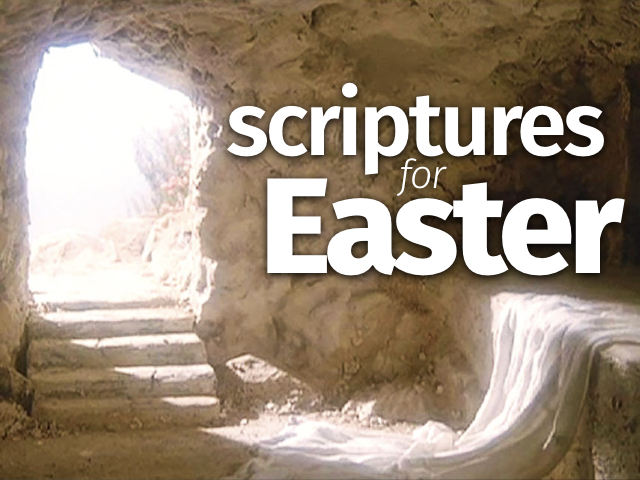
The sepulcher guards.

Matthew 27.62-66 KWL
62 In the morning,
which is [the Saturday] after preparation,
the head priests and Pharisees
assembled with Pontius Pilate,
63 saying, “Master, we remember this imposter said while alive,
‘After three days I rise.’
64 So command the sepulcher to be secured for three days,
lest his coming students might steal him,
might tell the people, ‘He’s risen from the dead!’
and the last imposture will be worse than the first.”
65 Pilate tells them, “You have a guard.
Go secure it as best you know.”
66 Those who go, secure the sepulcher,
sealing the stone with the guards.
 
Matthew 28.2-4 KWL
2 Look, a great quake happens,
for the Lord’s angel, which comes down from heaven,
upon coming, rolls away the stone
and is sitting down upon it.
3 Its appearance is bright as lightning,
and its clothing white as snow.
4 The sepulcher guards shake in terror of it,
and become like the dead.
 
Matthew 28.11-15 KWL
11 As the women leave, look:
Some of the guards, coming into the city,
report to the head priests everything that happened.
12 Getting together for a meeting with the elders,
taking enough silver to give the soldiers,
13 the priests were saying, “Say this:
‘His students, coming at night, stole him as we slept.’
14 And when this is heard by the governor,
we’ll convince him, and you needn’t worry.”
15 Those who took the silver, did as the priests taught,
and spread this word throughout the Judeans
until this very day.

There’s some debate among Christians as to who these soldiers are. Did Pontius Pilate send his own soldiers to secure the sepulcher? Or were these Senate police?—the same guys who secured the temple for the priests; the same guys who arrested Jesus; the same guys who handled Senate security? When Pontius said, “You have a guard,” did he mean “You can have my guards,” or “You already have guards, and don’t need any of my guys”?

I lean towards temple guards. Here’s why.

13 May 2022

Why Amazon is my favorite Christian bookstore.

Unless you count all the mini-bookstores found in the larger churches, my hometown has only one bookstore. One. It’s downtown; it mostly sells used books.

We used to have a Borders, a Crown Books, a Book Outlet, and multiple used bookstores. And a Family Christian Stores—which wasn’t so much a bookstore as a one-stop shop for all Christian. They had books, but they had even more Christian tchotchkes: CDs, shirts, toys, art for the walls. “Jesus junk.” Now we have just that one bookstore… and the book sections at Walmart, Costco, Target, the other department stores, and the thrift stores. (And the local library’s monthly book sale.)

Why can’t a town of 102,000 sustain a new-books bookstore? Because those stores, for the most part, didn’t know what they were doing. They didn’t realize, till it was too late, their primary competition was Amazon—and that Amazon had ’em so beat, people would shop at Amazon while browsing their stores. I did it myself. I’d browse their stacks, find a book I was interested in, take down its ISBN, and look it up on Amazon. Guess who always had the better price.

No, Amazon doesn’t pay me to sing their praises. Even though I link a lot of the books, movies, and albums I mention on TXAB to their website.

I learned a long time ago, and keep seeing it: No matter the bookstore, Amazon offers a lower price on the same book. Even if the bookstore marked everything at 20 percent below the suggested retail price. Even when the books are on the clearance shelf at 60 percent off. Even when they’re in a $2 bargain bin. Even when I find ’em at Dollar Tree for $1.25. Amazon regularly has ’em beat.

I’m not the only bookstore customer who noticed this. I’ve seen other customers browse the bookstore… then whip out their smartphone, compare prices, go with Amazon, and buy nothing from the bookstore but their coffee. If that. Too often Starbucks is cheaper.

12 May 2022

Unitarians: Those who insist God’s not three.

UNITARIAN ju.nə'tɛr.i.ən noun. A person or doctrine which emphasizes God’s oneness, and rejects the doctrine of the trinity.
2. [capitalized] A member of a church or group which asserts this belief.
3. adjective. Having to do with this belief, or with unitarians.
[Unitarianism ju.nə'tɛr.i.ən.ɪz.əm noun.]

Christians correctly understand God’s a trinity. One God; three people (or “persons,” as theologians prefer, but it’s bad English) who are the one God. Well, most of us do; there are holdouts who insist he’s not. They tend to fall into one of two camps:

  • MODALISTS. Those who say the Father, Son, and Holy Spirit are God… but really all three of them are just one person. Not three people. Just one person in different modes.
  • UNITARIANS. Those who say the Father is God—and the Son and the Holy Spirit are not.

People are more familiar with unitarians—mostly because there are entire unitarian denominations, like the Unitarian Universalists, the Unitarian Christian Church, and Unity Church. (The United States has even had four Unitarian presidents.) But that’s also because unitarianism is very obviously non-trinitarian, and very obviously denies Jesus is God. Whereas modalists will never say Jesus isn’t God. For that matter you’d likely never even know they were modalist… until you start asking ’em about trinity and they reply, “Well I really don’t like to use the word trinity to describe God…” then go on to explain why they say he’s not.

The main difference, y’notice, is modalists believe Jesus is God and the Holy Spirit is God. Unitarians do not. Well, generally unitarians do not; some of ’em are kinda pantheist and believe everyone is God. But for the most part, they insist God is One: One person, one being, one heavenly Father (or Mother; some of ’em aren’t particular); our Creator, the Almighty, and infinitely good. And while they consider Jesus to be Lord and Savior and King, they don’t consider him God. Same with the Holy Spirit—although I’ve known a few unitarians who believe the Spirit is God, but like modalists, don’t believe he’s a different person than the Father. To them, “Holy Spirit” is just one of God’s titles, like when certain indigenous Americans refer to God as “the Great Spirit.”

But unitarian doesn’t just describe Christians. Technically it describes everyone who believes in the One God, and doesn’t believe he’s a trinity. Most unchurched pagans figure there’s one God, aren’t so sure about Jesus, and know nothing about the Holy Spirit—and this description would mean they’re unitarian. Every Muslim would be unitarian: They definitely believe in one God, believe Jesus is a prophet but not God, and believe the Holy Spirit is a messenger of God but also not God. Religious Jews are unitarian, Sikhs are unitarian, Baha’is are unitarian.

But if you’re unitarian and call yourself Christian, you’ve chosen to ignore the scriptures which reveal God as a trinity. Which puts you outside historical orthodox Christianity and makes you heretic. And here I gotta remind you heresy does not send you to hell—but it does greatly interfere with getting to know and trust God, so it always needs to be dealt with.

11 May 2022

By Law we’re good as dead—so live for Jesus!

Galatians 2.17-21 KWL
17 “While looking to be justified by Christ,
if we’re found to be sinners ourselves,
then isn’t Christ a servant of sin?”
This ought not be said!
18 For if I rebuild the things I destroy,
I stand up for my own transgressive behavior.
19 For I, through the Law,
die to the Law so I can live for God.
I was crucified with Christ.
20 I no longer live. Christ lives—
in me. He now lives in flesh.
I live by faith in the Son of God, who loves me
and hands himself over for me.
21 I don’t reject God’s grace,
for if rightness comes by Law,
then Christ died for nothing.
Previously:
  • “Paul and the apostles of note.” Ga 2.6-10
  • “Paul challenges Simon Peter.” Ga 2.11-14
  • “Being good justifies nobody. Nobody.” Ga 2.15-16
  • Paul’s academy trained him in Greco-Roman rhetoric, the art of speech and debate. Most of us don’t know how the Romans practiced rhetoric, so sometimes we struggle to follow Paul’s arguments, and come to some very different conclusions than he was trying to make. This is nothing new; few things are. Peter rebuked ancient Christians for doing the very same thing. 2Pe 3.14-15

    Anyway it’s why I translated verse 14 with quotes. Paul’s doing a rhetoric thing: He’s quoting what other Christians have said, and responding μὴ γένοιτο/mi ghénito, “This ought not [be said]!” Most bibles translate it some variant of the KJV’s “By no means”—this is an idea we oughta strongly oppose. It’s heresy.

    So apparently this is what certain early Christians were teaching, particularly the legalists in Antioch. “You claim you’re following Jesus. But you sin. Everybody sins. You shouldn’t, but you do. So are you saying Jesus is okay with your sins? It’s fine with him if you sin? He even endorses your sinful lifestyle? (Because certainly we would never say this.) You need to stop; Jesus can’t save a willful sinner.”

    To some degree we still hear this from today’s legalists. Yes, of course we’re to resist temptation and quit sinning—but they turn it into something we have to do lest we lose salvation. Lest we undo everything Jesus did for us. Lest Jesus himself reject us, because sin offends him so much, and he simply can’t work with people like us. It’s a mindset which entirely goes against Jesus’s stated practices in the scriptures, and of course grace. But that’s kinda to be expected of legalists.

    So Paul preemptively deals with this one: No it’s not okay to sin. Jesus doesn’t say that; Paul didn’t write that. Sin is still evil and wrong. But the fact Jesus works with and through sinful humans, does not mean he endorses sin, nor overlooks sin, nor did some behind-the-scenes jiggery-pokery which nullifies the Law and means nothing’s a sin anymore.

    What he did do, is kill our sin. Killed it on the cross with himself. Killed us on the cross with himself. Our penalties are paid for. Our debts are paid. Now follow Jesus.