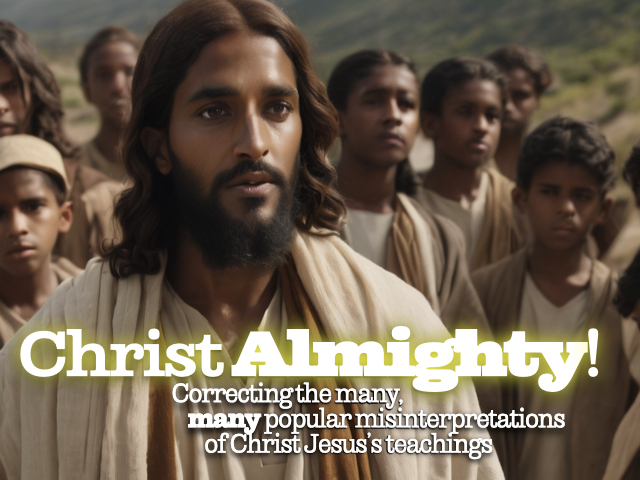
- TOXIC MASCULINITY 'tɑks.ɪk mæs.kjə'lɪn.ə.di noun. Claim that certain qualities or attributes are inherent to men and boys. Yet must be exalted, defended, and enforced; and males must be shamed when they don’t practice them, or allow women to practice them.
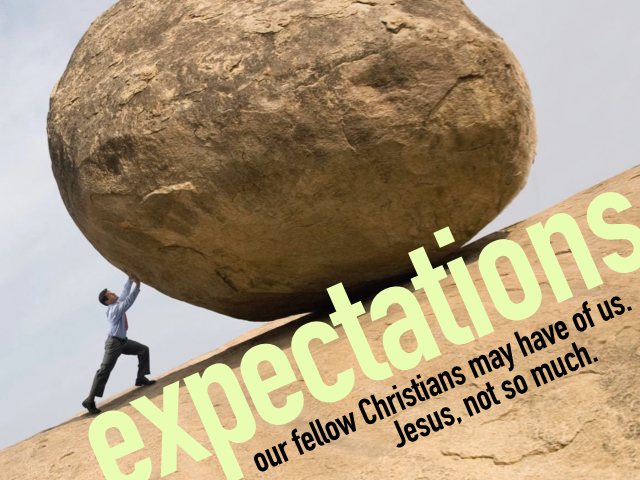
Nine years ago a friend, who should’ve known better, gave me a copy of John Eldredge’s Wild At Heart as a Christmas gift. The book was all the rage among Christian men five years before. At the time (’cause I tried to dispose of my copy by selling it on Amazon) it was going for 20 cents. Betcha she found it on sale.
People buy books like Wild at Heart to inspire the men in their lives. That’d include men who don’t read. Consequently there are a lot of men who own a dusty copy of Wild at Heart, and mine’s pretty dusty too, ’cause I refuse to read it again.
I’d read it years before. It was my brother’s copy, which is the only reason I didn’t throw it across the room in disgust. Nope, I don’t care for the book. Here’s why.
Eldredge’s profoundly misguided thesis is constructed around certain Happy Premises. (I stole this term from Bowfinger, which I watched again recently. Loony self-help ideas tend to gravitate together in my mind, whether fictional or not.)
- HAPPY PREMISE #1. Man needs to be wild, free, and undomesticated; he needs to pick fights and conquer stuff.
- HAPPY PREMISE #2. Man needs to pursue Woman, see her as his Beauty, and take her to be part of his grand adventure.
- HAPPY PREMISE #3. This was how God made men to be, and even Jesus was like this.
- HAPPY PREMISE #4. You must never, ever show it to the Laker Girls.
No wait; that last one’s from Bowfinger.
In Wild at Heart, Eldredge explains why humanity doesn’t know his Happy Premises, despite them being buried deep within every man’s heart. (Eldredge found them, and blames an emasculating female culture for why you haven’t.) Despite them being buried deep in the scriptures. (Again, Eldredge found them, and blames that emasculating female culture for why millennia of other Christians hadn’t.) Men aren’t proper, masculine males; their fathers never taught them to be one. Instead, their mothers teach boys to be girly, and domesticate and figuratively castrate them.
Hence women are wholly unfit to raise men. Seriously; that’s what Eldredge teaches. Something ladies better bear in mind, next time someone recommends this book for your husband.
If a mother will not allow her son to become dangerous, if she does not let the father take him away, she will emasculate him. I just read a story of a mother, divorced from her husband, who was furious that he wanted to take the boy hunting. She tried to get a restraining order to prevent him from teaching the boy about guns. That is emasculation. “My mom wouldn’t let me play with GI Joe,” a young man told me. Another said, “We lived back east, near an amusement park. It had a roller coaster—the old wooden kind. But my mom would never let me go.” That is emasculation, and the boy needs to be rescued from it by the active intervention of the father, or another man. Eldredge 64-65
Another man? Any other man? Say you’re a single mom, and you’ve forbidden your son from playing with matches, ’cause you know your little firebug will wind up in the burn ward. Is Eldredge actually suggesting some unrelated stranger should be able to overrule you and supply your boy with a box of matches, because you don’t get it?
Yes. Yes he does. To make his case, Eldredge references the Clint Eastwood movie A Perfect World. Kevin Costner plays an escaped convict who kidnaps an 8-year-old boy. He lets the boy ride the roller coaster his mother wouldn’t. He compliments the boy on his penis. Yeah, there are other instances in the movie of bonding between the criminal and his victim, but Eldredge picked those two. Wild rides and “Hey dude, nice peen.” The two things in this book he upholds most.
Eldredge blames emasculation on clingy mothers, and bad fathers who let their wives turn their sons into girly-men—then mock the boys for not being manly enough. He claims he’s never met a man who’s not been “wounded” this way. Eldredge 72 As a result, he says, men either overcompensate and become driven, violent men; or they retreat and become passive. Or both:
Witness the twin messages sported by young college-age men especially: a goatee, which says, “I’m kind of dangerous,” and a baseball hat turned backward, which says, “But really I’m a little boy; don’t require anything of me.” Which is it? Are you strong, or are you weak? Eldredge 73-74
Thus unwittingly providing us an example of mocking boys he doesn’t deem manly enough.
Y’know, I have a goatee, and by golly my hat is turned backward. However, I never considered ’em messages of strength and weakness—and if I did, they’d be opposite of Eldredge’s. My facial hair is ’cause I passively don’t feel like shaving every day. My backwards hat is because I can handle the dangerous glare of the sun—and the judgment of misogynistic authors.
Oh, I’m just getting started on this book.