14 August 2023

We’re all going to die, y’know.

I know, I know. “Unless the Lord tarries.” It’s a phrase preachers love to say, which reminds us there is Jesus’s second coming yet to take place—and because he can return at any time, he may very well return in our lifetimes. And if he does return in our lifetimes, we’re not gonna die: We’re getting resurrected without dying, like the apostles described.

1 Thessalonians 4.16-17 NLT
16 For the Lord himself will come down from heaven with a commanding shout, with the voice of the archangel, and with the trumpet call of God. First, the believers who have died will rise from their graves. 17 Then, together with them, we who are still alive and remain on the earth will be caught up in the clouds to meet the Lord in the air. Then we will be with the Lord forever.

Although I have heard some theologians argue that having our old bodies transformed into our new bodies means our old bodies pass away—they die. But that doesn’t jibe at all with the way Paul and Sosthenes put it when they wrote, “We shall not all sleep, but we shall all be changed.” 1Co 15.51 KJV Sleep is a euphemism for die, so they’re saying we won’t die. The preachers are right: When Jesus returns, those who are alive aren’t gonna die.

But are we gonna be alive when Jesus returns? Statistically, no. We’re gonna die.

Yep. You and me, and our kids, and our grandkids, and our great-grandkids, and all our descendants. People die, and we’re no different. We’re gonna die. You’re gonna die. Deal with it.

Yeah, I know. I’m gonna get accused of all sorts of heresy and apostasy and unbelief for saying this. Jesus can return at any time! How dare I give people the idea he won’t?

Well, I dare because thus far he hasn’t. For thousands of generations of Christians, he hasn’t. For good reason!—he’s trying to save everyone he can. 2Pe 3.9 And if it takes him a thousand more generations of Christians to save everyone he can, I’m okay with that. We should all be okay with that. I don’t want him to let other people perish just so I can avoid the uncomfortability of dying. I may be a dick sometimes, but I’m not that big a dick.

So Jesus is trying to save everyone he can, but despite this, every generation of Christians has claimed, “He’s coming back in my lifetime.” True, there were some generations where many of ’em weren’t saying this. Postmillennialism was really popular among Evangelicals for a few centuries, and postmil Christians thought it was their job to start the millennium—and Jesus wouldn’t return till it was over. But the majority of Christians still believed Jesus can and would return at any time, and return for them, and they wouldn’t die.

So they didn’t deal with it. And, y’know, died.

And you’ve likely seen what happens when people don’t prepare for their own death: Chaos. Family members who don’t know what to do. Wealth which they squabble over. Greedy opportunists who swoop in and take as much of that wealth as they can get their grubby hands on. Things left unsaid. Tasks left undone. Hurt feelings. And Christians who never, ever expected them to die—’cause Jesus was supposed to return first!—and now they go through a big unnecessary faith crisis because they thought Jesus was gonna return on their schedule.

I’ve seen this happen way too often. It’s entirely not necessary. It’s because Christians, and our teachers, aren’t dealing with reality. “Unless the Lord tarries” is likely gonna happen. It’s happened for 20 centuries; what’s another century? You’re not getting raptured before your 90th birthday. Or before Grandma’s 90th birthday. You’re gonna die.

Deal with it. Deal with it in a much better, healthier way than one of those pagans who don’t believe in resurrection and have no hope, but deal with it. Prepare for your demise. Get your family ready.

What, you figure you’re too young? You’re not. No one is. Accidents happen. Disease happens. People too stupid to take preventative measures because they don’t believe in science, happen—and sometimes happen to those of us who do believe in science, and we catch something deadly from these selfish morons. Even if you figure Jesus is returning within the next seven years, some driver fiddling with his phone could plow into you tomorrow, and nobody will be ready for that. So get ready for that. Practice some basic common sense, wouldya?
13 August 2023

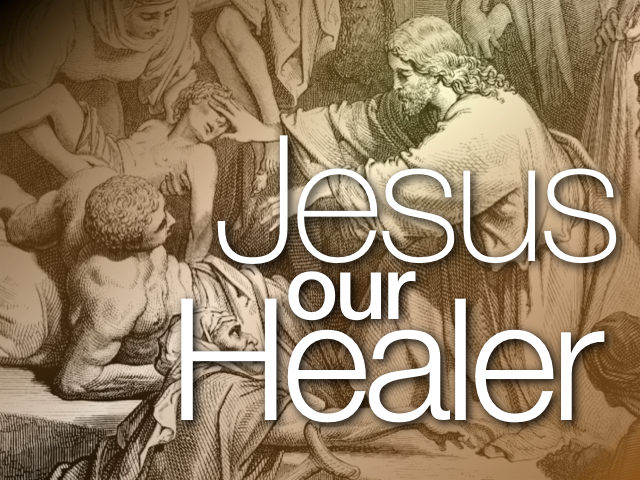
Jesus cures the crowds.

Mark 1.32-34, Matthew 8.16-17, Luke 4.40-41.

In ancient Israel there was no such thing as healthcare. If you got sick, your only recourse was either for God to miraculously heal you, or folk medicine. Science hadn’t been invented yet!

Following the standards of the day, folk medicine was largely unproven: People did what they believed oughta work, based on guesses (educated or not), hearsay, rumor, or homeopathy—if something makes you ill, why not dose yourself with more and build up resistance? You know, like shooting yourself with smaller-caliber bullets to build up your immunity to larger bullets.

Some of it did actually work—like willow bark, which we nowadays call “aspirin.” Or poppy juice, which we nowadays call “opium.” But y’notice sometimes these cures did more harm than good.

Because the “experts” didn’t know what they were doing. All of them were fumbling around in the dark. Read Hippocrates or Galen sometime: Their philosophical theories are kinda entertaining, but when you realize people were actually trying to cure desperately ill people with their “knowledge”—it gets kinda horrifying.

The King James Version translated the Greek word ιἀτρός/yatrós (plural, ιἀτροί/yatrí) as “physician”—by which they meant “one who gives you physic,” and physic means “medicine.” A physician gave you folk remedies. Or drugs; they’d dope you up till you didn’t care about pain anymore. It’s the best they knew. But don’t get the wrong idea these “physicians” in the bible were in any way doctors of medicine. A far more proper translation of yatrós is “witch doctor”—which is what I tend to use.

Among pagan yatrí, one of the tools in their iffy arsenal was δαιμόνια/demónia. We translate that word as “demons,” but to Greeks a demónion was a lesser god; kinda like a guardian angel. If you were sick, the yatrí would ask their gods Apollo or Æsculapius for help… and if those gods were busy, maybe they could call upon a demónion to help you. Maybe stick one in you, and it could root around in there and fix you right up! Maybe two or three for extra help, or expediency. Maybe more! If one tablet of aspirin is good for you, why not an entire bottle? Why not a legion’s worth of demónia?

So as I said in my article on Jesus’s first exorcism, if you’ve ever wondered why the gospels contain so many exorcisms, and how they’re connected to supernatural healing, this is why. Jesus lived in the Galilee, which wasn’t entirely Jewish: It was full of Syrian Greek villages filled with Syrian Greek pagans. And if a Jewish person was sick, and desperate, they’d try anything—including some pagan yatrós who was rumored to get results. So they’d get demonized. Way bigger problems than ever they bargained for.

As I also said in that article, when Americans get sick, and western medicine doesn’t know how to treat them, we too will get desperate, and dabble in witch doctoring. Call it “eastern medicine,” call it “alternative medicine,” call it “natural healing,” call it whatever; none of these guys went to medical schools, and some of them call upon demónia same as the ancient Greeks. Times change; human nature hasn’t.

10 August 2023

Reminding Titus to not be “wild at heart.”

Titus 3.1-3.

Back in the 1990s there were two popular fads among American men. There was Promise Keepers, an organization started by football coach Bill McCartney as a way to encourage Christian men to be faithful husbands, good fathers, and to fight racism. And there was the Mythopoetic Men’s Movement, founded by poet Robert Bly to help men “restore” what they felt were their “deep masculine” traits and urges—abandoned by our egalitarian society, rejected as toxic masculinity. (And to be fair, a lot of the things men call our “masculine urges” are really works of the flesh, repackaged to be socially acceptable, but the only people that fools are fleshly men.)

Bly’s movement is pagan; his proof texts come from Greek and Norse mythology, and European folk tales, which he claims are ancient descriptions of how men really are. But author John Eldredge wrote a bestselling book, Wild at Heart, which repackaged the principles of Bly’s movement with Christian labels, and borrowed out-of-context scriptures as its proof texts. Thus Eldredge encourages Christian men to be wild, virile pagans—but, y’know, not capital-P pagan; just virile warriors who are tough guys like we see in Mel Gibson and Clint Eastwood and John Wayne movies. Be fighters; God made us fighters. Forget all this “turn the other cheek” crap; what soft, domesticated she-male taught us that?

I’m still a big fan of Promise Keepers. Not at all the Wild at Heart bushwa, which is total depravity disguised as Christianity. The reason it resonates with so many Christian men is ’cause it encourages us to be boldly, unrepentantly, fleshly. To defy Jesus’s teachings to be kind and patient and love one another; instead fight everything we don’t like, ’cause God meant us to be wild donkeys, in hostility with all our brothers. Ge 16.12 That God’s happy with this.

It’s a devilish spin on the scriptures, and the very same behavior Paul warns Titus against in today’s passage.

Titus 3.1-3 KWL
1 Remind the people about rulers, about powers—
to be submissive, to listen to authorities,
to be ready for every good work.
2 To never slander. To not be “tough guys.” Appropriate.
Showing every humility to every person.
3 For at one point we were just as stupid—
unyielding, wayward, slaving for desires and various pleasures,
spending our lives in evil and envy,
hated and hating each other.

Y’notice it’s not just the people of Crete, whom Titus is ministering to, whom Paul is writing about. In 3.3, Paul points out both he and Titus used to be that way.

Because these traits aren’t “deep masculine” characteristics we need to rediscover and revive. They’re basic human depravity. Before we followed Christ, they were our fleshly human nature. We’re supposed to reject them in favor of the new, godly human nature the Holy Spirit is trying to develop us; in other words his good fruit. But if we won’t resist the temptation to indulge in our “lost wildness” and savagery again… well, we’ve made ourselves unfit to live in God’s kingdom.

Good luck telling the “wild at heart” bullies any such thing.

09 August 2023

God’s ways aren’t our ways. They’re holy.

Let’s begin with Isaiah 55. Yep, all of it.

Isaiah 55.1-13 MEV
1 Ho! Everyone who thirsts,
come to the waters;
and you who have no money,
come, buy and eat.
Come, buy wine and milk
without money and without price.
2 Why do you spend money for that which is not bread,
and your labor for that which does not satisfy?
Listen diligently to Me, and eat what is good,
and let your soul delight itself in abundance.
3 Incline your ear, and come to Me.
Listen, so that your soul may live,
and I will make an everlasting covenant with you,
even the sure mercies of David.
4 See, I have given him as a witness to the people,
a leader and commander to the people.
5 Surely you shall call a nation that you do not know,
and nations that did not know you shall run to you
because of the LORD your God,
even the Holy One of Israel;
for He has glorified you.
 
6 Seek the LORD while He may be found,
call you upon Him while He is near.
7 Let the wicked forsake his way,
and the unrighteous man his thoughts;
and let him return to the LORD, and He will have mercy upon him,
and to our God, for He will abundantly pardon.
 
8 For My thoughts are not your thoughts,
nor are your ways My ways,
says the LORD.
9 For as the heavens are higher than the earth,
so are My ways higher than your ways,
and My thoughts than your thoughts.
10 For as the rain comes down,
and the snow from heaven,
and do not return there
but water the earth
and make it bring forth and bud
that it may give seed to the sower and bread to the eater,
11 so shall My word be that goes forth from My mouth;
it shall not return to Me void,
but it shall accomplish that which I please,
and it shall prosper in the thing for which I sent it.
12 For you shall go out with joy,
and be led out with peace;
the mountains and the hills
shall break forth into singing before you,
and all the trees of the field
shall clap their hands.
13 Instead of the thorn shall come up the fir tree,
and instead of the brier shall come up the myrtle tree;
and it shall be to the LORD for a memorial,
for an everlasting sign
that shall not be cut off.

This chapter is something the LORD told Isaiah to encourage southern Israel in the 700s BC, as they were facing down the Assyrian Empire, which was devastating all the countries round about—including northern Israel. It’s among the chapters which some scholars call “Second Isaiah,” because they’re so different from chapters 1–39; they’re about hope and future and God’s grace, whereas the first section was about God’s usual frustrations with the Israelis’ rampant sinning. So different, these scholars are pretty sure they were written by a whole different prophet—as if one guy isn’t capable of writing about multiple subjects.

Or, more appropriately, doesn’t radically change when he has God-encounters which convince God’s grace is way more consistent with his character than God’s wrath.

Y’see, God’s wrath is temporary. God doesn’t stay angry long. When he’s outraged, it’s for a few minutes—and mainly, I suspect, to remind us he does get angry, and he’s not ignoring injustice. He’s gonna set things right. He frequently does. But way, WAY more often, God’s about grace: If we stop sinning and turn to him, he hasn’t gone anywhere. He’s always willing to accept repentant people and love on us.

So why do we see so many prophecies in the Old Testament, and so many visions in Revelation, about God’s wrath? Two reasons: We humans suck, and God’s warning us there will be consequences, and they’re coming sooner than we think; and we humans are wrathful—which is why we kept and fixate on God’s statements about wrath.

I’ve no doubt whatsoever that young Isaiah prophesied wrath, because Isaiah himself was likewise outraged about the doings of his fellow citizens. Because he wanted them to cut it out. So did the LORD!—so it’s not that Isaiah was selectively tweaking God’s words to suit himself, like people so often do. But again: God doesn’t stay angry long. We do. We let our frustrations fester. God knows better than to do that… and in time, Isaiah learned better than to do that.

It’s why I’m zeroing in on verse 8 in this chapter: כִּ֣י לֹ֤א מַחְשְׁבוֹתַי֙ מַחְשְׁב֣וֹתֵיכֶ֔ם וְלֹ֥א דַרְכֵיכֶ֖ם דְּרָכָ֑י נְאֻ֖ם יְהוָֽה/Ki lo makhshevótay makhshevóteykhém, velo darkheykhém derkhém, nhum YHWH— “For my inventions aren’t your inventions, and your paths aren’t my paths, the LORD reveals.” We don’t think alike.

So we gotta learn to. We gotta find out how he thinks—it’s in your bibles, folks—and stop presuming since we have the Holy Spirit within, we automatically have the mind of God. Time and again we’ve demonstrated we so don’t. We don’t produce his fruit. Our knee-jerk reactions still aren’t consistent with his character. We imagine good fruit will happen spontaneously ’cause we belong to him now, but that’s not how it works. We gotta practice his fruit, and resist the ever-present temptation to remain fleshly Christians and just relabel all our sinful activity with Christianese words.

We gotta be like God, and unlike other people. Including other Christians, who are often lousy examples anyway. We gotta be unique. Different. Weird. Holy.

08 August 2023

“If my people pray, I’ll heal their land.”

2 Chronicles 7.14.

Today’s out-of-context verse is really popular with patriots.

Every country has its problems, right? Limited resources. Suffering people who need social services and healthcare. Ecological crises, like pollution, floods, drought, and pests. Rich people, corporations, and criminals who think the laws don’t need to apply to them. Corrupt government officials who enrich themselves instead of serving others. Racists and nationalists who want social supremacy for their group. Fascists who want to undermine or overthrow democracy and run things their way. Foreign countries who want to oppress and exploit the country, or at least keep it powerless and out of their way.

Who’s gonna solve all those problems? Well, they need to, but it’s mighty hard! They’re gonna need God’s help—if not Jesus’s direct intervention when he returns to take over the world. So they pray.

As we should! What’s wrong with praying for our country? For the wisdom of our country’s leadership to rule us properly? For supernatural solutions, if that’s what it’ll take? Plenty of kings in the bible did it; even pagan ones. Often to the wrong gods, but still: They realized they were gonna need divine aid, so they sought it.

Hence most churches pray for their countries. Sometimes as a regular part of the liturgy, sometimes not—but the church members are really agitated about something in the news, so Pastor decides it’s time to pray for the country again. Some prayer groups make sure to include the country and its leaders, even specific politicians, every time they meet.

And a lot of ’em like to invoke today’s out-of-context verse. ’Cause to them, it looks like a promise from God: If they pray for their country, he’ll fix it!

2 Chronicles 7.14 KJV
If my people, which are called by my name, shall humble themselves, and pray, and seek my face, and turn from their wicked ways; then will I hear from heaven, and will forgive their sin, and will heal their land.

And of course they get really annoyed with me whenever I tell them they’re quoting this verse wrong. ’Cause what’s wrong with praying for our country? And why wouldn’t God fix it if we earnestly seek him?

Civic idolaters in particular. These’d be the folks who believe when Jesus returns, he actually won’t overthrow their country. In the United States, they figure the USA is the one exception to the kingdoms of this world which must become part of Christ’s one-world government. They figure already is his kingdom. Americans already are God’s chosen people. It’s just certain other unpatriotic factions are heavily mismanaging things. So we gotta outvote them. Or, failing that, overthrow them. You know, cheat.

And once our Christian nation returns to God, returns to proper Christian values (as they define them), stamps out the wicked, and makes a big show of repentance like public prayer and voting for the prolife political party (nevermind the various godless things that party’s candidates also believe): We’ve unlocked the magic spell laid out in that verse, and God has to heal our land. ’Cause it’ll really be his kingdom on earth. He’ll make it paradise. Maybe even hold back on the End Times for a few more years, so we can finally accomplish all our personal goals for wealth, romance, material success, and personal prosperity—all without that pesky rapture messing up our schedule. Yet at the same time, in our church services, claiming we’re getting the church ready to meet her groom. Rv 21.2

Yeah, it’s a wholly inconsistent theology. But politics and fear will do that to people.

Whenever I object to them ripping 2 Chronicles 7.14 out of its historical context, I regularly get accused of not loving the United States like they do. And they’re right: I love it, but definitely not like they do. I love it like God loves the world—and wants to save it! Jn 3.16 I want as many Americans as possible to turn to God. Not by political might nor personal power, but by the Spirit of Christ Jesus himself.

I remain mindful my citizenship is in God’s kingdom. And every time the Holy Spirit wakes me up to the fact the United States and his kingdom are opposed, I side with the kingdom every time. As should every Christian—instead of bending the truth till we can play both sides.

07 August 2023

Christians and the fear of public speaking.

Every Christian is meant to preach the gospel. (And use words.) We gotta tell others about Jesus; we gotta encourage our fellow Christians to have healthy relationships with him.

But not every Christian can handle getting up in front of a large audience on a weekly basis, to give talks.

Poll after poll shows the number one fear of many Americans is public speaking. They’re more afraid of public speaking than death. They’re more afraid of it than high-voltage electricity, than a bear attack, than swinging on a rope off the side of a cliff, than snakes crawling up your plumbing while you’re on the toilet. It’s the last thing they ever wanna do.

I don’t share that fear. At all. Yeah I’ve had nerves on opening nights of school plays, but that was about blowing my lines, not standing in front of a crowd. Audiences are fun. But that’s me, and other people can’t comprehend how I can be so casual about public speaking; why hasn’t my fight-or-flight instinct kicked in? Theirs is going off like a fire alarm.

My advice to them used to be, “Oh, just get over it.” I didn’t realize why they found public speaking so terrifying; I’ve done it a bunch, and there’s nothing to fear! Yeah, it wasn’t sympathetic of me at all. But that’s because I didn’t share their fear, and didn’t get it. Sometimes I still don’t get it, unwittingly drag people into a public-speaking situation with me, and only notice their deer-in-the-headlights facial expression at the last second: “Oh nuts; I just freaked ’em out.” If you’re one of those people, sorry! I wasn’t trying to induce a panic attack, honest.

I still think people need to get over it, but I realize it’s gonna take them some time and effort. You gotta get used to the idea. You gotta make small efforts with small crowds and work your way up to bigger crowds. You gotta get confident with your material. You gotta realize audiences, most of the time, are rooting for you—they want you to do well! They’re usually on your side. Especially when there are loved ones in the crowd.

And yes, the Holy Spirit can help. He can make you bold when he really needs you to be. But I find he provides a lot more opportunities to people who are already bold. A lot more.

06 August 2023

Curing Simon Peter’s mother-in-law.

Mark 1.29-31, Matthew 8.14-15, Luke 4.38-39.

The guy we know as St. Simon Peter is actually Simon bar Jonah of Capharnaum. Mt 16.17 Or Simon bar John; Jn 1.42 we don’t know which, ’cause one of the gospel-writers got it wrong, despite all the Christians who claim the bible has no errors. Fine; you tell me whether it’s Jonah or John, and don’t base it on which gospel’s your favorite, like the rest of Christendom has.

Jesus nicknamed him ܟܐܦܐ/Kefá, Syriac for “rock,” at the beginning of John. Jn 1.42 I don’t know that Kefá was mean to be his proper name, because the New Testament regularly translates it into Greek, Πέτρος/Pétros, instead of transliterating it into Κηφᾶς/Kifás (KJV “Cephas”). Anyway Pétros became Petrus in Latin and Peter in English.

Simon was chosen by Jesus to be in his Twelve, as apostles who’d learn to do as he does, and proclaim his kingdom. Simon’s actually listed first in all the lists of the Twelve, Mk 3.16, Mt 10.2, Lk 6.14, Ac 1.13 and whenever we read of the Twelve doing stuff, we typically read of Simon leading the group. Ac 1.15, 2.14, 5.29 While Christ Jesus is the church’s leader, now and forever, Christians recognize Simon Peter as its first non-divine head; and Roman Catholics insist part of the reason the Bishop of Rome leads their church is because he’s Simon Peter’s successor to that job.

But unlike bishops in the Roman Catholic church today, Simon Peter was married. 1Co 9.5 The whole unmarried celibate leadership requirement they have today, drawn from Paul’s comments in 1 Corinthians 7.32-35, didn’t become their standard for a few more centuries. Evangelicals ignore it… though from what I’ve seen among certain church leaders who’ve no clue how to juggle ministry and family, maybe more of us oughta consider it. But I digress.

Though Christian art and movies regularly depict ’em as middle-aged white men, Jesus’s students were young brown men—teenagers, since Jewish adulthood was age 13 in that culture. Jews could even marry at that age, same as Jesus’s mom did; all the culture expected of them was they should be able to financially support a spouse, and Simon apparently could do that. (Probably cut down expenses a lot with how many people lived there!)

We don’t know Simon’s wife’s name. She mighta been mentioned in the New Testament, but we’ve no idea because none of the women in it are said to be Simon’s wife. Some Catholics claim his wife died before Jesus started training him, but Simon later implies he left her at home while following Jesus, Lk 18.29 and Paul straight-up states Simon had a believing wife. 1Co 9.5 Ancient Christian historian Eusebius Pamphili wrote Simon’s wife was later martyred the same day as he, Church History 3.30.2 and Clement of Alexandria wrote that Simon told his wife as she was led off to martyrdom, “Remember the Lord,” Stromata 7.11 which obviously means she knew the Lord.

Even met him in person. He cured her mother, after all.

That’s the story I’m analyzing today. In Mark and Luke it happens right after Jesus throws an unclean spirit out of synagogue, and in Matthew it’s right after the Sermon on the Mount—Jesus comes down from the mount, cures a leper, cures a centurion’s slave, then swings by Simon’s and cures his mother-in-law.

The order of events isn’t entirely important… except that in Mark and Luke, because this event takes place right after Jesus teaches in synagogue, it’d mean Jesus cured Simon’s mother-in-law the same day. (Even if it’s the very next morning, it’s still the same Jewish day, which is figured sundown-to-sundown.) Which’d mean Jesus cured her on Sabbath.

Though Christians still debate whether throwing out evil spirits is the same thing as curing the sick (and I would argue it absolutely is), this’d certainly be another instance of Jesus curing people on Sabbath—a practice which, as you’ll later see, profoundly irritated Pharisees because of the way they interpreted the Law. Obviously Jesus interprets it differently. I’ll get to that later. Meanwhile the controversy doesn’t come up yet, because Jesus didn’t cure the mother-in-law in public, so no Pharisees were around to bellyache about it.

02 August 2023

“What do you think about 𝘵𝘩𝘪𝘴 guy…?”

The question I receive most often—even before I started blogging—is, “What do you think about…?” followed by some Christian book, some Christian movie, some Christian podcast, some preacher, some church. Something which exists in Christendom, and people want an expert opinion on it. Or, y’know, my opinion.

Sometimes it’s because my questioner has heard of it, has looked at it, doesn’t quite know what to think of it, and wants to pick my brain. Which is fine!—it’s here for the picking.

Other times… they do know what they think of it. They love it! Or they think it’s heresy and anyone who does like it is going to hell—and they wanna make sure I’m not going to hell, so this is an orthodoxy test. Or they don’t think it’s heresy, but do think it’s garbage, and just wanna make sure I have good taste. Either way, if I don’t think the same way they do, I’m in trouble.

I don’t always discern people’s motives for asking me questions. Or bother to. Why stress myself out over whether or not people wish me well or ill?—I’ll just answer the question honestly, and let the shrapnel fall where it may. If I don’t pass their orthodoxy test, so be it; if a person reduces the entirety of Christianity down to one single shibboleth, they’re a ridiculous person anyway. (We’re saved by grace, not orthodoxy, remember?)

So if someone decides I’m heretic, and quits reading TXAB because of it: It’s probably for the best. For me, at least: I no longer have to deal with their narrow thinking and bad attitudes. It’s not so good for them, since they still have spiritual growth to do. If they cut off all the voices which challenge or stretch them to overcome their prejudices, love different people from themselves, and think of God’s kingdom as a place where lots of very different people come together in unity, Rv 7.9 their relationship with God is gonna be a struggle—one they might quit. So I hope they never take this route, or snap out of it before they get too far into it.

Okay. Now let’s deal with the people who wanna know what I think about their favorite, or least-favorite, Christian things.

01 August 2023

Praying for the sick.

Praying for the sick is ridiculously easy.

It consists of asking God—exactly the same as we ask God for every other thing—“Father, would you please cure this sick person?” Or, if I’m the sickie, “Father, would you please cure me? I’m asking for this in Jesus’s name. Thank you. Amen.

What, you thought it was more complicated than that?

Well I get that. We humans overcomplicate everything. Especially religious stuff.

Especially because we’re asking God to show us favor, and cure people for free. Yet our karma-plagued mindset, found everywhere in our culture including Christianity, nudges us to think, “But shouldn’t we earn or merit God’s favor?—at least to some degree?” And next thing you know, we’re trying to earn it.

  • We try to get into the prayer mood, and pray as fervently as possible. As if God’s gonna see us stressing ourselves out and think, “By Me, it looks like they really mean it,” and acts faster.
  • We try to play on God’s emotions. With lots of crying, a few sad stories—“God, I’ve suffered so much”—and all the stuff which usually works on other people. Hey, sad people moved Jesus; maybe it still works.
  • We try to rope other saints into praying for our request. Which isn’t in itself a bad thing! But we do it thinking, “I’m not righteous enough for God to answer me, so I’m gonna borrow their righteousness, and if one saint is all I really need, a buttload of saints oughta do the trick.” So we start a little prayer campaign—as if God is swayed by numbers.
  • We try bargaining. “What do you need, God? I’ll give you this…”
  • Didn’t James say something about gathering the elders and anointing the sick with oil? Jm 5.14 Let’s cram the church’s board members into the hospital room and start lubing the victim up! Let’s get oily.

And people who teach on prayer, and people who lead prayer groups, will totally recommend these practices. No doubt you’ve thought of other strategies.

But are they valid techniques for getting God to cure people? Nah. If you read Jesus’s healing stories in the gospels, you know he didn’t need ’em; he simply cured people.

What Jesus did teach is that God prefers faith. By which he means faith in God. Not faith in our techniques. Not faith in getting our incantations right. Not faith in ourselves, nor our merit. Nor some “storehouse of merit,” consisting of all the faith-filled people of our church, which we can call up for prayer. He wants us to trust God.

And this includes trusting God if his answer is no. ’Cause it might be! It has been for me. I’ve prayed for other people, and myself, to be made well. Sometimes God answers yes, and that’s awesome! And sometimes he answers no; we’re gonna have to ride this illness out, and let the immune system beat it, or let the doctors remove it, or let time pass, or learn to treat it… or learn to suffer. And trust God while we’re suffering. Which sucks. But we gotta.

31 July 2023

Fascism and cultists.

Too many Americans didn’t pay attention in their high school history classes, and therefore aren’t all that clear about what fascism is. Which is understandable: Too few history books define it, and too many historians insist, “Well it’s not really that; it’s more like this.”

Fascism was the movement led by Italian prime minister Benito Mussolini in the 1930s. It was… pretty much whatever Mussolini said it was, ’cause he defined, redefined, and re-redefined the movement however he pleased. But throughout his reign, what he was all about was mainly

  • NATIONALISM—defining “Italian” by race, and insisting all “non-Italians” conform or get out;
  • AUTARCHY—a self-sufficient economy which needs nothing from other countries;
  • HIERARCHY—the wealthy or noble are the proper leaders of society, men should rule over women, and traditional gender roles should be enforced;
  • CONTINUAL WARTIME STATUS—the nation should be on high alert against any enemies, with everyone contributing to national defense;
  • LIMITED RIGHTS—and in some cases eliminated rights for undesirables.

In general, fascists think we have too much freedom, and this freedom permits people to be immoral. Well they wanna fight “immorality”—however they define it, and they have some really wide definitions. They’ll consider entire religions and entire political parties, “immoral.”

If you grew up Fundamentalist—particularly the sort of Fundie whose church was actually an authoritarian cult, whose fathers tried to establish their own little mini-patriarchy where Dad was king and ruled with an iron fist—fascism isn’t gonna be a new worldview to you at all. You grew up under fascism. It was never called that, but that’s precisely what it is.

And if you didn’t flee those cults and their fruitless, godless behavior, but instead adopted their mindset, and even try to perpetuate it in your own family and church, you might even think it’d be good for the country as a whole. In other words, you’d be fascist too.

This is why fascism has always had a foothold in the United States. Always; the mindset predates Mussolini. It’s been around since the very beginning, when some of the first English colonies were created to be little religious oligarchies where Puritans (or Baptists, or Catholics) ruled. Thankfully the United States ultimately adopted the Quaker worldview of religious freedom. But y’notice a lot of Fundies chafe at this idea—because to their minds, the Puritans, not the Quakers, had the right and “biblical” idea. The U.S. was founded as, and oughta still be, a Christian nation, with all non-Christians required to either conform to Christian principles or get out. And the government should have the power to enforce it—a power which includes imprisonment and death.

Now don’t get the wrong idea. I’m not writing this to alarm you—“The fascists are coming—the fascists are everywhere!—we gotta fight them before they gain power!” They’ve always been here. But way more Americans are antifascist (“antifa” for short) than not. I’m writing this to inform you. Like herpes, fascism is a problem which will never really go away, but there are steps we can take to tamp it down really hard, and make sure it doesn’t consume us.

And it starts by knowing about one of its most popular breeding grounds: Cults.

30 July 2023

An unclean spirit in Jesus’s synagogue.

Mark 1.23-28, Luke 4.31-37.

This happened right after Jesus went to synagogue one Friday night… and didn’t teach like the scribes. We don’t know what he taught. Probably something profound and life-changing. But despite his amazing, world-rocking message, the only words we have from his entire lesson was Φιμώθητι καὶ ἔξελθε ἀπ’ αὐτοῦ/Fimóthiti ke éxelthe ap’ aftú, “Shut up and get out of him.”

Lousy evil spirit.

Mark 1.23-26 KWL
23Next, a person with an unclean spirit
was already in their synagogue,
and he screams out,
24saying, “Who are we to you, Jesus Nazarene?
Do you come to destroy us?
I know who you are. God’s ‘holy one’…”
25Jesus rebukes it, saying, “Shut up and get out of him.”
26Convulsing him and shouting with a loud voice,
the unclean spirit gets out of him.
Luke 4.33-35 KWL
33A person is already in the synagogue
who has a spirit, an unclean demon.
It screams out in a loud voice,
34“Whoa! Who are we to you, Jesus Nazarene?
Do you come to destroy us?
I know who you are. God’s ‘holy one’…”
35Jesus rebukes it, saying, “Shut up and get out of him.”
The demon, dropping the man in the middle of the room,
gets out of him, never harming him.

Movies tend to overdramatize this scene. Your average Jesus movie shows Jesus, peacefully offering koans to a group of fawning students and skeptical Pharisees, when suddenly some wild-eyed madman forces his way into synagogue. Clothes disheveled. Hair unkempt. A little foam on his lips. Looking like Charles Manson after crawling through the desert two days without water. Because movie devils are profoundly stupid, this critter’s ready to pounce on our Lord—the one guy with the power to annihilate it with a word.

Any chance it was like that in real life? Nah; you just read the gospels. Get those movie images out of your brain and lookit the text. And bear these historical details in mind.

Sabbath began at sundown Friday night. Synagogue services began immediately afterward. People would enter the building—men up front so they could ask questions, women in the back where they were expected to not ask questions, sometimes separated by a partition but not always. Once everybody was in, the synagogue president would bar the doors to keep latecomers from interrupting. If you were late, you stood outside and listened as best you could, or you turned round and went home.

So if you were a raving lunatic, you couldn’t burst into the service and interrupt Jesus. All you could do is shout a lot, beat the doors, throw stuff through the windows… but you weren’t getting in.

Got that? Good. So how’d this demoniac get into the building? Simple: He entered along with everybody else. You had to be ritually clean to enter synagogue, and this guy looked clean. Had he appeared out of place, or off, he’d’ve been sent away. He wasn’t. He looked normal.

Entered with everybody else. Stood there in the crowd. Sang psalms. Listened to the scriptures and their translation. Listened to Jesus’s lesson… up to the point he got noisy. Nobody suspected he had a demon in him. Y’see, not every demoniac looks like a madman. Not every madman does either.

24 July 2023

Judge not. Or judge. Depends on the context.

Matthew 7.1-5, 1 Corinthians 6.1-6.

Christians and pagans alike love to fling around the following Jesus quote a lot.

Matthew 7.1 KJV
Judge not, that ye be not judged.

Usually for one of two reasons. Both incorrect—though sometimes with good intentions.

  1. Be kind to other people. When they offend you personally—when they’re clumsy or awkward, boorish or rude, look and smell and dress funny, have horrible taste in music and movies and comedy, or even sin in ways which really bug you—remember God still loves them, and so should we. Besides, it’s not like we don’t sin either. Or have our own offensive flaws.
  2. Hey, don’t you judge me. “Judge not,” right?

Since kindness is one of the Spirit’s fruit, it makes sense to remind people to be kind and compassionate towards the weird or the sinful. When he was on earth, Jesus didn’t drive such people away; he ministered to them and befriended them.

Thing is, he didn’t just tolerate them: He forgave them. And forgiveness means they did do something wrong; otherwise there’d be nothing to forgive. Forgiveness indicates we do judge them—as either sinning or trespassing against us. But forgiveness means we’re gonna overlook it, and pay God’s grace forward. It’s not mere tolerance, which ignores their behavior, pretends they didn’t sin, pretends we’re not bothered… and festers within us like a sour tumor.

As for those folks who quote that verse in order to use our religion to their advantage, so they can evade judgment and consequences… well, they’re just being jerks.

20 July 2023

Baptism: Get saved, get wet.

BAPTISM 'bæp.tɪz.əm noun. Religious ritual of sprinkling water on a person’s forehead, or immersing them in water, symbolizing purification, regeneration, and admission to Christ Jesus’s church.
[Baptist 'bæp.təst noun, baptizand 'bæp.tɪ.zænd noun, baptismal bæp'tɪz.məl adjective.]

Whenever the ancient Hebrews did something ritually unclean, they had to ritually clean themselves before they went to temple. How they did this was to simply immerse themselves in water, then wait till sundown—after which point they were ritually clean.

Since they were only required to go to temple thrice a year, they really didn’t have to do a whole lot of ritual cleansing. That is, till Pharisees decided every form of worship required people to be ritually clean. So if you went to synagogue—whether daily, or just Friday nights for Sabbath services—you needed to be ritually clean. Gotta wash!

How Pharisees (and today’s Orthodox Jews) did so was to create a מִקְֶֶוה/mikvéh, “collection [of water].” Basically a vat or pool large enough so a person could stand upright underwater. It had to consist of “living water,” by which they meant running water—and because Pharisees were big on loopholes, any kind of running would count. Water could be dripping into it and dripping out of it; that’d count. You stepped into the mikvéh fully clothed, then walked out. Then awaited sundown.

This ritual washing, they called βάπτισμα/váptisma, “immersion.” Yep, it’s where we get our word baptism.

If you were a new Pharisee, your very first baptism would be when you joined the synagogue. And that’s where John the baptist got the idea for his form of baptism: If you were repentant, and wanted to turn from your sins to follow God, start with baptism.

Since Jesus (though he personally had no sins to repent of) submitted to John’s baptism, and instructed his students to baptize any new students, Mt 28.19 baptism has thereby become the rite of Christian initiation. You’ve decided to follow Jesus? Great! Now get baptized in water. Get forgiven. Receive the Holy Spirit. Ac 2.38

There’s another form of baptism, called baptism of the Holy Spirit, which I discuss elsewhere.

Like every sacrament, we Christians get obsessed with doing it “properly,” and believing all the correct things about it. Sacraments, you recall, represent something God’s doing. Not so much us. We do the ritual, but God does the spiritual reality behind it, and that’s the relevant part. Still, you know how self-centered we humans get: “Oh, if you did it that way, it doesn’t count.” As if God’s not gonna embrace a new follower because we used a bottle of water instead of the nearest river.

19 July 2023

Proud heretics.

Some months ago a coworker asked me what “heretic” meant. Apparently there’s a brand of wine called Heretic, and a northern California microbrewery called Heretic Brewery, and she wanted to know whether it’s a liquor term.

I was kinda curious about that myself later, so I looked it up. It’s not. But my internet search led me to a company called Heretic Spirits, who had this on their website:

HER·E·TIC /'herəˌtik/ a person holding an opinion at odds with what is generally accepted.

Heretics are driven by new ideas and experiences. They possess a soul that yearns for the nourishment of new and exciting sensory experiences. We call this the Ravenous Soul and it represents the core of all that we do.

Okay, you will find their definition in a typical dictionary. But it’ll be the second definition; the one developed much later than the original definition, which is “a person or belief which differs from established religious orthodoxy.”

The word descends from the Latin hæreticus and the Greek αἱρετικός/eretikós, “able to choose.” Over time, Christians used it to describe those who’d chosen poorly. Wrongly. Incorrectly. Dangerously so, ’cause if you believed some of the junk Christian heretics taught, you could profoundly undermine your relationship with God, if not destroy it.

But to be succinct, I usually refer to heretics as people who are wrong. And that’s what I told my coworker “heretic” means: Wrong.

“Wrong?” she said. “Why would you name your wine ‘wrong’?”

Because heretics don’t think they are wrong.

18 July 2023

Prayer in the Abraham and Abimelech story.

The first time we ever read the word “pray” in the bible—the first time holy scriptures were even written which use the word פָּלַל/palál, “praying”—it’s in Genesis 20, in the middle of an odd little story which goes like so.

Genesis 20.1-18 NLT
1 Abraham moved south to the Negev and lived for a while between Kadesh and Shur, and then he moved on to Gerar. While living there as a foreigner, 2 Abraham introduced his wife, Sarah, by saying, “She is my sister.” So King Abimelech of Gerar sent for Sarah and had her brought to him at his palace.
3 But that night God came to Abimelech in a dream and told him, “You are a dead man, for that woman you have taken is already married!”
4 But Abimelech had not slept with her yet, so he said, “Lord, will you destroy an innocent nation? 5 Didn’t Abraham tell me, ‘She is my sister’? And she herself said, ‘Yes, he is my brother.’ I acted in complete innocence! My hands are clean.”
6 In the dream God responded, “Yes, I know you are innocent. That’s why I kept you from sinning against me, and why I did not let you touch her. 7 Now return the woman to her husband, and he will pray for you, for he is a prophet. Then you will live. But if you don’t return her to him, you can be sure that you and all your people will die.”
8 Abimelech got up early the next morning and quickly called all his servants together. When he told them what had happened, his men were terrified. 9 Then Abimelech called for Abraham. “What have you done to us?” he demanded. “What crime have I committed that deserves treatment like this, making me and my kingdom guilty of this great sin? No one should ever do what you have done! 10 Whatever possessed you to do such a thing?”
11 Abraham replied, “I thought, ‘This is a godless place. They will want my wife and will kill me to get her.’ 12 And she really is my sister, for we both have the same father, but different mothers. And I married her. 13 When God called me to leave my father’s home and to travel from place to place, I told her, ‘Do me a favor. Wherever we go, tell the people that I am your brother.’ ”
14 Then Abimelech took some of his sheep and goats, cattle, and male and female servants, and he presented them to Abraham. He also returned his wife, Sarah, to him. 15 Then Abimelech said, “Look over my land and choose any place where you would like to live.” 16 And he said to Sarah, “Look, I am giving your ‘brother’ 1,000 pieces of silver in the presence of all these witnesses. This is to compensate you for any wrong I may have done to you. This will settle any claim against me, and your reputation is cleared.”
17 Then Abraham prayed to God, and God healed Abimelech, his wife, and his female servants, so they could have children. 18 For the LORD had caused all the women to be infertile because of what happened with Abraham’s wife, Sarah.

Some weird cultural things I gotta unpack for you now.

17 July 2023

Why there are so many “nones.”

A number of my fellow Christians are extremely anxious about the rising number of “nones,” meaning the people who check “none” when surveyed about which religion they practice. They don’t do Christianity, Hinduism, Buddhism, Islam, any of the New Age nor capital-p Pagan stuff; nada. They do no religion. They’re “none.” There are a lot of ’em, they’re growing in numbers and percentages, and my fellow Christians are worried it’s a trend.

It’s actually been going on for a mighty long time. It’s just that, up to the past hundred years or so, it was way easier to be a hypocrite than tell the truth. Way easier to say, “Oh yeah, I’m Christian; I go to St. Herod’s,” even though they hadn’t set foot in that church building since they were baptized as an infant. And they psyche themselves into thinking they’re not lying about this; they kinda like Jesus, and consider him the best moral teacher, and they’re certainly not antichrists. And they were baptized after all. So okay; “Christian” it is.

Likewise people who figured they were Jews ’cause they were circumcised; people who figured they’re Muslim because their parents are Muslim; but none of these people are religious, as demonstrated by the fact they put bacon on everything. Did you know if you wind a strip of crisp bacon in a cinnamon roll before you bake it, it’s twice as awesome? Mmm, bacon. Wait, what was I writing about again?…

Anyway my fellow Christians are agitated ’cause they think they’re losing ground. Some are agitated for political reasons; they love that Christianity holds a supermajority in the United States, and are terrified what might happen if that ever changes. They fear it won’t even be America anymore. I remind them this is all the more reason they need to put laws in place forbidding government-enforced religion… but they’d rather fight a culture war instead of doing good deeds and spreading justice.

And still they wonder why Christianity isn’t growing like they think it should. Well duh; they’re not spreading Christianity. It’s just Christianism, the worldview of people who think they’re Christian but don’t obey Jesus.

16 July 2023

The Prodigal Son Story, part 3.

Luke 15.25-31.

There are three natural parts to the Prodigal Son Story:

  1. The son leaving and squandering his inheritance.
  2. The son returning and his father rejoicing.
  3. The elder son objecting to the celebration out of jealous bitterness.

By consensus Christians have always interpreted this story to be about someone who repents of their excessive living and turns to God, with the father as God’s stand-in.

And by consensus Christians have always interpreted ourselves as the elder son. And… we kinda don’t like comparing ourselves with this irritated man. So we insist he’s typical of other Christians. Less gracious ones. But not us.

’Cause we know better, right? We know Christianity is all about proclaiming God’s grace. And God forgives everyone! Any repentant sinner, anyone who tells God, “I can’t save myself, so you’ll have to do it,” anyone who says the sinner’s prayer and makes Jesus the Lord of their lives.

So to be like this elder brother, and say, “Oh, those dirty sinners coming to Jesus to save them—those people can’t be saved. Those people aren’t worthy of salvation”—that’s just nuts. Were we unsavable, or worthy of salvation, when we came to Jesus? Of course not, but Jesus died for our sins anyway, and we too can be saved. Anyone can.

Hence every single Christian reads the Prodigal Son Story, reads about the elder son’s bad attitude, and reacts pretty much the same way: “What a dick. Doesn’t he get it? His brother repented! He’s come to Jesus! Shouldn’t we rejoice if our wayward family members repent and come to Jesus? Rejoice!”

Here, watch him be a dick:

Luke 15.25-31 KWL
25 At this time, the elder son is in the field,
and as he comes near the house,
he hears music and dancing.
26 Calling one of the boys,
he’s asking himself, ‘Whatever ought this be?’
27 The boy tells him this:
‘Your brother is come!
Your father sacrificed the well-fed calf,
because he he got him back safe and sound.’
28 The elder son is enraged
and doesn’t want to enter the feast.
His father comes out to comfort him.
29 In reply the elder son tells the father, ‘Look!
I slaved for you so many years!
I never pushed against your commands,
and you never gave me a goat
so I might celebrate with my friends.
30 While this son of yours,
who devours your life’s work with loose women,
you sacrifice the well-fed calf for him!’
 
31 The father tells him, ‘Child,
you’re always with me,
and everything of mine is yours.
32 We have to celebrate and rejoice,
because this brother of yours is dead and lives,
and having been lost, is found.’ ”

Okay. Now here’s how the rest of us Christians have missed the whole point of this story, and missed how we actually are like the elder son. The younger son, who left his father and family and frittered away the father’s “life’s work with loose women”? Lk 15.30 Jesus isn’t describing a pagan who doesn’t know any better. He’s describing a Jew. A co-religionist. Someone who grew up under the Law of Moses, who was educated by Pharisees, who fully knew what God’s expectations are for his chosen people, who was raised better than this. Who left his family, left the promised land, to do as he pleased. To party.

Jesus is talking about an apostate.

And what does your average Christian teach about fellow Christians who quit Jesus? That they’re going to hell. That because they saw salvation, yet rejected it, they’re no longer receiving it; they’ve committed an unforgivable sin; they’ve doomed themselves. Some’ll insist they were never saved in the first place. They’re gone. They’re damned.

Some will even cut off all communication with them, lest they get all their apostasy-cooties all over ’em.

12 July 2023

Our inspired bible.

INSPIRE ɪn.spaɪ(.ə)r verb. Breathe (air) in; inhale.
2. Fill with a positive, creative feeling; encourage.
3. Fill with the urge or ability to do or feel something; provoke.
[Inspiration ɪn.spə'reɪ.ʃən noun.]

Whenever we Christians talk about inspiration, whether we refer to inspired prophets, inspired teachings, inspired writings, or even inspired music, we generally assume God did the inspiring. (Specifically God the Holy Spirit.) He’s the one who breathes brilliance into us.

One word we regularly translate “inspired” is θεόπνευστος/theónefstos, a word Paul probably coined. Literally it means “God-breathed,” which is how the NIV prefers to translate it in 2 Timothy 3.16.

2 Timothy 3.15-16 NIV
14 But as for you, continue in what you have learned and have become convinced of, because you know those from whom you learned it, 15 and how from infancy you have known the Holy Scriptures, which are able to make you wise for salvation through faith in Christ Jesus. 16 All Scripture is God-breathed and is useful for teaching, rebuking, correcting and training in righteousness, 17 so that the servant of God a may be thoroughly equipped for every good work.

People tend to fling around the word “inspired” as if it only means we had a brainstorm. That’s not what theónefstos means at all. It’s God involved with, behind, this creation process. It’s the Holy Spirit, living within the teacher, prophet, author, or artist, pointing ’em towards Jesus, getting them to describe God with infallible accuracy.

This is what Christians tend to believe about the books and letters which make up the bible: It’s inspired. The Holy Spirit got its authors to describe God with infallible accuracy.

Some Christians believe this God-breathed inspiration isn’t true of anything else. God inspired the bible, and that’s all. When God inspired Old Testament prophets and New Testament apostles, it was only so they’d write him some bible. Since the bible’s done, he’s inspired no one since. And of course this is bunk; God never stopped interacting with humanity, and still regularly inspires people. Not to write bible, ’cause it doesn’t need any more additions. But certainly the Spirit inspires all sorts of other things which point people towards Jesus.

And on the other extreme we have Christians who believe God inspires every act of human creativity. (Or even animal creativity; they’ll talk about bird nests and beaver dams as inspired.) Whereas I’m pretty sure if every time your kid builds something of Legos it makes you drop to your knees and praise Jesus for his gifts of creativity, you need a psychiatrist. Of course humans create; creativity is something God innately built into us. It’s not always inspired by God. Often it’s inspired by the hopes it’ll make us famous, or make us money. Yep, this is true of Christian artists too. I’ve seen the Jesus junk they sell at Hobby Lobby. Saying the Holy Spirit is behind all that crap? Dirty, dirty blasphemy.

But I digress; I’m trying to write about bible. And yes, the bible’s inspired. People had God-experiences, and wanted to record them for posterity. God dropped various ideas in people’s heads, and they wrote those down too. King David wrote poetry, and God nudged him to write really good poetry. Peter, John, James, Paul, Silas, Timothy, and Sosthenes had some good advice to give fellow Christians, and God nudged them to give profoundly useful advice. Inspired people wrote it, inspired Christians compiled it, and inspired Christians uphold it.

True, inspired people were and are fallible humans. But as people follow the Holy Spirit, he guides us to truth, Jn 16.13 and steers us clear of sin and error. In the moment, we can (and do) write and prophesy infallible stuff. Once done, we might (heck, do) slip up, sin, make mistakes, and fumble right back into fallibility. But the stuff done by the Spirit’s power is still good stuff. The writings in the bible are still authoritative. So we kept ’em.

11 July 2023

The bible in “the original Syriac”: The Peshitta.

When he lived on earth, Jesus spoke Syriac—or Aramaic, as western Christians often call it; or Chaldee, as western Christians used to call it. Aramaic-speakers call it Syriac, as does the King James Version. Da 2.4

It’s the language ancient Syrians spoke. “Aramaic” comes from אֲרָם/Arám, a country which later became part of Syria. Through the Assyrian and Babylonian empires, Syriac became the main language of commerce in southwest Asia till Alexander of Macedon forced everyone to switch to Greek in the 300s BC. When Israel was taken into captivity by the Assyrians and Babylonians, two generations later they all spoke Syriac. When they returned from Persia to re-found Jerusalem, they brought back Syriac with them. The Samaritans up north, and the Edomites out east (and later, south) also spoke Syriac. As did everyone.

Thing is… the bible’s in Hebrew. Except for the parts which are actually in Syriac, it had to be translated into Syriac so the Syriac-speaking public could understand it. It’s why Pharisees came up with targums, Syriac translations of the Hebrew scriptures which non-Hebrew-speakers could understand. Jesus could read the bible, Lk 4.16-20 and knew it extensively, so it’s obvious he’s fluent in Hebrew too. But whenever he spoke to the common people, to his fellow Israelis, he spoke Syriac. Ac 26.14

Syriac still exists as a spoken language, spoken in Germany, India, Iraq, Israel, Palestine, Sweden, Syria, and Türkiye. It’s still the language used in the worship services of the Syriac Orthodox Church, the Maronite Church, the Chaldean Catholic Church and other eastern Catholics who use a Syriac rite, the Malabar Independent Syrian Church, the Malankara Mar Thoma Syrian Church, the Assyrian Church of the East, the Assyrian Pentecostal Church, and other ethnic Assyrian Christians. Some linguists consider Syriac and Aramaic two different languages, and claim Syriac is a dialect of Aramaic, if not a whole different language with Aramaic at its root. Syriac doesn’t use the Ashurit alphabet like Hebrew does; it has its own alphabet, with similar names and sounds as Hebrew, but of course the letters look different.

Naturally there are Syriac translations of the bible. But the most important one is the one which predates nearly every other bible translation. Parts predate the Vulgate. Goes so far back, a lot of Syriac-speaking Christians insist this is the original New Testament; not the Greek texts. I’ll get to that.

We refer to the most ancient Syriac bible as the Peshitta (Syriac ܡܦܩܬܐ ܦܫܝܛܬܐ/mappaqtá f’šíthta, “ordinary version”). Reference to “the Syriac gospel” in Eusebius’s writings in the 100s indicate it’d been at least started in the 100s. We have fragments, quotes, and books which date back to the 400s. The earliest full copies of the New Testament date to the 600s. And while the Vulgate became the bible of the Latin-speaking world, the Peshitta became the bible of eastern Christians outside the Roman Empire: Missionaries brought it to Armenia, Georgia, Arabia, and Persia, where it influenced their bible translations.

10 July 2023

“Seek ye first”: Pursuing wealth via pursuing God’s kingdom.

Matthew 6.33.

In Jesus’s Sermon on the Mount, he said the following:

Matthew 6.31-33 Peshitta
31 ܠܳܐ ܗܳܟ݂ܺܝܠ ܬ݁ܺܐܨܦ݁ܽܘܢ ܐܰܘ ܬ݁ܺܐܡܪܽܘܢ ܡܳܢܳܐ ܢܶܐܟ݂ܽܘܠ ܐܰܘ ܡܳܢܳܐ ܢܶܫܬ݁ܶܐ ܐܰܘ ܡܳܢܳܐ ܢܶܬ݂ܟ݁ܰܣܶܐ 32 ܟ݁ܽܠܗܶܝܢ ܓ݁ܶܝܪ ܗܳܠܶܝܢ ܥܰܡ݈ܡܶܐ ܗ݈ܘ ܒ݁ܳܥܶܝܢ ܠܗܶܝܢ ܐܰܒ݂ܽܘܟ݂ܽܘܢ ܕ݁ܶܝܢ ܕ݁ܒ݂ܰܫܡܰܝܳܐ ܝܳܕ݂ܰܥ ܕ݁ܳܐܦ݂ ܠܟ݂ܽܘܢ ܡܶܬ݂ܒ݁ܰܥܝܳܢ ܗܳܠܶܝܢ ܟ݁ܽܠܗܶܝܢ 33 ܒ݁ܥܰܘ ܕ݁ܶܝܢ ܠܽܘܩܕ݂ܰܡ ܡܰܠܟ݁ܽܘܬ݂ܶܗ ܕ݁ܰܐܠܳܗܳܐ ܘܙܰܕ݁ܺܝܩܽܘܬ݂ܶܗ ܘܟ݂ܽܠܗܶܝܢ ܗܳܠܶܝܢ ܡܶܬ݁ܬ݁ܰܘܣܦ݂ܳܢ ܠܟ݂ܽܘܢ

What, you thought he said it in English? But okay, lemme stop messing with you and go with English instead of Syriac.

Matthew 6.31-33 GNT
31 “So do not start worrying: ‘Where will my food come from? or my drink? or my clothes?’ 32 (These are the things the pagans are always concerned about.) Your Father in heaven knows that you need all these things. 33 Instead, be concerned above everything else with the Kingdom of God and with what he requires of you, and he will provide you with all these other things.”

Or as the King James Version has verse 33, “But seek ye first the kingdom of God, and his righteousness; and all these things shall be added unto you.” Mt 6.33 KJV That’s the way I memorized it back in Sunday school. It’s a good verse to put in your brain. God first; let the worries of this world sort themselves out.

Problem is, when people only have that one specific verse in your brain, and aren’t wholly aware of the verses which come before it, nor what Jesus is even talking about… we’re gonna fill in the gaps in our knowledge with what we imagine Jesus meant by it. And some of those imaginations aren’t all that righteous.

One of the more frequent ways I’ve heard Christians misuse verse 33 over the years, is by not knowing what Jesus means by “all these other things.” By guessing at what Jesus means by “all these other things.” As if it’s all that hard to crack open a bible, read the Sermon on the Mount, and know what Jesus means; but yeah, they’d rather guess, and guess badly.

So among the Prosperity Gospel crowd, “all these other things” tends to mean wealth. If we “seek ye first the kingdom of God,” if we concentrate on growing Christianity and the church and its ministries and outreaches, if we put our resources towards all that first… then God will grant us “all these other things.” He’ll give us wealth. Riches. Health. Stable families. A state with an ethical, efficient government. A growing—no, booming!—economy. Wages going up, prices going down. Every hurricane pushed away from our state and redirected towards Florida… ’cause they know what they did. Taco trucks on every corner, with every taco more delicious than the last.

Yep, if we seek the kingdom of God first, God’ll grant us our own personal paradises on earth. Streets of gold before New Earth gets created. So let’s concentrate on that kingdom of God!

03 July 2023

The Joshua generation.

When Moses first appeared before the pharaoh of Egypt to demand freedom for his people, he was 80 years old. Seriously. Eighty. Ex 7.7

I know; the Moses movies never depict him as that old. Never cast an 80-year-old guy to play Moses. Might put him in a long white beard, as they did with Charlton Heston, but dude was still only 33 years old when they filmed it.

I suspect it’s because movie directors look at all Moses achieved and simply can’t believe he was 80. They figure the bible has to have exaggerated his age. But I have no trouble with the idea. After all, the LORD does all the heavy lifting, and all Moses had to do was repeat whatever the LORD told him. And not hit certain rocks—but that’s another story.

People in American culture expect to retire, and sit on our keisters the rest of our lives, at 65. In Moses’s day, retirement wasn't a thing. At his age he was still sheep-herding. Then the LORD called him to shepherd Israel.

For help, Moses had his 83-year-old brother, Aaron—first as spokesman, then as head priest. Plus his 90-something sister Miriam, a prophet. Finally his assistant, Hoshea ben Nun, whose age isn’t stated but was likely about 40. Moses renamed him Joshua, Nu 13.16 and he occasionally led Israel’s militia. Like the United States Congress, that’s what we call a gerontocracy—a nation run by old people. Joshua, and Aaron’s sons who helped their dad lead worship, were the only “youngsters”—if you can call men in their forties, fifties, and possibly sixties, “young.” Younger than Moses, anyway.

But over time Moses and his generation died, and those who were left of Joshua’s generation had to step up and run the nation.

Certain Christians are very aware that at some point, we’re not gonna run Christendom’s churches and denominations anymore. Not gonna lead ministries, charities, Christian schools, Christian publishers, Christian media, humanitarian lobbies, and various businesses which like to imagine they follow biblical principles. We’re gonna retire, either because age or ailments catch up with us; we’re gonna die. We have to hand the reins over to a new generation. The next generation. The “Joshua generation.”

So we gotta get this Joshua generation ready for the job!

26 June 2023

Put some bible in your brain!

There are certain bits of bible which need to be embedded in a Christian’s brain. Need to be.

No, this isn’t a requirement before God can save you. But it’s extremely useful to be able to quote various verses and passages which remind us of God’s love and grace and goodness, of Jesus’s teachings and commands, of the thinking behind God’s acts and our beliefs, and of promises, encouragements, and expectations. We need to put some verses into our memories.

So here’s how we get started.

Lots of Christians insist there are particular verses every one of us ought have memorized, like the Lord’s Prayer, or “the Lord’s my shepherd,” John 3.16, or Romans 6.23, or Romans 10.9. (People tend to refer to verses by their addresses. That’s sorta annoying for those of us who mix addresses up. I’m one of them, by the way.)

No, I’m not going to go through the entire list of Christians’ favorite memory verses right now. I’ll bring one or another up from time to time. If you’ve been praying the Lord’s Prayer, hopefully you’ve got it in your head by now anyway.

Me, I prefer this technique: It’s a little more natural.

19 June 2023

Fundamentalists and cultists.

Because I grew up Fundamentalist, I’ve written a few things about my childhood experiences with it. They actually weren’t all negative! And some Fundies manage to avoid all the negative stuff I’ve written about. Even so, I gotta warn people about the negative things you might encounter among Fundies.

True, I’m not Fundie anymore. It’s not because of the negative experiences; I’ve had negative experiences in Christianity but haven’t quit the religion; I’ve had negative experiences in California yet I’m still proudly Californian; same with the United States. The reason I’m not Fundie has to do with Fundie theology. I have significant disagreements with how they develop it, how they define orthodoxy and heresy, the legalistic ways they tend to enforce their beliefs, and how these beliefs are the root cause of all the problems in their churches—the gracelessness, the isolationism, the totalitarianism, the abuse, the prejudice and sexism, the terror of devils round every corner. These churches regularly get cultish, and the bad theology is precisely why.

One could even argue Fundamentalism itself is a cult. But it definitely won’t be me making that argument, because Fundies don’t have to become cultish. I’ve known good Christian fundamentalists!—believe it or don’t, there are many. There are Fundies who push back against bad theology, legalism, gracelessness, fruitlessness. Fundamentalism in itself doesn’t generate these things; its whole point is to preserve “the fundamental principles of Christianity,” and encourage biblical literacy.

Thing is, the way they go about it is almost exactly the same way Pharisees went at it in the first century BC. Their whole goal was to preserve the Law of Moses, biblical literacy, and a devout lifestyle. Of course, legalism and nationalism—and hypocrisy, and a ton of loopholesalso crept into their movement. The parallels between Pharisaism and Fundamentalism are crazy. But not surprising at all. Easily predictable.

Anyway, because of all the cultishness, whenever I tell pagans I grew up Fundamentalist, they immediately leap to the conclusion I used to be a cult member. All the Fundies they’ve met, or seen on TV, are mighty culty. True, TV writers choose all the worst-case excesses of Fundamentalism, ’cause it makes better drama. Crime documentaries are always gonna be about the worst-case excesses—’cause the good Fundies aren’t gonna commit crimes!—and if their churches foolishly endorsed or even tried to cover up their crimes, they’re definitely a cult. I once stumbled across a reality show which follows “regular, normal Fundamentalist folk,” but because reality shows aren’t all that real, they overemphasize anything weird… and Fundies, and for that matter all Christians, honestly don’t realize how weird we can sometimes get.

So yeah, if all you see are the wackadoos, stands to reason you’d assume Fundies are all like that. And I remind you, it’s not all. But… it’s many. Too many Fundies actually are like that.

18 June 2023

The Prodigal Son Story, part 2.

Luke 15.20B-24.

I split up the Prodigal Son Story, Jesus’s parable about a son who squanders his wealth and returns, tail between his legs, to a forgiving father. Whoops, spoiled the ending. Oh well; you had the past 20 centuries to hear of it.

Part 1 dealt with the popular Christian myth that asking for one’s inheritance before your dad died was a grave insult; it was an acceptable practice first-century Jewish sons did when they moved to other parts of the Roman Empire for whatever reason. I also brought up the evil, underhanded attitudes people project upon the prodigal son, when Jesus tells of no such things. He did lose his inheritance on excessive living, but let’s not leap to the conclusion he’s irredeemable.

I borrowed some names from a really lousy movie about the parable, so the son is Micah, his dad is Eli, and his brother is Joram. Hope the names don’t confuse you.

So we’re at the part where Micah realizes he’s starving unnecessarily, ’cause he could go back home and beg a job off his dad. And that’s what he does.

Luke 15.20-25 KWL
20 “And getting up, he goes to his father.
 
“While he’s still far away, his father sees him coming,
and feels sympathetic.
Running to him, the father throws his arms round his neck,
and kisses him.
21 The son tells him, ‘Father, I sinned against heaven and before you.
I’m no longer worthy to be called your son.’
22 The father tells his servants,
‘Quick, bring out the best robe and clothe him.
Put a signet ring on his hand,
and sandals on his feet.
23 Bring out the well-fed calf. Kill it.
We who feast on it should celebrate!
24 For this, my son, is dead and alive again!
Had been lost, and is found!’
And they begin to celebrate.”

Part 3 is obviously about the other son. Jesus didn’t leave him out. There’s a lot to say to Christians about him and his attitude. But meanwhile let’s look at the father and his attitude. It’s meant to reflect God’s attitude, obviously. It should likewise reflect our attitude when the lost are found.

15 June 2023

Grace and salvation in the present age.

Titus 2.11-15.

In Titus, Paul presents the Cretan apostle with instructions about how to choose Christian elders in the island’s churches—the mature folks who are gonna assume leadership roles, and guide the next generation to follow Jesus. It’s mainly about what sort of character these people are to have. They’re meant to be fruitful people—not necessarily talented people, educated people, or attractive people. Plenty of pagans put such people in leadership, and look where it gets ’em.

For that matter, plenty of Christians do it too, and this is why whenever pagans think of Christian bishops and pastors, they regularly think of cultish autocrats who charm their way into getting followers and money, but lack any good character. They think of nationalists, white supremacists, sexists who preach toxic masculinity instead of love, homophobes who preach persecution instead of love. They don’t think of people who follow Jesus, and love everyone like Jesus does; they think of hypocrites. And y’know, if we put people into Christian leadership despite anything Paul taught Timothy and Titus, these pagans aren’t wrong. Pagans may not know Jesus, but they like him—so they should like his followers when we’re trying to be like Jesus.

And when we have leaders who are serious about being like Jesus, and we have people who are serious about being like Jesus, we get a healthy church kinda like Paul described in today’s passage.

Titus 2.11-15 KWL
11 For God’s grace is now obvious:
Salvation to all people!
12 Educating us into renouncing impiety and worldly desires;
we should live soberly, fairly, and godly in the present age,
13 patiently awaiting “the blessed hope,”
the appearance of the glory
of our great God and savior, Christ Jesus.
14 He gives himself for us
so he might redeem us from all lawlessness,
and might purify his own unique people,
who are eager for good works.
15 Speak these things.
Encourage and rebuke, with all authority.
No one is allowed to dismiss you.

We get people who preach that God wants to save everybody. Everybody. EVERYBODY. He’s not only interested in the elect; he’s not only trying to save Jews and—whoops!—gentiles somehow got included. He intentionally wants everybody. He created everybody; he wants everybody.

And he wants everybody as-is. “Cleaning up” first implies it’s “cleaning up” which saved us; it’s not. In whatever state you’re in, repent and come to Jesus. Just bear in mind once you come to Jesus, he’s not gonna leave us as-is. The Holy Spirit’s gonna try to grow fruit in us. We’re expected to change for the better. But that comes later. In the meanwhile: As you are. As-is.

And the Spirit will educate us into being like Jesus. Tt 2.12 Ditching impiety, our natural tendency to not give a rip about what God thinks, but only what we think; we gotta live a new lifestyle which submits to God’s opinion about everything. Ditching worldly desires, our natural tendency to get comfortable, please our taste buds, get stoned, entertain ourselves, feel self-righteous, and do all of it at the expense of other people—while, paradoxically, seeking their approval. Nope; the Spirit encourages us to be sober, fair, and godly. We’re meant to become good people—not just by self-righteous Christian standards, but by everyone’s standards. Woe to you when only Christians think you’re a good guy, but everybody else thinks you’re a dick… ’cause yeah, you’re a dick.