25 October 2022

Christians who want us to be angry at sin.

“Doesn’t this make you angry? Well it should! It’s sinful, and it’s an abomination, an outrage, to God. It should be an abomination, an outrage, to you too. Don’t just tolerate it. Get angry!”

Betcha you’ve heard this statement, or something like it, before. Hopefully not from your pastor, from the pulpit, as part of the official messages and teachings of your church. God forbid. But I know churches where it doesn’t just slip into the messages; it’s the message. They feel it’s every Christian’s duty to hate sin. It needs to offend you so much, you’ll stay away from it. If you don’t do this, falling into sin is inevitable; if you won’t do this, it’s like you’re inviting sin into your life, and they want nothing to do with you.

It’s a pervasive teaching in some denominations. They think it’s how we achieve holiness, which they’ve confounded with goodness. To their minds if we’re gonna be holy, we gotta love what’s good—and hate what’s evil. Isn’t that how it’s done?

It might not be how your denomination thinks; your bishops, pastors, and presbyters may know better. But I guarantee you there are always gonna be some people who were exposed to one of those sin-hating churches, who consider it a mandatory Christian discipline… and who are regularly outraged it’s not taught as one in your church! (It’s one of many things they’re angry about, y’notice.) Lots of ’em will take it upon themselves to make sure it gets taught. They’ll promote it in the small group meetings, the Sunday school classes, the bible studies, the prayer groups, or simply the conversations individual Christians will have with one another.

These’d be the folks who preach, “Love the sinner, hate the sin,” and spend 99 percent of their efforts hating the sin. They insist Christians have to hate the sin; hate it with the very same white-hot intensity God hates it. Shun it. Ban it. Vote for politicians who will outlaw it. Kick anyone who does it, out of our churches till they repent. It’s how we stay pure—pure as that white-hot hatred we’re supposed to have.

Um… what’s with all this hatred? Aren’t enmity and anger works of the flesh? Even if we should avoid sinning whenever we can, isn’t this emphasis on hating sin gonna drive us to unintentionally hate sinners, and drive them away from Jesus?

I’ve brought this fact up quite a few times to Christians who claim we gotta be angry at sin. Their usual responses are to

  • accuse me of compromise, or of secretly committing such sins myself: “Are you saying we should tolerate sin? You realize God’s gonna judge all the nations which tolerate sin.”
  • be okay with hating sinners: “Those people hate God, as you can tell by their bad fruit. They’re destined for hell. Why waste time and effort on people who hate God?”
  • claim it’s actually easy to do both: “People can both hate sin and love sinners. I can absolutely hate when my kid lies to me, but still totally love my kid.” (Sure; I get that. But now try again with someone whom you don’t unconditionally love. Say, a coworker who constantly lies to you. Or a politician from the opposition party.)

In general, the thinking is we Christians have to be angry at sin… because if sin enrages us, if we absolutely hate it, we won’t commit it. It’ll repel us, and we won’t sin.

It’s a useful trick to help us resist temptation. Does it work? Not at all. Didn’t for Paul of Tarsus.

Romans 7.15 NRSVue
I do not understand my own actions. For I do not do what I want, but I do the very thing I hate.

Paul sinned, same as every human. And Paul knew better than to sin, and didn’t wanna sin… but he did. He blamed his body, his “flesh,” for having sin embedded in it, and doing what he didn’t want.

Romans 7.22-23 NRSVue
22 For I delight in the law of God in my inmost self, 23 but I see in my members another law at war with the law of my mind, making me captive to the law of sin that dwells in my members. 24 Wretched person that I am! Who will rescue me from this body of death?

Well, Jesus. Ro 7.25 But rather than trust Christ Jesus, a whole lot of Christians have adopted the “useful trick” of trying to get us to be angry at sin. Since it’s already quite easy to get people angry, may as well put that anger to good use, yeah? Get ’em angry at evil.

24 October 2022

Angry Christians.

Anger’s a work of the flesh. If you didn’t know this, you need to check out Paul’s list again. It’s right there in verse 20.

Galatians 5.19-21 NRSVue
19 Now the works of the flesh are obvious: sexual immorality, impurity, debauchery, 20 idolatry, sorcery, enmities, strife, jealousy, anger, quarrels, dissensions, factions, 21 envy, drunkenness, carousing, and things like these. I am warning you, as I warned you before: those who do such things will not inherit the kingdom of God.

A number of present-day translations have weaseled out of translating θυμοί/thymí (KJV “wrath”) as “anger” by translating it as a type of anger which sounds more brief. More temporary.

  • AMP, ESV, “fits of anger.”
  • CSB, ISV, LEB, NASB, NET, WEB “outbursts of anger.”
  • CEB “losing your temper.”
  • GW “angry outbursts.”
  • NABRE “outbursts of fury.”
  • NIV “fits of rage.”
  • NKJV “outbursts of wrath.”

But I’m pretty sure the KJV’s “wrath,” and its synonyms “anger,” “rage,” and “fury,” are fully accurate descriptions of what Paul wrote and meant.

Why are the translations trying to weasel out of it? Because there are a lot of angry Christians out there. A LOT. Too many. It’s everywhere. And just like gluttony in the United States, Christians are pretending anger’s not the profoundly serious problem it is.

Christians are pretending anger’s not the thing which regularly makes us least like Jesus. We’re mighty quick to point out Jesus himself got angry, more than once. Evil, sin, hypocrisy, and inhumanity regularly enrage God throughout the scriptures; heck, in Revelation entire bowls of wrath get dumped out in judgment for humanity’s sins. If God himself can get so righteously pissed off, why can’t we?

But when we know God, and know ourselves, we know exactly why not. God is love. We aren’t. We’re meant to develop God’s love in our lives… and don’t. When God gets angry, his love mitigates this; it’s why it takes a lot to get him angry. Ex 34.6, Nu 14.18, Jl 2.13, Jh 4.2 And when he does get angry, he doesn’t go berserk and do reckless things. He only concentrates on stopping evil.

Christians who’ve developed the good fruit of love oughta be just as slow to anger, Jm 1.19 and when we do get angry, we still keep our cool enough to keep from sinning, nor listening to devilish temptation. Ep 4.26-47

Oughta be. Aren’t. Instead we’re full of excuses. Our anger is a “righteous anger” because we insist we’re enraged by the very same things God is. And we need to stamp these things out now. Right now. Right the f--- NOW. Get your guns; we’re gonna go lynch some evildoers. We gotta eliminate them before they finally piss off God and he starts dumping wrath on all of us.

Really what angry Christians do, is justify their anger, justify never being rid of it, and justify incorporating it into their Christianity. Their anger, they insist, is biblical. Not mitigated by God’s love; these folks dismiss God’s love as irrelevant by pointing out, “But God is also just,” and therefore their his outrage at “evil” cancels out any love he might display towards sinners. Instead they do “tough love”—a type of casual cruelty towards sinners, which is supposedly “love” because they don’t straight-up murder them, like they feel they have every right to do.

Angry Christians’ anger completely wipes out any love, compassion, grace, and christlikeness they oughta have in their lives. It doesn’t look like Jesus at all. Since pagans are generally aware of what Jesus oughta look like, it means these self-described “Christ-followers” aren’t Christian; they’re hypocrites. Since there are so many angry Christians out there, these pagans often wonder whether all Christians are actually Jesus-denying hypocrites.

Heck, some of us Christians wonder that too.

23 October 2022

The “abomination of desolation.”

Mk 13.14, Mt 24.15-16, Lk 21.20-21.

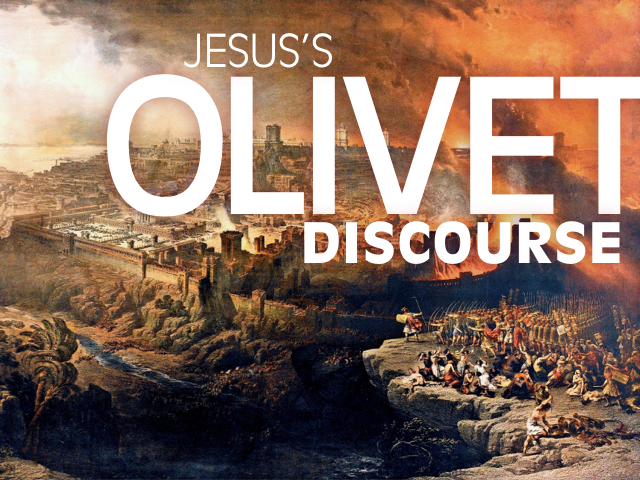
Up to now in his Olivet Discourse, Jesus only spoke of the events leading up to the Roman-Jewish War in the year 70. The first Christians would get persecuted, but the gospel would spread all over the Roman Empire. And then these events would happen—the events his students first asked him about; the events where not one of the temple’s impressive stones would be on top of another. Mk 13.2, Mt 24.2, Lk 21.6 The events which’d happen during 37 years later, within lifetime of the very first Christians… though James, Simon Peter, and Andrew wouldn’t live to see them.

Jesus starts by mentioning the βδέλυγμα ἐρημώσεως/vdélygma erimóseos, “disgusting spoiler”—not in the sense of ruining the ending of a movie, but ruining whatever you place it upon. It’s a term from Daniel, which was actually fulfilled by Antiochus Epiphanes in 141BC, but Jesus brings it up again ’cause history is about to repeat itself.

Mark 13.14 KWL
“When you see ‘the disgusting spoiler’
placed where it mustn’t be” (understand, reader?)
“then those in Judea: Flee to the hills!”
 
Matthew 24.15-16 KWL
15 “So then when you see ‘the disgusting spoiler’
as said to the prophet Daniel,
put in the holy place” (understand, reader?)
16 then those in Judea: Flee to the hills!
 
Luke 21.20-21 KWL
20 “When you see Jerusalem encircled by army units,
then know this: Its spoil has come near.
21 Then those in Judea: Flee to the hills!
And those in the middle of it: Leave!
And those in the fields: Don’t enter the city!

If you’re alive to see these things—and you might be—get out. Don’t even go back to get your stuff. Mk 13.15-16 It’s gonna be awful. The worst.

Jesus is speaking of the Roman-Jewish War, but a number of Darbyist “prophecy scholars” are absolutely sure he’s not. Or not entirely; some will confess he’s speaking of the Roman-Jewish War too. But they insist he’s primarily speaking of a future disgusting spoiler, an End Times “abomination of desolation” to be committed by the Beast in the temple.

What temple? Well I’ll get to that.

18 October 2022

So you feel unclean. Pray anyway.

Probably the most common reason Christians don’t pray… is because we don’t feel clean enough.

I’m not talking about ritual cleanliness. (Most Christians don’t even know what that is anyway: It’s the idea of ritually washing yourself before worship. Since the Holy Spirit now dwells in us Christians, we don’t need to ritually wash before temple; we are his temple.) But it’s not that; it’s feeling clean, because we feel dirty, because we sinned. Maybe we sinned recently; maybe we didn’t, but we’re aware we sinned a lot over the past few weeks, so we figure we’re not worthy to approach God. He’s too holy, and we’re too gross.

Some Christians even claim God is repelled by our sins. If there’s any sin in our lives, there’s no point in approaching God ’cause he’ll just turn away from us and ignore our prayers. Or even leave, in offense and outrage, like a heavenly snowflake.

It’s because these Christians either don’t understand, or don’t truly believe, Jesus covers everything. They don’t recognize when God accepted us as his kids, he was entirely aware of every sin we were gonna commit in the future. Even sins we’re committing this very instant. (Cut that out, by the way.) But Jesus paid for everything. God doesn’t dole out grace on a sin-by-sin basis: You and he are good. You’re his kid. He’s happy to talk with you!

Now I can say this, and you might understand it and sorta believe it… but Christians still find this a really difficult hangup to get past. For three reasons.

  1. Partly it’s because other people don’t act this way at all, so it’s a wholly foreign mindset, and we’re not familiar with it.
  2. Mostly it’s because it’s our mindset. We’re so used to karma! We can’t fathom the idea of preemptive total forgiveness. We’d certainly never do it, so of course it’s hard to imagine God doing it.
  3. And, y’know, the devil. It’d prefer we never pray, and the longer it can keep us acting upon our unhealthy beliefs, the better.

16 October 2022

The gospel preached to all before the end.

Mt 24.14.

Last week I discussed the verse about not completing all the cities of Israel before the Son of Man comes, Mt 10.23 and how that’s neither part of Jesus’s Olivet Discourse, nor a prophecy of the End: It’s about Jesus sending out the Twelve to preach the gospel, Mt 10.5-7 and how he’d catch up with them at the end of this specific mission. Christians who project End Times stuff onto this passage are quoting it out of context—a common practice among End Times “prophecy scholars,” who aren’t actually scholars.

Some of the reason these “prophecy scholars” quote that verse is because of this verse, which is in the Olivet Discourse. They think it’s a parallel verse. It’s also found in Matthew, and to help you understand it better, I’ll also quote the verses right before it.

Matthew 24.9-14 KWL
9 “Then they’ll hand you over to tribulation and kill you.
You’ll be hated people to every ethnic group because of my name.
10 Then many will be tripped up,
will betray one another, will hate one another.
11 Many fake prophets will be raised up,
and will lead many astray.
12 Because of the exponential spread of lawlessness,
the love of many will grow cold.
13 One who perseveres to the end—
this person will be saved.
14 And this gospel of the kingdom
will be proclaimed to the whole civilization
as a witness to every ethnic group.
Then the end will come.”

The “prophecy scholars” claim the whole of the Olivet Discourse is about a great tribulation right before the second coming. It’s not. After Jesus told his students the temple would be destroyed, they wanted to know when, so he told ’em what’d happen before it was destroyed… in the year 70, during the actual great tribulation of the Roman-Jewish War. All this stuff was fulfilled by that war. If “prophecy scholars” know anything about the Roman-Jewish War (and too often, they don’t) they’ll claim Jesus’s prophecies are actually gonna happen again during the End Times; that the Roman-Jewish War is just a foreshadowing of what the Beast will do to the entire world. But Jesus’s prophecies about the Beast are in in Revelation, not the gospels. These “prophecy scholars” are trying to add details to what Jesus disclosed in Revelation—and hey, isn’t there a curse upon anyone who tries to add or take away from that book? Rv 22.18-19 Illegitimately adding the Olivet Discourse to End Times prophecy definitely sounds like something that’d activate that curse.

But back to the Discourse. Jesus says the gospel of God’s kingdom is getting preached to the whole civilization before the end comes. Does he mean the End-end?—the end of the End Times, the days before his second coming, the last few years before the millennium? Or does he simply mean the end of the temple, which is entirely what the Olivet Discourse is about? As you’ve likely guessed, I’m gonna say it’s that second thing.

“Hold up,” a hypothetical prophecy scholar is gonna object, “the gospel wasn’t preached to the entire world by the time the temple was destroyed. It hadn’t reached the Germans, nor the sub-Saharan Africans, nor the Chinese, nor the Russians, nor the indigenous Americans and Australians and Pacific islanders. Only the Roman Empire had heard the gospel. That’s it.”

Well yeah. That’s what Jesus said would happen.

12 October 2022

Be kind. For once.

We Christians don’t have a reputation for being kind.

I wish it weren’t so, but I know a lot of pagans, and kindness is definitely not the first thing which comes to mind when they think of Christians. More like easily outraged, quick to judge, quick to condemn, holier than thou, just as bad as any pagan but such utter hypocrites about it, impatient, shunning, unforgiving buttholes. And if you were immediately offended by my using that word “buttholes,” you kinda proved my point.

Every so often I’ll read a discussion on Reddit which brings up Christianity, and the immediate response of the commenters—even when an atheist didn’t start the discussion!—is how thoroughly awful Christians are to everybody. Some of the critics will even be fellow Christians!—“Yeah, we suck.”

Then someone will point out Jesus. And the inevitable response of everyone, pagans and Christians alike—atheists included!—is he doesn’t suck. He’s a good guy; he taught peace and love, hung out with sinners and whores and lepers, railed against hypocrites… and unlike his followers, actually forgave sins. Jesus always gets a thumbs-up. Christians, of course, not.

It annoys me to no end. What’s with all the Christian jerks? Don’t we know better? Shouldn’t we?

I’m not gonna perpetuate the myth our fleshly attitudes are the leading cause of unbelief. They certainly don’t help, but people who don’t believe in Jesus are simply looking for any excuse not to. Otherwise they’d be Christian: “Well Christians suck, but despite them, Jesus is legit. So I’m gonna follow him on my own.” They’d be one of those Christians who shun all the other Christians and won’t go to church. But no matter how much they claim to respect Jesus, they still won’t follow him… because hypocrisy isn’t solely a Christian practice, y’know.

Anyway. The reason there are awful Christians is ’cause we’re deficient in love—and love is kind. 1Co 13.4 Christians who don’t love, who swap out the charitable, unconditional love of God for the vastly inferior substitute of reciprocity: A “love” which expects to receive “love” in return, and if it doesn’t, nevermind; it’s withdrawn. A “love” which demands payback, which is only offered to “worthy” and “good” people. A “love” that’s largely based on karma.

Which is a massive problem. Χρηστότης/hristótis, the word we translate “kindness,” Ga 5.22 more accurately means “graciousness.” It’s the grace of God, in action. It’s one of God’s character traits—which is precisely what the Spirit’s fruit is. When we’re fruity, we exhibit God’s grace: We’re kind, like he is.

Whereas when we’re not kind, not gracious, we’re still gonna be fuming about my dropping the B-word seven paragraphs ago. And plan to write an angry email, then never, ever read this blog again. And feel totally justified in such behavior. Grace and kindness is for people who don’t use rude words, even if they’re TV-safe words.

When we’re kind, we’re gonna be gracious, friendly, generous, humble, courteous—and nice. Yeah, I know plenty of Christians who are quick to point out kind and nice aren’t the same thing: Niceness is entirely about getting along with other people. And people will frequently lie, deceive, stifle their opinions, compromise their standards, or choose other evils, just to get along with others. They’ll be nice hypocrites.

But I would object we don’t have to lie and deceive in order to be nice to others. We can be gracious! We can forgive. We can agree to disagree. We can be patient. And hey, if all it takes to get a better reputation with others is to simply be pleasant to them, why are we objecting to this? Why is being a thorn in everyone’s side so fundamental to our integrity?

10 October 2022

Covenant: How God makes our relationship official.

COVENANT 'kəv.ən.ənt noun. Agreement.
2. [Law] A contract drawn up by deed, or a clause in a contract.
3. [Theology] An agreement which creates a committed relationship between God and his people—such as the covenants between the LORD and Abraham, Moses, and David, or between Jesus and Christians.
4. [verb] Agree by lease, deed, or other legal contract.
[Covenantal kəv.ən'ənt.əl adjective.]

In our culture, “covenant” is a fancier, or more formal, way of saying “contract.”

Because that’s what our English word means. It comes from the Latin word convenire, “go together,” which evolved into the French word, then our English word. Early bible translators used it for the Hebrew word בְּרִית/berít, “treaty, alliance, constitution, ordinance, pledge,” and the word the Septuagint used to translate it, διαθήκην/diathíkin, “will, testament, agreement, arrangement.” Y’notice the Hebrew word has more of a sense of loyalty and diplomacy, and the Greek word has more of a sense of carrying out one’s wishes. Whereas the way we tend to use our English word “covenant” nowadays is either to talk about how sacred and binding marriage oughta be… or about the restrictions a neighborhood puts on the homeowners who live in it, and usually the penalties for violating those restrictions.

Not sure whether any of these concepts describe what God actually does with his covenants in the bible.

And when you ask your average Christian what a covenant is, most of the time we lean hard towards the idea it’s an agreement… and it’s binding. I’ve heard more than one preacher claim covenant means “a contract which cannot be broken.” Which certainly isn’t the way we use the word nowadays. Marriage covenants are dissolved all the time. Neighborhood covenants get changed whenever new leaders get elected; heck, most of those people run for office specifically to either make the covenants stricter or looser! In fact those people who claim a covenant is an unbreakable contract: Many of ’em claim God did away with the Law and replaced it with Jesus’s new covenant… so how’s it an unbreakable contract if God considers it null and void? (Isn’t the Law part of God’s word?—and isn’t it true God’s word never returns void?)

Frankly, the reason our English dictionaries say covenant means an agreement—that it’s nothing more than a verbal or written contract between interested parties—is because that’s how we use the word. A covenant is a contract; a contract is a covenant; they’re synonyms. “Covenant” sounds harder to get out of, but it’s really not. Ask any divorced Nevadan.

So if we wanna understand what covenants in the bible are all about, we need to put aside our English word and our culture’s ideas about covenant, and look at how God set up a berít or two with humanity.