23 October 2025

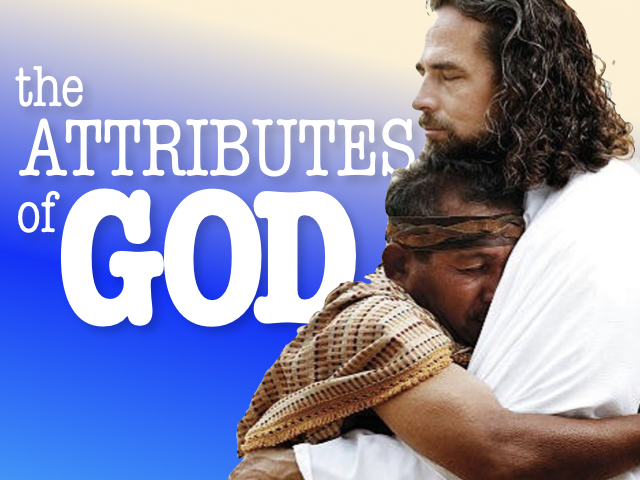
God is transcendent.

TRANSCENDENT træn'(t)sɛn.dənt adjective. Beyond or above the range of human experience.
2. Existing separate from, and not limited by, the material universe.
3. Extraordinary, exceptional.
[Transcendence træn'(t)sɛn.dəns noun.]

Had to start with the definition because when people use the word, they usually go with the third definition. Transcendent is usually just a synonym for awesome—people wanna use an out-of-the-ordinary word for a superlative thing, and sure, “transcendent” works.

But when we use this word in Christian theology, we mean something a lot more specific. We’re affirming not just that God is very different from us, but that he’s significantly beyond us in every way. God is not merely the greatest thing, the greatest being, in the universe. He’s far greater than the universe he created. He’s beyond even that. He’s far, far greater than we can ever describe him.

No, this isn’t just hyperbole; it’s not humanly possible to accurately describe God’s greatness. He’s unlimited by power, by space, by time—so unlimited the only way it’d be possible for us to really get to know him, is he had to come down to our level. Which he did. Emptied himself of all his power (the thing about him we covet most) and became human; became Jesus. Pp 2.6-8 Who then tries to explain how God is to us as best he can, Jn 1.18 considering how astoundingly dense we humans can be.

Try describing the unlimited God with a limited human vocabulary. Try putting an accurate picture of the unlimited God into the limited space of a human brain. Jesus alone is the one who can do it, ’cause he came down from heaven. But even he hasn’t told us everything about God; even Jesus’s apostles haven’t told us everything about him. Jn 21.25 And Jesus preferred to describe God and his kingdom with metaphors and parables, not specific language; probably because specific language will get in the way.

So what we humans typically do instead of specifically describing who and what God is, is we compare him with things and people he’s greater than, and point out he’s obviously greater. We struggle to say what he is, but we can more easily say what he’s not. We talk about how Jesus and the prophets describe him in the scriptures; we have those teachings at least. It’s a start. But we can’t go much further.

Not that various Christians haven’t tried—and gone about it all wrong. Like when Thomas Aquinas tried to fill in some of the blanks with Aristotelian philosophy. That’s how we got the popular Christian myth God doesn’t change—because Aristotle believed change only makes you better or worse. A God who improves doesn’t sound divine enough for him; a God who gets worse definitely doesn’t. No room in Aristotle nor Thomas’s worldviews for a third option—a God who changes and remains at his best. A God who transcends our meager ideas of what’s “best”—who gives up divine prerogatives to become human, yet always remains God.

22 October 2025

The Epicurean Paradox: Why is there evil?

Back in 2020 a reader wanted me to tackle the Epicurean Paradox, as it’s called. So I did. But I’ve had to update the article a bit.

Epicurus of Athens (Greek Ἐπίκουρος/Epíkuros, 341–270BC) is the founder of “the Garden,” a philosophy school. He’s a materialist, meaning he didn’t bother with spiritual stuff, and didn’t believe the gods intervened in human affairs. He’s also an empiricist, meaning he believed all knowledge comes from what we perceive with our five senses—not intuition, not rationalization; ideally you wanna go with the scientific method, but that wasn’t invented yet.

Epicurus believed the purpose of philosophy is to promote peace and tranquility, and alleviate suffering. Over the centuries “epicurean” evolved into a synonym for “foodie,” which is weird ’cause Epicurus preferred simple meals. He wrote more than 300 works on all sorts of subjects, but we only have three books and various random quotes. The Epicurean Paradox is one of those quotes.

And for all we know, Epicurus didn’t even come up with it. The paradox was a popular ancient meme, and wound up with Epicurus’s name attached to it, much like the Prayer of St. Francis. I wouldn’t be at all surprised if it predates Epicurus; somebody had to have thought of it before him. In any event Christian philosopher Lucius Caecilius Firmianus Lactantius (ca. 250–325) quotes the paradox in his book De ira Dei/“On God’s Wrath,” in which he critiqued the non-foodie Epicureans of his day. My translation:

[Epicurus] said God either wants to eliminate evil and can’t; or can, but doesn’t want to; or neither can nor wants to; or can and wants to. If he wants to and can’t, he’s weak—which fails to describe God. If he can but doesn’t want to, he’s jealous—which is equally alien to God. If he neither can nor wants to, he’s jealous and weak—therefore not God. If he can and wants to, which is the only proper conclusion… God, where are you? Lactantius 13.20-21

It’s obviously not an exact quote of Epicurus, ’cause as a polytheist he’d’ve referred to the gods, not God. Anyway, the gist of it worked its way down to Scottish philosopher David Hume, who put it this way in his 1779 book Dialogues Concerning Natural Religion—placed in the mouth of his character Philo.

Epicurus’s old questions are yet unanswered. Is he willing to prevent evil, but not able? then is he impotent. Is he able, but not willing? then is he malevolent. Is he both able and willing? whence then is evil? Hume 10

Clearly Hume never read the source of the Epicurean Paradox, ’cause Lactantius actually does answer the old question. Which I’m now gonna quote from the Ante-Nicene Fathers translation, “A Treatise on the Anger of God Addressed to Donatus,” ’cause I don’t feel like translating the whole of it.

For God is able to do whatever he wishes, and there is no weakness or envy in God. He is able, therefore, to take away evils; but he does not wish to do so, and yet he is not on that account envious. For on this account he does not take them away, because he at the same time gives wisdom, as I have shown; and there is more of goodness and pleasure in wisdom than of annoyance in evils. For wisdom causes us even to know God, and by that knowledge to attain to immortality, which is the chief good. Therefore, unless we first know evil, we shall be unable to know good. But Epicurus did not see this, nor did any other, that if evils are taken away, wisdom is in like manner taken away; and that no traces of virtue remain in man, the nature of which consists in enduring and overcoming the bitterness of evils. And thus, for the sake of a slight gain in the taking away of evils, we should be deprived of a good, which is very great, and true, and peculiar to us. It is plain, therefore, that all things are proposed for the sake of man, as well evils as also goods. Lactantius 13

For Lactantius, God can but doesn’t want to—not because he’s evil, but because he’s gonna teach us to fight evil alongside him, and that’s good.

I like Lactantius’s answer. It’s not my answer, but it’s a darned good one. But it’s an answer which clearly won’t work at all for nontheists like Hume. Really, such people use these arguments to prove there’s no God in the first place, and any answer to the problem of evil and pain which involves God is unacceptable. I don’t know that Epicurus was nontheist, but as a materialist he didn’t figure a relationship with the gods was even possible, so it wouldn’t’ve worked for him either.

Let’s not forget those pagans who don’t even want such a relationship with God. They wanna believe in him, and maybe interact with him if he makes ’em feel good, but they don’t care to follow him all that much. Really they just want evil and suffering to stop already. And definitely don’t wanna be recruited into the battle to fight it; isn’t that God’s job?

21 October 2025

Are our prayers consistent with the scriptures?

There are many reasons to read our bibles. One, obviously, is so we know God hears our prayers and answers prayer requests—sometimes with “no,” but that’s an answer!—and another is so we know God’s character and intentions, and know why he’d answer yes or no.

And another is so we know we’re not praying for something God forbids. ’Cause that’ll happen. God spells out what he approves of, and what he doesn’t, in the scriptures… but immature Christians don’t know the scriptures, and will pray for all the stuff God condemns. They’ll pray for evil things, immoral things, deceptive things, idolatrous things.

We’ll ask God for money—and we’re not even hiding how we worship money instead of Jesus, and we’re not even asking God to fund our daily provisions; we’re asking for conveniences, comforts, and luxuries.

We’ll ask God to smite our enemies. Not because our enemies are evil; sometimes they’re actually not! But they’re competition, and we wanna win. I’ve heard a lot of prayers before sporting events, both when I played in school, and among fans when professional teams play nowadays. A lot of vituperative prayers are made against the opposing team. Do the players and managers of those teams deserve any of the curses called down upon them? Not in the least. You think God appreciates any of this behavior? Not in the least. But fans do it anyway. Partisans do too.

We’ll ask God to hide our sins. Nevermind the fact God specializes in exposing hidden sins—if we don’t know our bibles, we won’t realize this, and actually think God might help us in our coverup. And he won’t. At all. He’ll tell on you. Ac 5.3 God’s our refuge in times of trouble, Ps 46.1 but not when we created and deserve the trouble, and definitely not when God’s empowering our prosecution.

We’ll even ask God for sin. We’ll ask him for idols; I already brought up money, but there are plenty of other things we prioritize over God. We’ll ask him for the things we covet—nevermind the fact we’re forbidden to covet. Ex 20.17 We’ll ask him to aid and abet us while we lie, cheat, and steal. While we abuse enemies and strangers. While we deliberately overlook the needy. We’ll justify all that lying, cheating, and stealing to ourselves, and presume that might be good enough for God too, and of course it’s not. Doesn’t matter what “righteous cause” you think you have which justifies evil.

I already brought up partisans; some of ’em are far more familiar with what their party proclaims than what the scriptures do. They naïvely presume their party is God’s party, and always does the right and godly thing, and that’s why they pray for their party’s wishes and success. Now, what if the party’s gone wrong?—what if it’s actually in opposition to God? Well, they can’t abide that idea; don’t you dare even say such a thing. They’ll persecute you like the pagan kings of Israel persecuted the prophets who dared rebuke the king on the LORD’s behalf. But obviously if the party’s gone wrong, God’s not gonna grant its members’ unrighteous prayer requests.

I could go on, but you get the gist. If you know God—if you know how your bibles describe God—there are plenty of things you won’t pray. Or you might pray ’em anyway, without thinking, but you do know better, and need to stop it.

20 October 2025

Be good to one another.

1 Peter 3.8-15.

Simon Peter starts today’s passage with τὸ τέλος/to télos, “The last [thing],” but there’s two more chapters in his letter. How is this his last thing? Well it’s the last of his instructions to his readers about how we oughta live as Christians.

Scholars call these types of instruction “household codes,” but they’re not properly codes—meaning a list of laws one has to live under—so much as the right attitudes one should have when living under a patriarchal environment. You remember Peter began by addressing how people should live under Roman government, then how slaves and servants oughta be, then how wives and husbands oughta be. Some of these “household codes” also include instructions to the children of the family, but Peter doesn’t do that. Paul does. Ep 6.1-3, Cl 3.20

So this’d be the last part of Peter’s code—how Christians in general oughta be with one another.

1 Peter 3.8-15 KWL
8The last thing:
Everyone ought to be united,
sympathetic, loving one’s family,
compassionate, humble-minded.
9Not returning evil for evil,
nor insult for insult.
On the contrary, blessing,
because you’re² called for this reason—
so you² might inherit a blessing.
10For “One wanting to love life,
and to see good days:
Stop the tongue from evil,
and the lips from speaking deceit.
11Turn away from evil. Do good.
Seek peace and pursue it.
12Because the Lord’s eyes are on the right-minded,
and his ears are for their request,
and the Lord’s face is on evildoers.” Ps 34.12-16
13When you² become zealous to do good,
who will harm you²?
14But if you suffer for righteousness,
you’re awesome.
“Don’t be afraid of their fear,
nor should you² be bothered.” Is 8.12
15Sanctify Christ the Lord in your² minds,
always ready with a defense
for everyone who asks you² for a word
about the hope in you.

17 October 2025

Jesus and Peter walk on water.

Mark 6.46-52, Matthew 14.23-33, John 6.16-21.

After Jesus had his students feed 5,000-plus listeners, while he was handling the crowd who wanted to king him, he sent the kids to the far side of Lake Tiberias (i.e. “the Sea of Galilee,” though it’s not as big as a sea. The Great Lakes are way bigger.) So as Jesus left the crowd to go pray, the students rowed their way south. Wasn’t easy, ’cause the weather didn’t cooperate.

Mark 6.46-47 KWL
46 Saying goodbye,
Jesus goes off to a hill to pray.
47Later, the boat is in the middle of the lake,
and Jesus is alone on land.
Matthew 14.23-24 KWL
23Saying goodbye to the crowds,
Jesus goes up a hill by himself to pray.
Later he is alone there.
24The boat is already many stadia away from land,
tortured by the waves,
for the wind is against it.
John 6.16-18 KWL
16When it becomes later,
Jesus’s students go down to the lake,
17get into a boat,
and go to the far side of the lake, to Capharnaum.
It became dark,
and Jesus hasn’t yet come to them.
18The lake’s wind increased,
blowing greatly.

The title of this piece shoulda tipped you off what comes next: Jesus will walk to them on the surface of Lake Tiberias. You’ve heard the story before. Heck, everybody’s heard it before; walking on water is one of the most famous stunts Jesus ever pulled.

But not everybody knows it in context. Don’t know what happened before it; don’t know its consequences. In fact it didn’t really have any. It should have had a massive impact on the students—it’s meant after all to teach them the Holy Spirit makes the impossible doable. But like Mark points out at the end of the story, these kids were mighty dense.

16 October 2025

God has a soul.

In the past I’ve stated God has a soul, and it makes various Christians balk at the idea.

For two reasons. The first and dumbest is they have some weird beliefs about what a soul is. Some Christians use “soulish” as a synonym for “fleshly,” so they have some really negative ideas about the soul—so they really don’t wanna think of God as having a soul. To them, a soul is like the id in Freudian psychology—it’s selfish and totally depraved, and God’s absolutely not depraved, and how dare I describe him in such a way. Except I’m not! They’re defining “soul” wrong.

The other, which makes a little more sense, is they believe humans have souls—which we do; God put it in us. Ge 2.7 But they also believe only humans have souls. They think animals don’t have souls—and never mind that the Latin word for soul is anima, which is where we get our word “animal”; and never mind where Genesis states animals have a נֶפֶשׁ/neféš, “soul.” I know; most bibles translate it “life,” like yea—

Genesis 9.4 NRSVue
“Only, you shall not eat flesh with its life, that is, its blood.”

That’s because soul means a lifeforce. Humans have a lifeforce; that is, when we’re alive. Animals, which are also alive, also have a lifeforce. As do plants and fungi and bacteria. And God, who’s a living God, Dt 5.26, 1Sa 7.26, Ps 42.2, etc. quite obviously has a lifeforce; he lives forever, so it’s probably the most potent lifeforce in the universe. He has a soul.

Of course if reason doesn’t convince people, I can always quote more bible.

Leviticus 26.11-12 NRSVue
11“I will place my dwelling in your midst, and I shall not abhor you. 12I will be your God, and you shall be my people.”

Naturally there are gonna be those who claim God doesn’t literally have a soul, and even though this is a direct quote from the LORD himself, they’ll claim God’s just anthropomorphizing himself—he’s describing himself in human terms for our benefit. Since we have souls, and “my soul” is a common synonym the ancient Hebrews had for themselves, God’s just borrowing our language.

Except no he’s not. Again, a soul is a lifeforce. God interacts with humanity in a way an impersonal force does not; in a way which makes it blatantly obvious God’s a living being. Electricity can’t love us. Gravity can’t forgive us—and typically doesn’t. Magnetism can’t promise things to the people it has a relationship with. The universe doesn’t care whether we live or die, and has no plans whatsoever to resurrect us after we die. God does.

Instead of saying God has a soul, plenty of Christians prefer to put it this way: “God’s a person.” There’s a catch though: When we’re describing God, the word “person” means something extremely specific in Christian theology… and has to do with trinity. Historically, Christians have taught God is three persons in one being. Saying God’s a person kinda implies we’re claiming God’s one person, i.e. not a trinity. I’m not claiming any such thing, and don’t wanna give people the wrong idea. “God has a soul” makes my point way better.

Why’s it important to point out God has a soul? Because not everybody believes he does. There are an awful lot of pantheists out there, and pantheists believe “the universe” is God; they’re one and the same. They might use anthropomorphic language to talk about the universe and what it wants, and might even call it God and use “he” and “she” pronouns. But they’re not talking about a personal, living being. They’re talking about an impersonal, unconscious, non-sentient thing. Their idea of God contains souls, but he himself doesn’t individually have one.

And some of that idea has leaked into Christianity just a little. I’ve known Christians who talk about “what the universe wants,” as if the universe was sentient and was God. Challenge them on it, and they’ll backtrack a little—no they don’t think the universe is sentient, no they don’t think it’s God. But they’ve been listening to pagans talk about how to get what they want out of the universe, and they’re starting to get adopt some of those pagan ideas… and it’s messing up their picture of God. So we gotta clarify. The universe doesn’t have a soul. (It contains souls, but it itself doesn’t have one; it’s not alive, not sentient.) But God has a soul, and is very much alive.

15 October 2025

The Great Commission. [Mt 28.18-20]

Matthew 28.18-20 KJV
18And Jesus came and spake unto them, saying, All power is given unto me in heaven and in earth. 19Go ye therefore, and teach all nations, baptizing them in the name of the Father, and of the Son, and of the Holy Ghost: 20teaching them to observe all things whatsoever I have commanded you: and, lo, I am with you alway, even unto the end of the world. Amen.

There are two passages which Christians tend to call Jesus’s Great Commission: The instructions to his students in the Long Ending of Mark, and this passage here. This one’s shorter, so more Christians have memorized it. Probably a good idea for you to memorize it. It’s not just a commission for the first apostles; it’s for every follower of Jesus ever since. Including you.

In it, Jesus instructs his students to disciple the ἔθνη/éthni, “ethnics,” which the KJV translates “nations”; which the students would’ve understand to mean gentiles. This is why some skeptics aren’t so sure Jesus legitimately said this: If he told his first followers to go to the gentiles, why’d they struggle so much with the idea, they had to have a whole council about it? But if you’ve ever worked with kids, you know they don’t always listen. Jesus traveled to other Roman provinces in the area—to the Dekapolis, to Tyre and Sidon and provinces north of the Galilee, to Samaria—and while there were plenty of ethnic Israelis in those areas, you know there were gentiles intermixed among ’em. He’d demonstrated many times his message was for everyone. So yeah, this is a legitimate Jesus command. Go teach all nations.

We’re to teach everyone, everywhere, everything Jesus taught us. We’re to baptize people in the name of the trinity. We’re to create new disciples, new students of Christ, new Christ-followers, new Christians, to preserve what he teaches, and obey him. And, lest we think he’s abandoned us to do it alone, he intends to be with us every day till the monumental job is done.

Which is… when? At the second coming? Seven years before? A thousand years after? Jesus only says “the end of the world,” which is kinda left open to interpretation. After all he’s gonna rule the world for a millennium, so the world won’t end for a mighty long time. All we do know is this age has an end-point. When that day comes, Jesus expects his kingdom to be full of people whom his apostles brought to him. We gotta get busy!

14 October 2025

Too guilty to pray.

There’s two kinds of guilt: The emotion, and the legal status. Today I’m talking about the emotion.

Not that there aren’t people who don’t bother to pray because of the legal status—because, they say, they’re far too evil to talk to God. Rubbish; the only thing really stopping ’em from talking to their Father, is their emotion, and probably their pride—they’re just so bad, God can’t abide them. That’s rubbish too.

’Cause if the devil, which is probably as pure evil as beings can get (though there are definitely some humans who give it solid competition) had no trouble talking with God, Jb 1.6-7 we all know God isn’t so holy he can’t interact with evil creatures. Jesus ate with sinners, remember? So much so, it bugged snobs.

So yeah, I’m writing about the emotion of guilt—that feeling you’ve done wrong and deserve chastisement for it. Tied together with it is the irrational fear God’s gonna chastise you, when you approach him: “How durst thou stand before me and speak unto me, thou filthy sinner? Half a mind have I to smite thee with shingles.” And visions of this angry KJV-speaking cosmic hairy thunderer dance through our fearful brains.

’Cause we completely forgot God is Jesus. Was Jesus this way towards people who approached him? No. (Well okay, he acted a bit racist towards this one Syrian, but that was likely a test. Mt 15.21-28) When we turn to God in prayer, he doesn’t blast us with wrath and anger. He confronts us like the father in the Prodigal Son Story:

Luke 15.20-24 The Message
20“He got right up and went home to his father.
“When he was still a long way off, his father saw him. His heart pounding, he ran out, embraced him, and kissed him. 21The son started his speech: ‘Father, I’ve sinned against God, I’ve sinned before you; I don’t deserve to be called your son ever again.’
22“But the father wasn’t listening. He was calling to the servants, ‘Quick. Bring a clean set of clothes and dress him. Put the family ring on his finger and sandals on his feet. 23Then get a grain-fed heifer and roast it. We’re going to feast! We’re going to have a wonderful time! 24My son is here—given up for dead and now alive! Given up for lost and now found!’ And they began to have a wonderful time.”

The son was feeling mighty guilty—but his father’s response was, “I have my boy back! Let’s party!” In a healthy relationship with a healthy father, your dad’s not gonna smack you around for screwing up; life will already do that aplenty. He’s just gonna love you, and be there for you. That’s God. That hairy thunderer?—that’s not a healthy father, ergo that’s not God. Stop letting that false image obstruct your relationship with God. Jesus describes his Father in his parable. That’s what we should expect—no matter how guilty we might feel.

13 October 2025

“Wives, be subject to your husbands.”

1 Peter 3.1-7.

Just after Simon Peter addresses how household servants oughta live under difficult masters, next he deals with how wives oughta live under difficult husbands. And again, he’s speaking to people in a different culture, in the Roman Empire, where women lacked rights and couldn’t always escape their tyrannical spouses. They’d be suffering in the very same way a slave would under a despotic master. Does God care about them too, and have grace for them too? Of course he does.

And of course tyrannical spouses misuse this passage, and claim it justifies all their evil. It does not. Plenty of other scriptures warn ’em God doesn’t approve. Peter warns ’em too, in verse 7. In no way does any part of this passage negate those other passages, and in no way should you trust any pastor who suggests otherwise.

1 Peter 3.1-7 KWL
1Likewise you² women submitting
to your² own men
—and if a certain man doesn’t obey the word,
perhaps they’ll be won over without the word
through the lifestyle of their women,
2seeing their holy lifestyle
in fear.
3About them:
Don’t be externally like the world—
with elaborately braided hair,
decorated with gold,
or dressing in conspicuous clothing.
4Instead be like a private, thoughtful person,
looking into the incorruptible things
of a gentle, quiet spirit,
who is precious in God’s sight.
5For holy women who hope in God
lived this way at some point,
arranging themselves in submission
to their own men,
6like Sarah listened to Abraham
and calls him Master.
You² who do good deeds are her daughters,
and aren’t afraid of anything startling.
7You² men likewise—
living with your² women
with the understanding
that they’re like a weak utensil;
showing them honor
like they’re your² fellow heirs of living grace
—lest your² prayers be cut off.

I should remind you: Most bibles tend to translate women and men (Greek γυναῖκες/yinékes and ἄνδρες/ándres) as “wives” and “husbands.” Contextually, that’s usually what the New Testament authors meant. But not always. A patriarch was responsible for all the women of his house, whether they were married to him or not; this’d include unmarried sisters and daughters, widowed mothers-in-law, and any other family members under his protection, and of course household servants and slaves. They’d also be “his” women—and for the women, he’d be “their” man. They wouldn’t be married; they’d be in no sexual relationship (or at least they really ought not be!) but as the ruler of the family, they were expected to heed his authority and wisdom, and he was expected to take them into consideration and not act unilaterally. Did they always do this? Nah. Hence Peter’s need to remind ’em to do so.

Like most people dictating their letters, Peter uses some run-on sentences, out-of-place clauses, and forgets to use verbs. Makes translation and interpretation tricky—but not impossible! What he’s basically saying is: Christian women, be a good devout example for your crummy men. They may not listen to God’s word, but maybe despite this, they’ll listen to you; they’ll respect you, and be won over by your Christlike behavior. Hey, it’s been known to happen!

10 October 2025

The Five Thousand try to crown Jesus.

John 6.14-15.

Right after Jesus and his students feed the 5,000 in the Galilee, this happens:

John 6.14-15 KWL
14So the people,
seeing the sign Jesus does,
are saying this:
“Truly, this is the Prophet
who comes into the world!”
15So Jesus,
knowing they are about to come and seize him
so that they might make him king,
goes back again into a mountain,
alone by himself.

The synoptic gospels also tell this story, but Mark and Matthew end it thisaway:

Mark 6.45 KJV
And straightway he constrained his disciples to get into the ship, and to go to the other side before unto Bethsaida, while he sent away the people.
Matthew 14.22 KJV
And straightway Jesus constrained his disciples to get into a ship, and to go before him unto the other side, while he sent the multitudes away.

Mark and Matthew don’t say why Jesus ordered his students to “straightway” (Greek εὐθέως/efthéos, “quickly”) get into the boat, but John certainly fills in that blank: The crowds believed the miracle of feeding an entire town’s worth of people with one boy’s lunch Jn 6.9 was a σημεῖον/simíon, a sign from God. In their bible, the last time somebody miraculously fed a massive crowd with bread was when Moses ben Amram led the newly-freed Hebrews into the wilderness, and the LORD fed ’em manna. And didn’t Moses say this?—

Deuteronomy 18.15-19 KJV
15The LORD thy God will raise up unto thee a Prophet from the midst of thee, of thy brethren, like unto me; unto him ye shall hearken; 16according to all that thou desiredst of the LORD thy God in Horeb in the day of the assembly, saying, Let me not hear again the voice of the LORD my God, neither let me see this great fire any more, that I die not. 17And the LORD said unto me, They have well spoken that which they have spoken. 18I will raise them up a Prophet from among their brethren, like unto thee, and will put my words in his mouth; and he shall speak unto them all that I shall command him. 19And it shall come to pass, that whosoever will not hearken unto my words which he shall speak in my name, I will require it of him.

The LORD goes on, describing a fake prophet in case anybody tries to pull a fast one on the Hebrews, Dt 18.20-22 and Christians really oughta memorize that passage, because many a fake prophet has successfully pulled some fast ones on us.

But even though people recognize (and are meant to recognize) the LORD is describing any prophet who steps up and says, “The LORD told me something,” Pharisees claimed this passage is also an End Times prophecy. At some point before the End, there’s gonna be a Prophet-Like-Moses who, just like Moses, is gonna rescue Israel from their enemies, take ’em back into the wilderness, and feed ’em manna.

Is Jesus this Prophet-Like-Moses? Yes he is. Simon Peter said so. Ac 3.20-26

Now, is he gonna do what Pharisees believed he’d do? Some of it. Definitely not all. Fr’instance he is gonna rescue Israel from its enemies… but he’s not taking Israel into the wilderness to feed ’em manna; there’s no need for that. Unless “feed them manna” is a metaphor for “teach them the word of God”—but again, there’s no need to take ’em into the wilderness for that.

In any event that’s the quandary Jesus now found himself in. Yes he’s the Prophet; no, he’s not gonna do that.