26 March 2023

Could’ve stopped it at any time.

Matthew 26.50-54, John 18.3-9.

When Jesus was arrested in Gethsemane on the morning of 3 April 33, the knee-jerk response of his students, same as every human, is fight or flight. Some of them fled. And some of them fought.

To some degree it was really stupid of them to fight. The senators had sent their police, along with a mob—you might call it a posse comitatus, but there was no such procedure back then for formally deputizing a mob. Basically it was, “Grab your staff and machete; we gotta go arrest a blasphemer,” and off they went. So the students were deliberately outnumbered. But there’s always gonna be a faction of true believers who think, “Numbers don’t matter; Gideon routed the Midianite and Amalekite armies with only 300 men; Jg 7 Samson personally slaughtered a thousand people with a jawbone; Jg 15.16 God can likewise supernaturally empower me to fight any number of people.”

True, God can do and empower anything he wants. But does he want to empower us to singlehandedly fight a mob? Did he say anything in advance about this sort of thing, like he’d said to Gideon and Samson? Or have we arrogantly presumed our cause is righteous, and right makes might?—because unless God intervenes, it really doesn’t, and if God hasn’t foresaid he’s gonna intervene, he likely won’t.

And had God foresaid he’d intervene in Jesus’s arrest? Or had Jesus said just the opposite, multiple times, and the students were in denial? Like this time:

Mark 10.32-34 KWL
32 Jesus and his students are on the road to Jerusalem,
and Jesus is going before them.
They’re amazed,
and the followers are afraid.
Taking the Twelve aside again,
Jesus begins to tell them what’s about to happen to him,
33 namely this: “Look, we’re going up to Jerusalem.
The Son of Man will be handed over
to the head priests and the scribes.
They’ll sentence him to death.
They’ll hand him over to the gentiles.
34 The gentiles will mock the Son of Man,
and they’ll spit on him,
and they’ll flog him,
and they’ll kill him.
And after three days, he’ll rise up.”

God hadn’t told anyone, “Fight the mob, and you’ll win”; Jesus told them he’s getting arrested. There’d be no supernatural defeat of any mob; neither by Jesus’s followers fighting back the mob, nor of angels pouring from the black sky to smite every sinner on the ground. Jesus wasn’t gonna fight back and win; Jesus was gonna surrender. On purpose. And in so doing, win and win big; but Christians still don’t understand that strategy, and still keep adopting the tactic to fight back hard.

Although the whole angels-pouring-from-the-sky idea? It actually was an option. In Matthew, Jesus says so in the middle of his arrest.


22 March 2023

Judas Iscariot sells Jesus out to the authorities.

Mark 14.41-46, Matthew 26.45-50,
Luke 22.45-48, John 18.1-3.

In St. John Paul’s list of stations of the cross, the second station combines Judas Iscariot’s betrayal and Jesus of Nazareth’s arrest. ’Cause they happened simultaneously—they, and Simon Peter slashing one of the head priest’s slaves. There’s a lot to unpack there, which is why I want to look at them separately. Getting betrayed and getting arrested, fr’instance: That’s two different kinds of suffering. Psychological and physical.

So right after Jesus prayed in Gethsemane (the first station), this happened:

Mark 14.41-46 KWL
41 Jesus comes back a third time and tells his students,
“Sleep and rest now; it’s fine. The hour comes.
Look, the Son of Man is handed over to sinful hands.
42 Get up so we can go: Here comes the one who sold me out.”
43 Next, while Jesus is still speaking,
Judas Iscariot approaches the Twelve.
With him, a crowd with machetes and sticks,
coming from the head priests, scribes, and elders.
44 The one who handed over Jesus had given the crowd a signal,
saying, “Whomever I might show affection to, is him.
Grab him and take him away carefully.”
45 Next, coming to Jesus, he tells him, “Rabbi!”
and kisses him hello.
46 So the crowd lays their hands on Jesus
and arrests him.
 
Matthew 26.45-50 KWL
45 Then Jesus comes back to the students and told them,
“Sleep and rest—look, the hour has come near.
The Son of Man is handed over to sinful hands.
46 Get up so we can go: Here comes the one who sold me out.”
47 While Jesus is still speaking, look:
Judas Iscariot, one of the Twelve, comes.
With him is a great crowd with machetes and sticks,
coming from the head priests, elders, and people.
48 The one who handed over Jesus gives them a sign,
saying, “Whomever I might show affection to, is him. Grab him.”
49 Immediately coming to Jesus, he says, “Hello, rabbi!”
and kisses him hello.
50 Jesus tells Judas, “Brother, why have you come?”
Then the approaching mob throws their hands on Jesus
and seizes him.
 
Luke 22.45-48 KWL
45 Rising from the prayer, Jesus goes to the students
and finds them sleeping from the grief.
46 Jesus tells them, “Why are you asleep?
Get up and pray, or else you might enter temptation!”
47 While Jesus is still speaking, look:
A crowd, and the one called Judas, one of the Twelve, leading them.
He goes to Jesus to kiss him hello,
48 and Jesus tells him, “Judas, to kiss the Son of Man, you turn him in.”
 
John 18.1-3 KWL
1 When he said this, Jesus with his students go over the Kidron ravine,
where there’s a garden. He and his students enter it.
2 Judas Iscariot, who was selling him out, had known of the place,
because Jesus often gathers with his students there.
3 So Judas, bringing 200 men,
plus servants of the head priests and Pharisees,
comes there with torches, lamps… and arms.

21 March 2023

Nope, Jesus didn’t sweat blood.

Luke 22.39-46 KWL
39 Coming out, Jesus goes to Olivet Hill as usual.
The students also follow him.
40 Once they’re in the place, Jesus tells them,
“Pray not to enter into temptation!”
41 Jesus withdraws from them about a stone’s throw away,
and taking to his knees, he’s praying,
42 saying, “Father, if you want, take this cup away from me!
Only not my will but yours be done.”
43 [A heavenly angel appears to Jesus, strengthening him.
44 Being in agony, Jesus is praying more fervently.
His sweat becomes like drops of blood,
falling down to the ground.]
45 Rising up from the prayer, coming to the students,
Jesus finds them sleeping from the grief.
46 Jesus tells them, “Why do you sleep?
Get up and pray, so you might not enter into temptation!”

Before his arrest, Jesus went to Gethsemane and spent some time in intense prayer. ’Cause he didn’t wanna get beaten and tortured to death. Who would?

In Mark, Jesus only has three of his students come along with him to pray, and has to go back and awaken them thrice. In Luke it appears to be all of them, and he only comes back to chide them once. Yeah they’re tired; they just had a big Passover meal and a lot of wine, plus a walk uphill, plus it’s late. But Jesus warned them his time was coming, and they needed to pray—not for him, but themselves. They’d be tempted to do a lot of dumb stuff as a result. (In fact that’s exactly what we see them do. Shoulda prayed.)

Certain preachers love to quote the Luke version of the story, because they love to point out how Jesus was so incredibly stressed out by his soon-coming passion, he was sweating blood. You saw that in verse 44. Here it is again in the KJV:

Luke 22.44 KJV
And being in an agony he prayed more earnestly: and his sweat was as it were great drops of blood falling down to the ground.

Turns out this is an actual medical condition. It’s called hematidrosis (from the Greek for “bloody sweat”) or hematohidrosis (“bloody water”). It’s rare, but possible. Blood vessels under your skin break from stress, and blood comes out your pores. It looks creepy. But not a lot of blood comes out of you this way, so it’s largely harmless. Might cause a little dehydration, so drink some Gatorade; you’ll be fine.

Preachers find this fascinating. And they love to point out how Luke, the traditional author of this gospel, was a physician! Cl 4.14 So he’d know all about such medical conditions, right? Including this one.

Though more than once, I’ve heard a preacher claim hematidrosis actually isn’t a harmless condition: They insist it’s life-threatening. That’s why Jesus needed an angel to strengthen him in verse 43: He was on the verge of bleeding out. After all the verse says great drops of blood. Jesus was already dying, and he hadn’t even been arrested yet! You don’t want him dying before the Romans killed him; for some reason that might bungle the atonement. I’m not sure how, but they’re pretty sure it woulda.

Okay. As you can tell from the title of this article, they’re wrong. Not just about how dangerous hematidrosis is or isn’t. They’re wrong about Jesus sweating blood in the first place. The verse doesn’t say that.

14 March 2023

The Pharisees: Those in the first century who 𝘧𝘰𝘭𝘭𝘰𝘸𝘦𝘥 God.

PHARISEE 'fɛr.ə.si noun. Adherent of a first-century denomination of the Hebrew religion, which emphasized the widespread teaching of the Law, and evolved into today’s Judaism.
2. A hypocrite. [Thanks to Jesus’s regular condemnation of hypocrites among the Pharisees.]
[Pharisaic fɛr.ə'seɪ.ɪk adjective, Pharisaism fɛr.ə'seɪ.ɪz.əm noun.]

People nowadays don’t really know much about the Pharisees—other than they opposed Jesus an awful lot, and he called ’em hypocrites right back. Mt 23.13, 15, 23, 25, 27, 29 So there’s a lot of false information floating around about ’em. Stuff like this:

  • “BUT THEY WERE HYPOCRITES.” Yeah, some definitely were. Otherwise Jesus wouldn’t’ve had to denounce their hypocrisy. But be fair: A lot of us Christians are hypocrites. A lot of us humans are hypocrites. Hypocrisy is universal. Singling out the Pharisees just means we’re gonna ignore our own tendencies towards phony behavior.
  • “THEY WERE LEGALIST.” Pharisees were all about teaching the Law, so as a result Christians assume they were all about rules. All about precisely, exactly, nitpickingly following God’s commands to every last detail. Pure legalism. And works righteousness Supposedly Pharisees believed God saved them because they perfectly followed the Law. Thing is, if that were true, John the Baptist wouldn’t have to shout at them to stop sinning, and stop taking their salvation for granted just because they were Abraham’s descendants. Mt 3.7-10 Because—same as us Christians—some were legalists… and some were libertines, who figured God forgives all, so do as you please.
  • “IT’S A POLITICAL PARTY, NOT A DENOMINATION.” Which they claim ’cause Flavius Josephus called ’em a political party—and he was Pharisee, so he oughta know. And it’s easy to see why: There was no separation of temple and state back then. When that’s the case, denominations are political parties. That’s what they turn into, ’cause they pursue power exactly the same way parties do, whether it’s Calvinists and Anabaptists in medieval Geneva, Puritans and Traditionalists in early modern England, Catholics and Protestants in northern Ireland, or Pharisees and Sadducees in ancient Israel. They were both.
  • “THEY UNIVERSALLY HATED JESUS.” They did not. We all know exceptions from the bible, like Nicodemus. We also forget: Every synagogue Jesus taught in was a Pharisee synagogue. His title rabbí, meaning “[school]master,” was a Pharisee title. His apostle Paul, who wrote a big chunk of the New Testament, continued to call himself Pharisee long after he became Christian. Ac 23.6 The Pharisees whom Jesus tangled with in the gospels certainly didn’t care for him—but we certainly can’t say all.

Okey, let’s get to facts about Pharisees.

09 March 2023

Those who don’t use bible as a source of revelation.

So I wrote about how the bible’s a source of revelation, and how it can be a useful tool as we Christians develop good theology. Problem is, not everybody who calls themselves Christian does this. Whether unintentionally or deliberately, way too many of us don’t bother with bible at all.

Whenever I bring up this fact with certain Evangelicals, thanks to certain prejudices they have, they immediately think of mainline churches. The assumption they typically have, is old-timey churches don’t bother with bible; their theology is based on feel-good junk. This assumption’s not based on anything valid, ’cause I’ve visited and studied the history of mainline churches, and know a few of their pastors. Their churches’ official doctrines are based on longtime traditions… and these traditions are regularly based on bible.

Don’t believe me? Look at their catechisms. A catechism is a list of a church’s official doctrines, frequently presented in the form of a list of frequently asked questions, ’cause it’s easier to memorize that way. They regularly encourage children and newbies to memorize ’em so they know exactly what Christianity—more accurately, their church—teaches.

  1. “What is the chief end [by which they mean purpose] of man?”
  2. “Man’s chief end is to glorify God, and enjoy him for ever.”

Now, does that question-and-answer pair come from bible? Kinda.

1 Corinthians 10.31 KJV
Whether therefore ye eat, or drink, or whatsoever ye do, do all to the glory of God.
 
Psalm 145.1-2 KJV
1 I will extol thee, my God, O king;
and I will bless thy name for ever and ever.
2 Every day will I bless thee;
and I will praise thy name for ever and ever.

That question and answer is based on bible. Most of the catechisms connect right back to bible. Or at least they claim to; every once in a while you’ll find a Q&A where you’ll balk: “Wait, is that what the bible meant?” and no, not really. Catechisms are the work of humans y’know, and humans make mistakes.

Hence every so often there’s gonna be an official teaching of that church where y’might wonder, “How’d they come up with that?”—and nope, it’s not from bible. The church’s founder, or one of its more famous preachers, or some significant author, coined it. The people of that church thought it sounded like godly wisdom—and hey, maybe it is! But maybe it’s not. And either way, since it’s not bible, it’d better be consistent with bible. At the very least it’d better not contradict it!

So that’s what you’ll find in mainline churches: People who are trying to be consistent with the scriptures. But also consistent with their traditions. Traditions are very important to them!—they help connect ’em with one another, and with the Christians of the past. Likewise they figure those traditions are ultimately, originally based on the apostles’ teachings, i.e. bible: We shouldn’t find any contradictions between them.

Yeah, those people with hangups about how biblical mainliners are, don’t really know any mainliners.

Me, I’m not necessarily even thinking of mainliners and catechisms. I’m thinking of heretics. ’Cause I know a few.

07 March 2023

Humility, and the “cage-stage” Christian.

The starting point of theology may be revelation, but the first principle of theology is humility: Recognizing we’re wrong about God, and Jesus is right, and following Jesus so we can know God better.

The purpose of theology isn’t to learn so much that we become God-experts, then correct everyone else around us. It’s to correct ourselves. Our beliefs. Our poor character. Our bad attitudes. Jesus may have redeemed us, and granted us access to God’s kingdom, but we still suffer from a depraved sense of selfishness, and need the Holy Spirit’s help and power to overcome that, and become like Jesus—the only human who ever did it right.

The problem? A lot of Christians have utterly skipped this first theology lesson. Or weren’t paying attention, ’cause we were too busy staring at the syllabus. Or promptly forgot all about it, ’cause all our new knowledge puffed us up. However it happened.

Hence too many of us imagine theology’s first principle is, “I was wrong. But now I’m not! Jesus fixed me.” Supposedly when he gave us new life, he also gave us a new nature. His nature. And now we have a Jesus nature, and fruit of the Spirit now grows in us spontaneously on its own, and we have the mind of Christ. 1Co 2.16 Whatever we think… it’s miraculously just as Jesus thinks. All our motives are good and pure and noble and godly. We have arrived.

And if you claim we haven’t… well, [UNNATURAL ACT] you. I have the mind of Christ, and you’re just some dirty heathen who thinks he’s Christian, but you probably voted for the other guy, didn’tcha? Who are you to claim I’m just as corrupt as before I came to Christ? You don’t know Christ. I do. [Cue Genesis’s “Jesus He Knows Me.”]

I run into Christians with this mindset all the time. They’d be the folks who email me to explain, patiently or in full fiery wrath, why I’m wrong and heretic and going to hell. Or who show up on discussion boards to loudly, angrily correct everybody who varies ever so slightly with their infallible doctrines. Back when they were pagan, they’d get this way about plenty of other subjects, like politics and Star Wars. Now they do it with doctrine. Or apologetics.

There’s a term the Calvinists use when their young, overzealous theologians get like this—when they’re a little too enthusiastic about “the doctrines of grace,” and forget to be gracious altogether. Calvinists call it “the cage stage.”

01 March 2023

Revival!

REVIVAL ri'vaɪ.vəl noun. A new interest in something old. [In this case religion.]
2. An improvement in the condition or strength of something.
3. Reawakened religious excitement.
4. A worship service meant to reawaken religious excitement.
[Revivalist ri'vaɪ.vəl.ɪst noun.]

If you grew up in a churches which hold a lot of revival services, y’might not be aware revivals are actually controversial among a lot of Christians.

Usually because there are a lot of con men in the revivalist business. A lot of them. Always kinda have been. People discovered eons ago it’s a really great way to make money: Whip people into a religious lather, ask ’em for money, and they’ll give it! More people are familiar with the fictional versions of such people—like Elmer Gantry, or Jonas Nightengale in Leap of Faith. But Gantry and Nightingale were totally based on real people.

Like Marjoe Gortner, a former child evangelist turned Hollywood actor. He quit Jesus in the early 1970s, but went on a final revivalist tour and let documentarians watch him behind the scenes… and film how he really felt about what he was doing. It made for a disturbing but Oscar-winning documentary, Marjoe.

These folks—and too frequently, real evangelists—take full advantage of religious excitement. Too many people confuse spirit with emotion, and can’t tell the difference. This particularly happens in revival meetings. Yeah, we’re meant to experience the Holy Spirit, not mere religious mania. But both evangelists and con men want us to lose our heads over God. Some evangelists don’t realize there’s a difference… and frankly, some don’t even care; if it brings you to Jesus, they figure it’s all good! Others legitimately believe the excitement is the same thing. I’ve personally watched an evangelist tell a woman overcome with excitement, “That’s him! That’s the Spirit!”

That’s dopamine, you dope. Not God.

So how do we tell the difference? Duh; fruit. If the Holy Spirit is legitimately involved in any revival, we’re gonna see good fruit. We’ll see authentic behavioral changes. Better emotional self-control. Better all kinds of self-control. Better attitudes. Authentic miracles. A pursuit of truth, not clever sayings and happy thoughts which make us feel good. People following Jesus. Changed lives which stay changed.

And yeah, personal God-experiences are exciting! People changed for the better is awesome! But excitement is a byproduct of the Spirit. Don’t confuse it for the real thing.

The reason many people do, is because God is good, and dopamine most definitely feels good. And people will do crazy things to chase dopamine. Like heroin.

Problem is, dopamine happens quickly and immediately… and the good fruit of the Spirit’s activity is a long-term thing. In the short term, we’re only gonna see the preachers, crowds, emotions, and reactions. In the short term, the only way we’re gonna know God’s in any way involved with this revival is when God tells us so; when those people he’s gifted with supernatural discernment recognize this actually is a God thing.

Whereas naysayers don’t think any of ’em are a God thing. To them it’s all fakery, and all fleshly.

17 February 2023

Giving… so it can be given you.

For certain Christians, whenever the topic of generosity comes up, this is the first bible quote which comes to mind. It’s part of the Sermon on the Plain; Jesus said it, so you can take it to the bank, right?

Luke 6.38 NIV
“Give, and it will be given to you. A good measure, pressed down, shaken together and running over, will be poured into your lap. For with the measure you use, it will be measured to you.”

And that is what they’re counting on. Give, and it’ll be given you. Give, and you’ll get. And not just mere karma-style reciprocity: You’ll get more. You’ll get a lot more. You’ll get a tenfold return on your donation. A hundredfold return, if we can borrow a line from the Four Seeds Story

Mark 4.8 NIV
“Still other seed fell on good soil. It came up, grew and produced a crop, some multiplying thirty, some sixty, some a hundred times.”

A hundred times what you put in. Doesn’t that sound like the best reason to be generous? You only get that kind of return when you’re gambling. And this is no gamble! It’s on God. Jesus himself said there’d be some kind of hundredfold return on what gets put in.

Now yeah—Jesus only said there’d be a hundredfold return in this parable, and in it he was talking about sharing the word, namely God’s word; it produces a hundredfold return, but that’s a trait unique to God’s word. Pulling it out of context to claim it can also be applied to charity, is in no way a legitimate use of the scripture. Doesn’t matter how many preachers claim, “No it is legit; it’s a biblical principle, and combined with 20 other verses it reveals a profound cosmic secret about how the kingdom works!” It’s not, it doesn’t, and they’re using your greed to con you out of your money. Don’t fall for that.

’Cause I point out to you something which should be fairly obvious to those of us who practice basic reading comprehension: Jesus’s statement in the Sermon on the Plain does not say we’re getting back more than we put in. It says quite clearly, “With the measure you use, it will be measured to you.” You’re getting back the same. Jesus talks about his Father’s overabundant grace a lot, but here, in this particular favorite proof text, he’s actually describing reciprocity.

So what about the whole “good measure, pressed down, shaken together and running over” bit? That presumes that’s what we gave. We gave others a good measure, pressed down, shaken together and running over. We were generouslike any fruit-producing Christian oughta be. We gave abundantly, so we receive abundantly.

If we didn’t give abundantly? Well, “with the measure you use, it’ll be measured to you.” You gave stingily? Expect others to reciprocate stingily. If it looks pressed down, shaken together, and running over, it’s only covering up the fact everything below the top layer has weevils in it.

Or, because not every Christian is a covetous dick, someone actually practiced generosity towards you. Which is awesome. Now pay it forward.

But if your only motivation for generosity is because you think you’ll be in God’s karmic debt, and because he’s infinitely rich he’ll overdo it when he repays you, and you are banking on him falling for your clever money-making scheme… man are you missing the point.

02 February 2023

God’s character.

No doubt you’ve heard of the fruit of the Spirit. Unfortunately, for way too many Christians, they’ve only memorized Paul’s list Ga 5.22-23 and whether they actually strive to practice love, joy, peace, patience, kindness, etc. is a whole other deal. They know these are virtues, but too many of us are kinda just expecting them to appear spontaneously, rather than really work with the Holy Spirit on our character.

Okay. What are these virtues in relation to God himself? Does he exhibit them? Is he loving, joyful, peaceful, patient, kind, etc.? Or have we never made any such connection? Maybe doubt we even should make such a connection, ’cause we’d rather imagine God as offended at humanity’s sins, mournful over humanity’s sins, ready to smite people over their sins, absolutely fed up over people’s sins, eager to offend and outrage people back (after all, they offended him first!) and so forth? Do we figure these traits aren’t in any way practical, considering God needs to be super-duper vengeful right about now?

In other words, do we figure humanity’s sins have flipped God over 180 degrees, and made him fleshly?

I’ll leave you to ponder that idea, and whether our ideas about the wrath of God haven’t somehow turned him into Zeus. But as you hopefully know already, if you wanna know what God is like; if you wanna identify God’s attitude and character traits, the best thing to do is look at Jesus the Nazarene. Does he exhibit the Spirit’s fruit? Or when you read the gospels, do you figure Jesus likewise is triggered and enraged and ready to call down fire because he has HAD IT with these maggot-farming Judeans?

If so, I don’t know what bible you have, or what sort of demented “Christian” movie you’ve been watching. Every bible translation I know of, reveals the Spirit’s fruit describes Jesus’s character. And since Jesus is God, the Spirit’s fruit describes God’s character. Christians think and act fruitful because the Spirit within us thinks and acts like that.

So this being the case… whenever we look at the LORD’s behavior in the scriptures, what attitudes should we attribute to him? Fruitful ones? Or fruitless and fleshly ones? Which traits sound like Jesus, and are therefore God’s?

…Unless of course you don’t believe Jesus is God. Not really. Plenty of Christians flub the concept of trinity, and imagine Jesus is only a segment of God, or a mode of God, or even isn’t really God; he’s just a really important creation—he’s the Son of God!—but not God himself.

And if Jesus isn’t fully God, then it’s understandable—even okay—if Jesus and God are entirely different individuals. Not one in purpose, will, intent, attributes, and character; two distinct deities, like Zeus and Hades. Who are playing a cosmic game of “good cop bad cop” with humanity: God’s the bad cop, eager to roast us in hell, and Jesus is the good cop, trying to get us forgiven and saved—not from sin and death, but from God himself. ’Cause God’s super murdery, but Jesus is more about peace and love than Ringo Starr.

I can’t even tell you how many times I’ve heard fellow Christians express this demented idea. All sorts of Christians. Even people who went to seminary and studied way more theology than I have, and should know better! Christians who should know the apostles wholly meant it when they wrote in the scriptures how Jesus as the image of God, Cl 1.15 someone whose very nature is that of God, Pp 2.6 the only-begotten God who accurately reveals who the Father is like, Jn 1.18 and if you’ve seen him you’ve seen the Father. Jn 14.9 Who identified God himself as love, 1Jn 4.8, 16 and defined love by God’s gracious attitude towards us. 1Co 13.4-8 Yet despite knowing these scriptures, they still think God is wrath, and Jesus opposes him. God is the angry Old Testament tribal deity, and Jesus is the loving New Testament global deity… and of course they like Jesus way better.

But this twisted view of God is unbiblical and heretic. Again: Jesus is God. If you think God’s character is all bile and rage, you’re wrong. Get rid of that idea. God’s character is Jesus’s character. Jesus is all about peace and love; so is God.

01 February 2023

Context? Who needs context?

CONTEXT 'kɑn.tɛkst noun. Setting of an idea or event: The larger story they’re part of, the circumstances or history behind them, the people to whom they’re said. Without them, the idea is neither fully understood nor clear.
[Contextual kən'tɛks.tʃ(əw).əl adjective.]

“Neither a borrower nor a lender be.”

It doesn’t come from bible, though from time to time someone will claim it totally does, and therefore it’s a divine command. But nope, it’s not scripture at all. Comes from William Shakespeare’s Hamlet, act 1, scene 3. Shakespeare’s no slouch, but it’s still not bible.

Why do people quote it? Typically because they literally mean it: Don’t borrow! Don’t lend! Because if you never borrow money, chances are you’ll never go into debt or bankruptcy. If you never lend money, you won’t have to fret when your friends can’t repay you. Simple, prudent advice. Words people think we oughta live by.

Okay, so why’d Shakespeare write this line?

Well… actually we don’t care why he wrote it. We’re only interested in what we mean by it: Don’t borrow! Don’t lend! We presume Shakespeare meant the very same thing. It’s straightforward enough, isn’t it?

But a Shakespeare scholar, or anyone who’s stayed awake through Hamlet, will recall exactly where it came from. The wily King Claudius’s not-as-wily adviser, Polonius, is giving advice to his son Laertes before he sends him off to university. If they watched any halfway decent performance of Hamlet, they’ll remember Polonius was kind of an idiot. All his other advice in the play turns out to be wrong, bad, foolish, and fatal.

“Well okay, Shakespeare put it in the mouth of a dunce. But it’s still sound advice.”

Is it? Look at the life stories of certain billionaires, and you’ll notice nearly all of them, in order to start the company which made ’em a billion dollars, borrowed money. (The few who didn’t borrow money, already had money, or had wealthy relatives.) You’ll also notice nearly all of them lent money, and made a bunch of money that way too. As for lending, should I not buy treasury bills? Should I not put my money in long-term certificate of deposit accounts? Should I not invest in businesses and people I believe in?

Really, I find the only people who quote it are self-serving or stingy people. And if they claim it’s godly advice, it’s really not. Bible doesn’t back up Polonius at all.

You see the problem. Context is important. We should care where our quotes come from. We might be giving bad advice. Or, when quoting the bible, we might make a divine command out of something which was never meant to be one.

23 January 2023

Don’t believe in fake Messiahs and fake second comings.

Mk 13.21-23, Mt 24.23-28, Lk 17.22-24, 37.

The word χριστός/hristós is a loaded term. Nowadays we just translate it “Christ” and presume it means the Christ, Jesus of Nazareth, son of Mary. First-century Judeans figure it likewise meant Messiah, the king-like-David who’d conquer the Romans and the world and whose kingdom would never end… and we Christians believe that about Jesus too, although we figure all that takes place in his second coming, ’cause it clearly didn’t in his first. (Although he did conquer the Romans all the same.)

Thing is, hristós literally means “anointed one.” And you’re likely aware there are a lot of people nowadays who call themselves, or call their favorite gurus, Spirit-anointed leaders, or teachers, or prophets, or even politicians. People who follow those gurus as if they’re Jesus himself. People who worship those gurus, although they’d never, ever admit it: They claim they only worship Jesus, but y’notice how you’re never, ever allowed to dislike or criticize their gurus. Speak ill of them and their worshipers will call you heretic, or otherwise act as if Satan itself pooped you out.

When I was a kid and read this passage, I noticed how Jesus said these people would “seduce, if it were possible, even the elect.” Mk 13.22 KJV I actually found that hard to fathom. What Christian would be dumb enough to follow anyone other than Christ? But I’ve since lived and learned. All of us have witnessed Christians who let themselves get led astray—and if you’ve never seen any such thing, odds are you’re astray.

But like Jesus himself said, “But take ye heed; behold, I have foretold you all things.” Mk 13.23 KJV He gave us a heads-up. Don’t fall for the frauds! Worship only the actual Anointed One, and if anyone tries to tell you he’s pulled some kind of secret second coming, or is plotting some kind of secret rapture, tell ’em they’re absolutely wrong, and quote ’em these passages.

Mark 13.21-23 KWL
21 “Then when anyone tells you, ‘Look here; it’s Messiah!’
‘Look there!’—don’t believe it,
22 for fake Messiahs and fake prophets will be lifted up,
and will present signs and wonders,
to lead the chosen people astray, if doable.
23 You watch out.
I have foretold you everything.”
 
Matthew 24.23-28 KWL
23 “Then when anyone tells you, ‘Look here; it’s Messiah!’
or ‘There!’—don’t believe it,
24 for fake Messiahs and fake prophets will be lifted up,
and will present great signs and wonders
in order to lead even chosen people astray, if doable.
25 Look, I have foretold you.
26 So when they tell you, ‘Look, he’s in the desert,’
don’t go out!
‘Look, he’s in the private room,’
don’t believe it!
27 For just as lightning comes out of the east
and is visible all the way in the west,
thus is the Son of Man’s second coming.
28 Wherever the corpse might be,
there the eagles will gather.”
 
Luke 17.22-24, 37 KWL
22 Jesus tells the students, “The days will come
when you will long to see one of the Son of Man’s days,
and will not see it,
23 and people will tell you, ‘Look there!’
or ‘Look here!’
Don’t go, nor follow.
24 For just as lightning flashes from the sky
and gives light to all under the sky,
thus is the Son of Man in his day.
 
37 In reply the students told him, “Where, Master?”
Jesus told them, “Where the body is,
there also the eagles will gather.”

16 January 2023

Worse tribulation than they had ever known.

Mk 13.17-20, Mt 24.19-22, Lk 21.23-24.

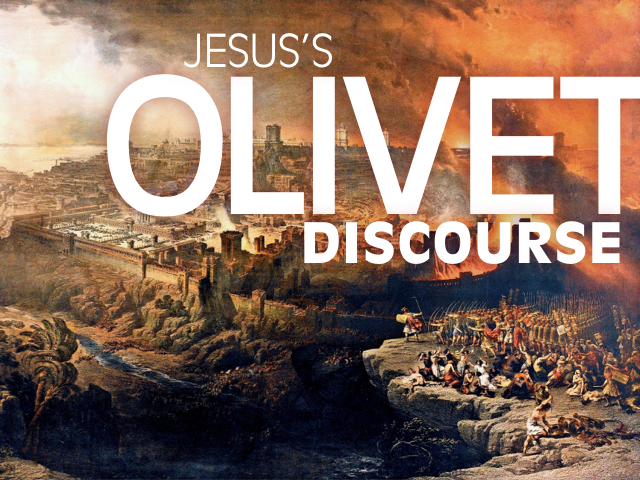
Most American Evangelicals are conditioned to think Jesus’s Olivet Discourse is entirely about our future. Not his students’ near future; humanity’s future, specifically our own. It’s a combination of self-centeredness (“the bible’s speaking about me!”) and the fact there’s a whole lot of money to be made, and power to be gained, by keeping your people terrified of a scary future.

But it’s not. And if you don’t believe me, ’cause your churches have been really successful at convincing you otherwise, I recommend you read today’s Luke passage more than once. Really read it. Let it sink in.

Mark 13.17-20 KWL
17 “Woe to those who have babies in the womb,
and those who are nursing, in these days!
18 Pray lest it happen in the rainy season.
19 For these days will be tribulation.
Unlike what’s happened to what God creates,
from the first creature until now,
it may never yet be this bad.
20 If the Lord doesn’t shorten the days,
not all flesh will survive—
but because of the chosen whom he selected,
he will shorten the days.”
 
Matthew 24.19-22 KWL
19 “Woe to those who have babies in the womb,
and those who are nursing, in these days!
20 Pray lest your flight happen in the rainy season,
nor on Sabbath.
21 For then will be great tribulation.
Unlike what’s happened
from the beginning of the world until now,
it may never be this bad.
22 If these days aren’t shortened,
not all flesh will survive.
Because of the chosen,
these days will be shortened.”
 
Luke 21.23-24 KWL
23 “Woe to those who have babies in the womb,
and those who are nursing, in these days!
It’ll be great calamity in the land,
and wrath upon the people.
24 They will fall by the machete’s blade,
and be put into captivity in every nation.
Jerusalem will be trampled by gentiles
until the gentile era might be full.”

’Cause according to futurist End Times prognosticators, the Olivet Discourse is about a seven-year stretch of great tribulation which takes place just before Jesus’s second coming. It’s not about the Romans invading Israel in the year 70, destroying Jerusalem, killing 2 million Judeans, and scattering the rest of them all over the Roman Empire.

Even though Jesus is obviously talking about the events of the year 70.

Well… it’s obvious to people who know the history of the actual great tribulation. Not so obvious to American Evangelicals who know little to nothing about it—who know that’s how the Jerusalem temple was destroyed, but very little else. To them, this won’t be a great calamity in the land; it’ll be a great calamity all over the earth, like the English Standard Version implies.

Luke 21.23 ESV
“Alas for women who are pregnant and for those who are nursing infants in those days! For there will be great distress upon the earth and wrath against this people.”

True, γῆς/yis can be translated “land” or “earth.” Or “dirt.” It means that kind of earth—the ground below us, not the planet. You want the planet, you’re more apt to use the word κόσμου/kósmu, “world”—although this can also mean all the people of the world, like when Jesus says God so loves the world. Jn 3.16 But you get the point. Translators who choose to turn yis into “earth” typically have an agenda—namely to make us think something’s global when it doesn’t have to be.

Or, bluntly, isn’t.

09 January 2023

Don’t even go back to get your stuff.

Mk 13.15-16, Mt 24.17-18, Lk 17.31.

So in his Olivet Discourse, Jesus spoke about “the abomination of desolation,” as the KJV calls it: Something—probably something nasty and disgusting—which’ll make it impossible to worship in temple anymore. Something that’d ultimately happen when the Romans destroyed Jerusalem in 70CE, although Jesus didn’t tell his kids specifically when all this stuff would happen—although he indicated it’d happen within their lifetime, and for a few of them, it did.

When that happened, Jesus said, run for the hills. Mk 13.14 Get out of there before you’re overtaken by it. And in the next two verses, he makes it clear he’s not kidding about getting out of there as quickly as possible. You can interpret these verses as hyperbole if you wanna, but I don’t think that’s wise. When you hear the tornado siren, you don’t go digging around for all your favorite photo albums; you get in the basement. Same thing here. Run.

Mark 13.15-16 KWL
15 “One on the roof: Don’t come back in!
Never go inside, to take up what’s in the house!
16 One who’s gone to the field: Don’t return to what’s behind,
even to take up your clothing.”
 
Matthew 24.17-18 KWL
17 “One on the roof: Don’t come back in
to take up what’s in the house!
18 One in the field: Don’t come back
to take up your clothing.”

Luke doesn’t include this warning in its version of the Olivet Discourse, but it does have this Jesus-saying elsewhere in the gospel… specifically when he’s talking about his second coming. That’s most of the reason a lot of Christians confound the Olivet Discourse warning about the destruction of Jerusalem, with the End Times and second coming: They think it’s all the same thing. It’s not. The Luke passage is indeed about the second coming, but the Mark and Matthew passage is about the destruction of Jerusalem. I’ll quote the relevant verse anyway:

Luke 17.31 KWL
“On that day, whoever’s on the roof
and their stuff is in the house:
Don’t come back in to take it up!
And likewise one in the field:
Don’t return to what’s behind!”

In the Olivet Discourse, the warning is to ignore your stuff and run from disaster. In Luke, the warning is to ignore your stuff and run to Jesus. In both cases, you’re not gonna need your stuff! But it’s for whole different reasons, and just because the verses are parallel doesn’t mean we’re to pluck them out of context and claim they’re all about the destruction of Jerusalem. Or the second coming.

05 January 2023

Ulterior motives for being religious.

In 2018 Trevin Wax wrote “Routine bible reading can change your life.” Another site changed the title to the clickbaity, “Why so many Christians start, but don’t finish a bible reading plan.” ’Cause that’s what it’s about: Why so many Christians start, yet don’t finish… you know.

Got my attention because at the turn of the year, I usually urge folks to start a bible reading plan. I plug mine, but any will do. I encourage people to do it in a month, in part because I’m convinced longer programs are needlessly so, and you’re more likely to give up on them because they’re longer. You gotta rigidly stick to it for so long—and you’re not gonna get as much out of a bible snippet as you will a whole book.

Wax gave another reason Christians quit on these plans, and it’s quite insightful for a lot of reasons. I’ll quote him. (But yeah, I edited out all his capitalizations to keep it consistent with TXAB’s styleguide.)

One reason may be that we have too high of an expectation of what we will feel every day when we read. We know this is God’s word and that he speaks to us through this book, and yet so many times, when we’re reading the assigned portion of scripture for the day, it all feels so, well, ordinary. We read a story, note a couple of interesting things, don’t see how it applies to our lives today, and then move on. By the time we near the end of the first books of the bible, we’ve gone through extensive instructions on how to build the tabernacle, or how the sacrificial system is to be implemented, or a book of Numbers that is aptly titled. We read the daily portion of scripture, put down our pencil or highlighter and wonder, “Why don’t I feel like my life is changing?”

I sympathize with Christians who feel this way. We’re right to approach the bible with anticipation, to expect to hear from God in a powerful and personal way. But the way the bible does its work on our hearts is often not through the lightning bolt, but through the gentle and quiet rhythms of daily submission, of opening up our lives before this open book and asking God to change us. Change doesn’t always happen overnight. Growth doesn’t happen in an instant. Instead, it happens over time, as we eat and drink and exercise. The same is true of scripture reading. Not every meal is at a steakhouse. Not every meal is memorable. Can you remember what you had for dinner, say, two weeks ago? Probably not. But that meal sustained you, didn’t it? In the same way, we come to feast on God’s word, recognizing that it’s the daily rhythm of submitting ourselves to God and bringing our plans and hopes and fears to him that makes the difference.

If you’re the “too long, didn’t read” sort… well first of all, what’re you doing on TXAB? I write yards of articles. But in summary, Wax correctly points out people read bible because we’re hoping it’ll transform us for the better. And it does! But we want it to change us now. Not gradually, not over the course of the year we take to read it, not as an effect of reading and following it for years: Right bloody now. And if we don’t see immediate results, we’re gonna ditch it like we did cardio. Seems the bible’s just another thing that’ll make us sweaty, tired, hungry, achey, and frustrated.

We already know Christians lack the patience to stick with bible reading plans; again, it’s why I encourage short little one-month plans. But like Wax said, some of this impatience comes from what we expected to get out of reading the bible, and what we want—what we really want—are powerful spiritual experiences. We want every daily bible reading to be an epiphany: “Great Thundering Moses, I can’t believe I never realized that before. Why, that upends everything I ever believed. Now I have the secrets of the universe! I… have… the POWER…” and now you’re quoting He-Man instead of bible.


Probably expect to be glowing like Prince Adam… when he tranforms into a guy who looks exactly the same, only shirtless and more tan.

This is why too many Christians read bible: We want secrets. We want revelations. We want visions. We wanna grow a brain full of profound truths which make us wise and infallible, and know God better than the smartest bible scholars. We wanna infallibly know God’s will, and use that knowledge to have the best possible life in the best possible timeline. The bible is our magic lamp, so start rubbing!

Of course none of this is why we oughta read bible, and all of this betrays many of the reasons people think we need to follow Jesus. We’re not following him because we love him and want to grow closer to him. We’re following him because he’s rich and powerful, and whenever he throws us a bone, it’ll be a golden bone.

30 December 2022

Read your bible, go to church.

Yesterday I wrote about resolving to be religious, and how reading one’s bible and attending small groups simply won’t be enough.

Problem is, among American Evangelicals, that’s what we’re taught whenever we talk about getting more religious. “Oh, you wanna get closer to God? Then you need to read your bible and go to church.” And pray, but y’might notice not as many Evangelicals will bring up prayer—partly because they presume you’re already praying for more God; partly because they themselves do the bible thing and the church thing, but not so much the prayer thing. Usually because their prayers are still unidirectional… but that’s a whole other tangent, and best you just read the article on that.

But as you’re fully aware, plenty of Christians already read bible and go to church… for all the good it does ’em. You might already read bible and go to church, and you know firsthand it’s not doing it for you. You know more bible trivia and doctrine, but you want Jesus, and the fan club meetings are fun, but they’re most definitely no backstage pass.

The key, like I said, is obedience. You wanna grow closer to Jesus? Do as he teaches. Don’t just memorize it, then just find excuses for not doing putting it into practice. Do it. Deny yourself, take up your cross and follow him.

That said, you know how Evangelicals say we gotta read bible and go to church? They’re right. Read your bible. And go to church.

Because once you’re actually obeying Jesus, you’re suddenly gonna find bible and church become way more useful and profound. See, bible and church can be good in and of themselves, but if you wanna activate them, you gotta start living the Christian life. It’s like buying a microwave oven and refrigerator, but you never plug them in, and you’ve been using them as storage cabinets. “Why is my food never hot nor cold?” Um… y’know that electricity stuff you’ve been using for the lights?

29 December 2022

Resolve to be more religious.

Too many conservative Evangelicals have been fed the false idea religion is a dirty word—that it means dead religion, where we only go through the motions instead of loving Jesus. So here’s the obligatory paragraph where I remind you: Religion is all the stuff we do to facilitate loving and following Jesus. If loving Jesus isn’t the whole point, it’s bad religion; if following Jesus isn’t happening, stop doing it!

With this in mind, one of a Christian’s resolutions—not only for the new year, but for all time—is we oughta get religious. Or more religious. Where we are isn’t good enough. Nor should we ever think of it as good enough. We must always strive to follow Jesus better.

Yeah, lemme throw in this caveat for the Evangelicals who get all paranoid about works righteousness: I’m not talking about being good enough for salvation. I’m fully aware salvation is by God’s grace; it’s a free gift we don’t earn. The point of being more religious is not, and never should be, so we can rack up more good-karma points so when we stand before Jesus at the End, we can tell him, “See Lord?—I did this, that, and t’other thing. Jewels please.” Frankly this idea of doing good deeds only to earn heavenly rewards, is just a variant of Mammonism and needs to be denounced more often. We don’t practice religion so we can get stuff. We do it for Jesus—we love him and wanna be closer to him, and the only way to do this is by obeying him.

So we need to obey him! And obey him more often. Not just when we remember, “Oh yeah, didn’t Jesus say something about this somewhere in the red letters?” Not only when the pastor brings up a random Jesus verse in a sermon. Not solely when we already want to behave a certain way, but we need a bible verse to support the behavior, so we’re proof-texting a defense. Preferably we obey Jesus all the time.

But obeying Jesus requires self-control. Self-discipline. Which means we gotta develop self-control… which because it’s self-control, means we gotta do it. Won’t just happen on its own.

We gotta get disciplined about how we follow Jesus. We need to practice the things which encourage good fruit and goodness in general. We need to love our neighbors better; certainly better than the apathetic “Well I don’t wish them harmwe practice more often. Way better than the toxic “tough love” bullpucky which too many Christians fall into.

The usual way Christians encourage us to follow Jesus better, is by getting involved in a small group and following a bible-reading plan. As if going to bible study, and reading lots of bible, is gonna trigger goodness. While I’m all for interacting with fellow Christians and reading lots of bible—the better to get familiar with it!—of course it’s not gonna trigger good deeds. Plenty of Christians go to small groups and read bible… and are the same royal dickweeds they’ve always been. Didn’t make ’em better; it only made ’em think, “Well of course I follow Jesus, ’cause I read my bible and go to a bible study.”

Nope; reading isn’t enough. We have to obey it.

28 December 2022

TXAB’s bible-reading plan.

Whenever the new year approaches, Christians resolve to read the bible. The entire bible, not just the parts we like best: Genesis to maps, as the old joke goes. (See, when you buy a bible in print, most of them have maps of Israel and the Roman Empire in the back. Yes, explaining the joke makes it less funny. Yes, deliberately making the joke less funny is ironically funny. Yes, this is metahumor. I’ll stop now.)

Christians tend to pick up a bible-reading plan of some sort, and most of the time it goes through the scriptures in a year. Which, I insist, is far too long. I prefer you do it in a month. Yes it’s totally possible; the bible’s a big fat inspired book anthology, but it doesn’t take an entire year to read. What book do you take an entire year to read?—unless you chop it into bite-size bits so small you’re spiritually starving. No wonder so many Christians lose track and lose interest.

Now if a month seems too extreme for you (especially if you don’t read), y’know what you could do: Read the bible at your own speed. Read it till you’re done. However long it takes you to get it done. Might be three months. Maybe two. Then again you might surprise yourself and finish it in one.

That’s where TXAB’s bible-reading plan comes in. It’ll help you read it at whatever speed you’re going.

22 December 2022

Pinpointing Messiah’s birthplace.

Matthew 2.3-6.

Because the magi brought Jesus three gifts, Mt 2.11 people presume there were only three magi. We’ve no evidence of that. It seems way more likely there were a lot more magi than three. Three rich foreigners in Jerusalem would’ve caused a minor stir, ’cause rich people came to Jerusalem every day to go to temple. People therefore assume these guys came with massive entourages—dozens of camels per guy, hundreds of servants, as befit an oriental sultan. But again, these weren’t kings; they were magi seeking a king.

The actual king, Herod bar Antipater, wanted to know what this was all about, so he consulted his own wise men—the leaders of the Judean senate. This’d be the head priest, whom he appointed personally: Either Simon bar Boethus, Herod’s brother-in-law, who died that year; or Matthias bar Theophilus, who only served a year before Herod replaced him with Simon’s brother Joazar. The priests, whose field of expertise was the temple, not the Law, brought scribes with them.

Matthew 2.3-6 KWL
3 Hearing this agitates King Herod,
and all Jerusalem with him.
4 Gathering all the people’s head priests and scribes,
Herod is asking them, “Where’s Messiah born?”
5 They tell Herod, “In Bethlehem, Judea,
for this was written by the prophet:
6 ‘You, Bethlehem, land of Judah,
are in no way the least of Judah’s rulers.
For a leader will come from you
who will shepherd my people Israel.’ ” Mi 5.2

For centuries, Pharisees had been collecting bible passages which they considered Messianic prophecies, which they believed foretold a great king who’d take over Israel, conquer the world, and inaugurate God’s kingdom. True, some of these “prophecies” were great big stretches. This one, which comes from Micah, isn’t really a stretch. Yeah, there are gonna be people who insist Micah was really talking about King David ben Jesse, who was also born in Bethlehem; that was the leader—a literal shepherd!—who eventually shepherded Israel. But no, Micah wasn’t speaking of David. He was speaking of a king like David, who’d rule till the end of the world. Mc 5.4 A much greater king.

Pharisees believed in a coming Messiah, but Sadducees didn’t—and the head priest, his family, and the chief priests who worked under him, were almost entirely Sadducee. But they weren’t unaware of what Pharisees believed, so when Herod asked ’em about Messiah, they could easily tell him what the Pharisees claimed: “Oh, he’s gonna be born in the next town over. In Bethlehem.”

20 December 2022

King Herod the Worst.

When Jesus was born, Judea was ruled by “Herod the Great,” as he’s commonly called. I don’t know who first gave him the title “the Great,” and loads of people—myself included—have pointed out the man was far from a great human being; he was a murderous tyrant. As achievements go, he did get way more done than the subsequent members of the Herod family. But in terms of character he’s the worst. Hence the title of this piece.

Lemme backtrack through history by way of introduction. So Isaac ben Abraham had two sons, Esau and Jacob. Jacob’s descendants became Israel, and Esau’s descendants became אֱדוֹם/Edom, a nation located just southeast of Judah, which likewise spoke Hebrew and likewise did a rotten job of worshiping the LORD. And yes, they did know and worship the LORD; one of Edom’s more devout examples was Job. Yes, that Job. The guy with the book about him. (No he didn’t live before Abraham’s day; that’s just a weird young-earth creationist belief. All the names in his book are Edomite, and his book was written in sixth-century Hebrew.) Edom had a really long history of being subservient to Israel: First it was conquered by King David ben Jesse, 2Sa 8.14 and made a tributary state to Israel. When Israel split into Ephraim in the north and Judah in the south, sometimes Edom was ruled by one, sometimes the other; either way they weren’t big fans of Israelis. They rejoiced when Babylon conquered Judah in the early 500s BC, and were annoyed when the Babylonian Jews returned to found Judea in the 400s.

In the 300s BC, the Edomites themselves were exiled from their land—shoved out by the conquering Nabatean Empire. They were forced to resettle west of their old land, in southern Judea. This land became Ἰδουμαία/Iduméa—which is simply the Greek word for Edom. In 110BC, king and head priest John Hyrcanus 1 of Judea decided to take the land back, conquered Idumea, and told the Idumeans—who are ethnically the same as Judeans, y’know—they could stay there only if they followed the Law. Historians like to describe it as forcibly assimilating them, but the Idumeans could’ve fled to Egypt you know. But they didn’t; they stayed. By Jesus’s day they had largely assimilated into the rest of Judea. They’re Jews now.

(Yeah, there are various Christians who claim Jordanians are descendants of the Edomites. They’re not. They are descendants of Abraham; just not through Esau.)

Anyway 37 years after the Judean conquest, an Edomite named ܗܶܪܳܘܕ݂ܶܣ/Horódos was born to a former governor of Idumea, Antipater bar Antipas, in 73BC. Herod (Greek Ἡρῴδης/Iródis, Latin Herodes) was Antipater’s second son. His mother was Kyprós, a Nabatean noblewoman related to King Aretas 3 of Nabatea. Historians sometimes call Herod an Arab because they confuse Edomites with Arabs, or speculate the Idumeans weren’t really Edomites, but only claimed to be so they could relocate in Judea. Conspiracy theories regardless, Herod was a descendant of Abraham on both sides.

12 December 2022

Christology: What we understand about Jesus.

Christology is a branch of theology, and the christ- prefix should give you the hint it specifically has to do with Christ Jesus.

Historically, christology has been about who Jesus is. Because Jesus came to earth and said some profound things about himself, and it took us Christians a few centuries to hash out those ideas.

I know; plenty of Christians insist they’re pretty self-explanatory ideas. They read the bible, and it’s plain as day! But that’s because they, like most people, greatly lack self-awareness: It wasn’t plain as day when they first became Christian. (It certainly wasn’t plain as day before they became Christian—which is why they weren’t Christian!) It became plain as day after they were exposed to Christians who explained Jesus to them, and after they were exposed to the Holy Spirit who made ’em stop rejecting every little thing they heard, stop insisting they knew it all, shut up, and listen, dangit.

It’s still not plain as day to a lot of Christians. For all sorts of reasons. They lack the humility to listen to other people or the Spirit, try to figure out Jesus for themselves, invent some “clever” ideas which are really just old heresies that’ve been tried and rejected ages ago, and won’t listen to anyone who tries to correct ’em. Some of ’em simply never read their bibles—never read the gospels, never read the Sermon on the Mount, presume Jesus thinks exactly the way they do and shares all the same prejudices, and proclaim that instead of Jesus.

Yeah, much of the reason Christianity has a thousand denominations is because Christians don’t agree about Jesus, what he teaches, and what he emphasizes. They’re not seeking Jesus’s input; or as theologians are gonna put it, they have a weak christology. They don’t value who he is, and don’t care what he’s about. They have their own ideas.

So let’s look at christology. Which examines a few particular areas of Christian theology:

  • What Jesus teaches and does—both in the first century, back in time before he came to earth, in the future during the End Times and millennium and New Earth, and of course what he’s doing right now.
  • Sin, how it affects humanity, and precisely how Jesus conquers it.
  • God’s kingdom, ’cause Jesus is after all its king. Also how he’s its king.
  • Jesus’s family. Particularly his mom, who’s a person of huge interest within Roman Catholicism. Likewise what she did and is doing.

But most of our focus in christology is how Jesus is the primary lens through which we understand God himself. Humanity doesn’t understand him correctly without Jesus.

09 December 2022

Jesus, our Immanuel.

Isaiah 7.14, Matthew 1.22-23.

In the middle of the Joseph story, the author of Matthew inserted this comment.

Matthew 1.18-19 KWL
22 (All of this happened so it could fulfill
God’s message to the prophet, saying,
23 “Look, the maiden will have a child in the womb,
and will birth a son,
and they will declare his name to be Immanúël,” Is 7.14
which is translated “God is with us.”)

So let’s jump from the first century of our era, to the eighth century BC, for that story.

If you’re not familiar with the nation of Ephraim, that’s because the writer of Kings preferred to call it “Israel.” It’s the nine northernmost tribes of Israel, which split from Jerusalem and were run by the king of Samaria. Back round the year 735BC, the king of Samaria, Peqákh ben Remalyáhu (KJV “Pekah the son of Remaliah”) joined forces with Radyán of Damascus, Aram (KJV “Rezin the king of Syria”) to attack Jerusalem. 2Ki 16.5 This was one of the first campaigns of the Assyro-Ephraimite War… which eventually destroyed Samaria. The Assyrians dragged all the cities of Ephraim into exile, and all the country-dwellers left behind either moved south to Jerusalem, or evolved into the Samaritans.

While Jerusalem was under seige, the prophets Isaiah ben Amóch and his son Sheüryahsúv had come to King Akház ben Yotám (KJV “Ahaz son of Jotham”) with good news from the LORD: Ephraim and Aram’s plans would ultimately come to nothing. But Akhaz—who wasn’t the most devout of kings—really didn’t know how to take the encouragement.

Isaiah 7.10-17 KWL
10 The LORD’s word to Akház, saying,
11 “Request a sign from your LORD God.
Make it deep as a grave,
or make it high as outer space.”
12 Akház said, “I won’t ask.
I won’t test the LORD.”
13 Isaiah said, “House of David, listen please.
It takes little for you to tire people,
because you also tire God.
14 For this, my Master himself is giving you a sign.
‘Look, a pregnant maiden gave birth to a son.
She declared his name Immánuël/‘God with us.’
15 He’ll eat curds and honey,
and learn to reject evil and choose good.
16 But before the boy learns to reject evil and choose good,
the nations you fear are laid waste
before the face of these two kings.’
17 The LORD is bringing upon you, your people, and your father’s house
days which haven’t been
since the days Ephraim turned away from Judah to Assyria’s king.”

God had Akház’s back. Proof? Little Immánuël. And Matthew quotes this prophecy because Jesus is like little Immánuël.

17 November 2022

Grace and liberalism.

As regular readers know, I’m somewhere in the middle of the political spectrum in the United States. It’s because I’m trying to follow Jesus rather than any of the political parties, and when his teachings differ with the party platforms, or the politicians running for office or holding office have deficient character and no plans to reform, I’m gonna differ too. Hence progressives see me as conservative, and conservatives see me as liberal.

Since most of the people I know are conservative, some of ’em see me as just a little bit leftist, and others consider me a fully radical socialist nightmare. Of course it all depends on how conservative they are; really, how much they’ve permitted partisans to compromise their Christianity. Because some of their beliefs aren’t Christian at all. They’re disguised as Christian beliefs, which is why I call ’em Christianist: Some of ’em do a full 180-degree turn from anything Jesus, the apostles, and the scriptures teach.

And no, this isn’t just a phenomenon found among conservatives. Partisans of every stripe do it. I know lots of people on the Christian Left who’ve made similar compromises. Because more of the people I know are conservative, you’re gonna find me pointing at them more often. Same as in the gospels when Jesus was constantly correcting Pharisees (or as the gospel of John calls ’em, “Judeans” or “Jews”) —that’s who he interacted with most.

Whenever conservatives object to my politics, it’s predictably because I don’t follow the party line. Right-wing radio and TV told ’em real Americans gotta think or behave a certain way; I won’t behave that way, so they rebuke me. I don’t keep up with their favorite pundits, so obviously I’m not gonna be in lockstep. Which is fine by me; those guys aren’t my Lord anyway.

But an equally common phenomenon is they object to my politics because I’m practicing grace. As Christians should; it’s a fruit of the Spirit. Jesus expects us to love all, forgive all, be generous with strangers and even enemies, show compassion, and preach good news to the poor. So I try to do that. And they object.

Yes, they object to grace. The same grace by which they’re saved; the same grace God shows to the just and unjust without limit. They don’t practice grace y’see, so it stands to reason they don’t recognize it as something we Christians are to do. It’s only something “the bleeding-heart liberals” do.

You know where the bleeding heart idea comes from? From Jesus. From the Roman soldiers stabbing Jesus in the heart. Jn 19.34 Over time Roman Catholics turned “the sacred heart of Jesus” into a big devotional thing, meditating on how Jesus’s compassion for sinners resulted in shedding his blood to save us. A “bleeding heart” used to be how irreligious people mocked compassionate Christians. Now it’s how conservatives mock compassionate people in general. They lost sight of the connection between bleeding hearts and Jesus—and whenever I point it out to them, they just dismiss it as ridiculous Catholic stuff. No, it’s Christian stuff—but what do they know of how Christians oughta behave? They don’t do grace.

To them, compassion is “liberal.” Charity is “liberal.” Generosity is “liberal.” Good works are “liberal”—they’re “works righteousness,” and the only reason people do ’em is to make themselves feel self-righteous. Loving your neighbor?—“liberal.” Grace? Same deal.

It’s actually not liberal. Conservatives can do all these things too—and if they claim to follow Jesus, they should be doing all these things too! Heck, they should be outperforming pagan liberals by a mile. So why don’t they? Because there are tons of Mammonists in the American conservative movement. Loads of social Darwinists who see generosity as a drain on their wealth; who see no profit in helping needy people whom they consider unworthy. They’ve come up with Christian-sounding arguments so as to lead the Christians in their movement astray—and these arguments have worked profoundly well. Screw grace; it’s not “good stewardship.”

Hence gracelessness has become associated with conservatism. I know; if you’re conservative but practice grace, you certainly don’t see it that way. Back when I was conservative, I didn’t see it that way either. But that’s reality. The Mammonists are ruling the movement (they are funding it, after all), and their policy is the reigning policy: Charity is for suckers, and if you “need” a handout you’re either weak or a con artist. Pull yourself up by your own bootstraps. Get a job.

If conservatives don’t do grace—at all—stands to reason you’d think it’s a liberal thing.

16 November 2022

Grace is a fruit of the Spirit.

Paul’s list of the Spirit’s fruit in Galatians 5 is not a comprehensive list. Wasn’t meant to be. Plenty of other fruit, like generosity, forgiveness, and humility, oughta be overt and obvious in Christians who follow the Spirit. But Christians who suck at fruit in general, who struggle enough with faking the few items Paul enumerated, immediately squawk when I make mention of other fruit: Stop adding to the list! But if they were truly trying to follow the Spirit, they shouldn’t have to protest; we’d already see this fruit in ’em.

And if they already exhibit love, they should already exhibit grace.

God’s love is what generates his grace. Love, like Paul wrote in 1 Corinthians, “bears all things, believes all things, hopes all things, endures all things.” 1Co 13.7 NKJV Love forgives all, takes the optimistic view, and grants unmerited favor to people because we simply love ’em as God loves them. Because the Spirit within us wants to use us to spread more grace.

Those who don’t do grace, are always looking for ways to merit the favor. Fr’instance, “Everybody has potential.” They love the unloveable because they’re hoping their love will change these people, just like it does in their favorite romantic comedies. They figure their love will break these people, show ’em the error of their ways, get ’em to repent, make ’em want to be a good person from now on. You know, like Ebenezer Scrooge in A Christmas Carol, or Darth Vader in Star Wars. Yea, happy endings!

But offering favor because of someone’s potential, isn’t grace. It’s a karmic bet. One which often won’t pay off in real life; some people are far too set in their ways to ever make them pay off the time and attention we show them. But worthiness isn’t the point; never was. The point is to follow the Spirit. Do as Jesus does. Love everyone. Love enemies. Lk 6.27 Love the people who mock and crucify you. Lk 23.34

Luke 6.35-36 NLT
35 “Love your enemies! Do good to them. Lend to them without expecting to be repaid. Then your reward from heaven will be very great, and you will truly be acting as children of the Most High, for he is kind to those who are unthankful and wicked. 36 You must be compassionate, just as your Father is compassionate.”

The reason people get called “children of the Most High” is because we exhibit his traits—or in other words, his fruit. Grace is one of the Spirit’s most obvious fruit; so obvious it really doesn’t need to be listed. Christians are meant to be known for our love, and grace means our love doesn’t come with strings attached. It’s not about trying to profit off new relationships, not about the satisfaction we feel when our love affects people in positive ways; it’s not even about winning them to Jesus, although that’ll happen. It’s about the fact every human being is a child of God, and if God loves them, so should we.

15 November 2022

Ingrates.

As I indicated in my article on grace, a number of Christians aren’t familiar with the concept, and think it’s a mystery or something indefinable. God grants us his unmerited favor; they know not how.

They don’t define grace by God’s attitude towards us. Largely because they don’t share this attitude, and don’t think we have to duplicate it towards others. God’s instructions about generosity, forgiveness, compassion, mercy, favor, and kindness haven’t sunk in. God is love, but we don’t love; at least, not without conditions.

So they’re graceless. They’re ingrates—a word usually defined as someone who’s not grateful, but comes from the Latin ingratus/“no grace.” They don’t do grace. They love friends and family… but big deal; everybody does that.

Matthew 5.46-47 GNT
46 “Why should God reward you if you love only the people who love you? Even the tax collectors do that! 47 And if you speak only to your friends, have you done anything out of the ordinary? Even the pagans do that!”

The love of God doesn’t project outside their social circle, into the world, into dark places where we’re meant to be light. We don’t represent Jesus to our lost and hurting society. We don’t spread grace. We don’t produce fruit.

’Cause grace is a fruit of the Spirit. True, it’s not one of the fruits Paul listed in Galatians. Doesn’t need to be included in his list. It should be fairly obvious this is a trait Christians oughta have if we have the Holy Spirit within, and are following him, and his godly attitudes and characteristics are overflowing into our lives. You oughta see grace in Christians. If you don’t, they might have the Spirit in them, but they don’t know him.

Grace is the whole point of Jesus’s Unforgiving Debtor Story. We were forgiven; we oughta forgive as well. God has been compassionate towards us; we oughta show compassion. God loves everybody; so should we. God makes no exceptions; neither should we.

Christians can be easily identified because we love one another—as we should. But we should likewise be identified because we love everyone. Because we’re gracious to everyone. Because we act like Jesus in that regard.

But as you probably notice, we don’t. We’d rather not.