21 January 2025

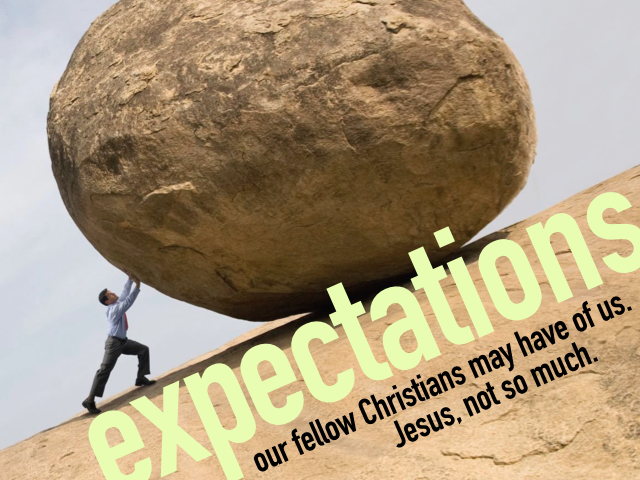
God doesn’t owe us anything for fasting.

I’ve pointed out fasting is a great way to focus our attention on God so we can pray better, hear him better, and develop our self-control.

But no, I don’t guarantee you’ll grow in all these ways when you fast.

All things being equal, you probably will. But as you know, there are lots of ways people can bollix our own growth. If we’re fasting, yet the rest of our lives are just as sinful as ever, why should we expect anything to change whatsoever? And yet Christians do: “I’m fasting! That should count for something.”

The Hebrews did it too, y’know. They’d fast, then make prayer requests ’cause they believed fasting would show the LORD they were serious, and it’d move him a little faster. It’s why Jehoshaphat told Jerusalem to fast so God might rescue them from invaders, 2Ch 20.3 and why Esther asked the Persian Jews to fast before she petitioned the king. Es 4.16 But because God acted on the petitioners’ behalf in these stories, Christians get the idea fasting always makes God move. They’ll claim this is “the biblical principle of fasting”: If you fast, God’ll answer prayer, and give you revelations.

But no it’s not a “biblical principle.” The idea that fasting always makes God move, is based on works righteousness, the idea God we can earn God’s favor through good deeds and acts of devotion. So if we’re good, God supposedly owes us one; if we’re super good God owes us a lot. And supposedly religious acts and rituals can cancel out any evil deeds: If I’m stealing from my workplace’s cash drawer, saying a few hundred Hail Marys oughta work it off, right? What’s the going exchange rate, a buck per hail?

In reality there is no biblical principle of fasting. Because in the bible, the LORD never commanded anyone to fast. Ever. The bible contains no teachings about what fasting does, why it’s important, and how often we oughta do it. The one teaching it does have on fasting is when Jesus tells us to not be hypocrites about it, and do it privately instead of publicly. Mt 6.16-18 The rest of Christianity’s teachings on fasting come from tradition: From fellow Christians’ experiences with fasting, and how it benefited them; and how it personally benefited us when we tried it.

But anyone who claims fasting unlocks God’s promises, and now he owes us stuff: They didn’t get that from bible. They got it from a corrupt Christian tradition, if anything. It’s not so. God owes us nothing. His kingdom runs on grace, not quid pro quo. He grants us grace and prayer requests and revelations because he loves us, not because we racked up enough heavenly frequent flyer miles to get a trip to Belize.

He tends to grant these things to active followers, not because we’re actively following, but because what good would they be in the hands of people who aren’t actively following? Such people will just squander his gifts, and be of little to no help to his kingdom. It’s not merit; it’s pragmatism.

So when we fast, is God obligated to do more for us than usual? Not at all. He tends to, but that’s only because Christians who fast, tend to love Jesus and follow him otherwise.

20 January 2025

The Holy Spirit sent Jesus to be tempted.

Matthew 4.1, Luke 4.1-2A.

In the Lord’s Prayer, Jesus tells us to pray that God not lead us to temptation. Mt 6.13, Lk 11.4 I don’t know whether he included that because God led him to temptation—and he didn’t wanna repeat the experience, and he didn’t wish that on his followers either. But you do realize that particular part of the Lord’s Prayer was answered with “No” in this particular instance: The Holy Spirit led Jesus into the wilderness to be tested by Satan. God—’cause the Holy Spirit is God, remember—led him into temptation.

Matthew 4.1 KWL
Then Jesus is led into the wilderness by the Spirit,
to be tested by the devil.
Luke 4.1-2 KWL
1Full of the Holy Spirit,
Jesus comes back from the Jordan.
He’s being led by the Spirit into the wilderness
2Ato be tested by the devil 40 days.

When we pray this particular part of the Lord’s Prayer, we need to keep Jesus’s temptation in mind. Because sometimes God will put us into circumstances where the devil’s gonna try to derail us. If we’re seriously following Jesus, and in so doing seriously mucking up the devil’s plans, of course Satan’s gonna try to put a stop to us. And the fastest way is to get us to stop following the Spirit and start following our selfish human nature.

Happens all the time. Christians create million-dollar ministries, then start thinking, “I’m a CEO; shouldn’t I get paid like a CEO; shouldn’t I get to live like a CEO?” and start feathering their nests and living luxuriously, instead of putting all that money into God’s kingdom and living reasonably. And plenty of mammonists, plenty of Christians who covet wealth and the things of this world, will come up with plenty of godless reasons why they not only can live like that, but should. Nevermind the fact it’s undermining their character, their witness, their ministry, their ability to hear the Spirit, their relationship with Jesus; that this money could help needy people, and these “CEOs” are nowhere close to needy. Nevermind that they’re robbing the poor, and in so doing, they’re robbing God. But I digress.

Appealing to our selfish human nature is Satan’s favorite tactic. Heck, it’s not just Satan who uses it; everybody tries it. Everybody wants to know what we covet, so they can sell it to us, or manipulate us by it. Why do you think social media companies are trying so hard to keep us on their sites—and when we’re off their sites, track our every movement on the internet? They wanna sell us stuff. Their plans are more benign than malevolent, although the more guardrails they remove, the more malevolence is gonna happen. But that’s what we see throughout Jesus’s temptations: The devil tries three times to appeal to Jesus’s selfish human nature.

And Jesus resisted. Kinda easily. Because he doesn’t have a selfish human nature. He’s got the original human nature; the one Adam and Eve had before they sinned. Plus he has something Adam and Eve coulda gained, but never did, because they sinned long before they could develop it: He’s got God’s nature. And God’s not selfish. Thanks to that divine nature, Jesus immediately identifies those appeals to his flesh, dismisses them as stupid and wrong—and punctuates his dismissals with Deuteronomy quotes. Jesus knows the Law, and never ever broke it.

When the Spirit led Jesus into temptation, Jesus was totally ready for it. Arguably he’s always been ready for it. Yes, he fasted for 40 days once he got there, to try to steel himself against temptation even further. I’ll write about that another time. But there’s nothing at all wrong with over-preparing yourself for spiritual battle. You don’t just wanna win by the skin of your teeth; you wanna win decisively. You want that devil reluctant to challenge you again, ’cause losing so bad to a lowly human embarrasses it in front of all the other devils on the playground.

15 January 2025

Universalism: Isn’t God gonna save everybody?

UNIVERSALIST ju.nə'vər.səl.əst adjective. Believing all humanity will (eventually) be saved.

Generally, pagans believe good people go to heaven, and bad people to hell. There’s a minority among them who believe there is no hell—not even for genocidal maniacs; everybody goes to the same afterlife, and if you’re a westerner that’d be heaven. There might be some karmic consequences to the afterlife, like you might find yourself in the suckier part of heaven; but it’s all heaven, so it’s not that bad.

The reason many pagans believe this, is because they believe the universe is benevolent, or believe God is love. Which he is! 1Jn 4.8 And he does love everyone; “for God so loved the world” Jn 3.16 and all that. So they figure a loving God would never throw people into hell, especially for something so minor as not believing in him—which is an honest mistake, most of the time. Hardly sound loving of God to toss someone into hell simply because they were born in a part of the world where they were never taught God properly, be it North Korea, Nepal, Mali, or Mississippi.

Now I agree God’s unlikely to smite people for honest mistakes. But I also seriously doubt the bulk of humanity’s mistakes are honest ones. Face it: Lots of us embrace our God-beliefs purely out of convenience, pragmatism, or selfishness. That Iranian who’s never gonna hear the gospel: He already wouldn’t listen to it if offered. If he honestly wanted to hear the gospel, it doesn’t matter what filters his nation puts on the internet; he’d track down Christians (there actually are some in Iran) and ask questions. Or Jesus might personally appear to him, as he does throughout Christian history, beginning with Paul. (No, that wasn’t just a one-time deal.)

Or that American whose parents raised her a militant atheist: No matter how skeptical and free-thinking she claims to be, she honestly doesn’t wanna challenge her parents’ claims, and examine whether there’s anything to this God stuff. If she did, the first miracle she experienced would shatter her atheism like a cinderblock through safety glass.

Honest mistakes are like Calvinism: People try to defend God’s sovereignty, go overboard, and wind up teaching God’s secretly evil. But if they’re honest mistakes, these people are nonetheless pursuing God despite their errors. And the Holy Spirit’s still producing love and patience and kindness in them, and still letting ’em into his kingdom. (Unless they’re only pursuing clever arguments, producing no fruit, and wind up some of those poor souls who’re mighty shocked Jesus doesn’t recognize ’em. Mt 7.23) The whole “honest mistakes” cop-out is a convenient excuse to ignore God, avoid obeying him, and dodge religion, church, and Christians.

It’s a risky little game they’re playing, for Christ Jesus says not everyone’s getting saved.

Matthew 7.21-23 GNT
21“Not everyone who calls out to me, ‘Lord! Lord!’ will enter the Kingdom of Heaven. Only those who actually do the will of my Father in heaven will enter. 22On judgment day many will say to me, ‘Lord! Lord! We prophesied in your name and cast out demons in your name and performed many miracles in your name.’ 23But I will reply, ‘I never knew you. Get away from me, you who break God’s laws.’”

That’s the people who really thought they were Christian. How much chance does the “honestly mistaken” nontheist have? Well, God is gracious, so we’ll see.

Though God absolutely does wants everyone saved, 1Ti 2.4 he knows full well many people want nothing to do with him. Nor his kingdom. They don’t want saving. Since God did create ’em with free will, he permits them to tell him no. He won’t force ’em into his kingdom. They don’t have to enter. But man alive are they gonna hate the alternative.

13 January 2025

Trying to tempt Christ Jesus.

Mark 1.12-13.

I’ve lost count of the sermons and articles I’ve read about Jesus’s temptations by Satan in the wilderness… and how this was supposedly a cosmic struggle for the ages. And I find every single one of ’em ridiculous. Because seriously: Do any of you—does anyone—imagine there was any chance whatsoever of Jesus giving in to the devil’s temptations? Does anyone think Satan had a chance? Had the smallest of chances?

Okay granted, if you don’t know Jesus, or if you’ve never read about him in the gospels and Revelation, I could understand thinking his temptations might’ve been a threat. Popular culture has this idea in its collective head that Satan is a mighty demon, big as a kaiju, capable of all sorts of elder-god world-destroying activities. It’s all rubbish; Satan’s been padding its resume ever since humanity found out it exists. Unwitting Christians have been helping it along, ’cause if Satan’s a big deal, but Jesus can effortlessly defeat it, doesn’t that make Jesus an even bigger deal? As if our Lord creating the universe Jn 1.3 isn’t impressive enough.

Look, Jesus has the sort of iron willpower it took to suffer torture and crucifixion—even though at any instant he could’ve called upon more than 60,000 angels, Mt 26.53 put a stop to everything, and skipped forward to his second coming. He’s got a divine nature, and an unfallen human nature. Meaning it’s not in his nature, at all, to sin. When presented with a tricky situation, humans get tempted to sin, and no doubt Jesus did too—but Jesus immediately dismisses any such sins as ridiculous. Sin is simply not him. He doesn’t do sin. Has no hold on him. Never gonna happen.

So were Jesus’s temptations in the wilderness anything remotely like a cosmic battle? Nah. Satan pitched some ideas, and Jesus easily dismissed them. Like spitballs bouncing off the hull of a battleship.

Some preachers get annoyed when I say this. Partly because they’re big fans of the cosmic battle idea. Partly because we get tempted, and it’s kind of a cosmic battle to us!—and how in the world can we claim that Jesus understands what we’re going through, because he was tempted too, He 2.18 if those temptations barely tempted him at all?

Simple: If Jesus can easily dismiss the devil’s temptations as silly and irrelevant, so can we. We can learn to resist temptation like he did. He’s given us the ability—if we take advantage of it.

The idea Jesus’s temptations were a cosmic battle, gives us the false idea that resisting temptation is impossible, and the only reason Jesus could dismiss Satan so easily is because Jesus is almighty. Certainly we’re not almighty, so when Satan tempts us, we’re boned. But like I said, that’s a false idea. We don’t have to be almighty to resist the devil. We only have to follow the Holy Spirit. And resist the temptation to blame our weak wills on everything but our unwillingness to resist.

So let’s look at how Jesus resisted the devil, and then let us resist.

09 January 2025

The body, soul, and spirit.

When I was a kid, my church taught me that God’s a trinity; Father, Son, and Holy Spirit; three persons, yet one God.

And they taught me we humans are kind of a trinity. That is, humans have a body, a soul, and a spirit. God made us in his image; Ge 1.27 therefore just as he is a trinity, so we are trinities.

Except… well that’s entirely wrong, isn’t it? God is three persons, but we humans aren’t three persons. Even those of us with dissociative identity disorder aren’t three persons. I have a body; that’s not a different person than my soul nor my spirit. I’m one person, not three.

If anything, my body, soul, and spirit are three parts of me. For now, anyway; when I die, my body will be dead, and either decay, or (I hope) be immolated in an awesome Viking funeral. My spirit will go to paradise. And my soul, my lifeforce, will cease to exist until God resurrects me… in a new immortal body.

One can say, and many Christians have, that my spirit is the core of who I am. ’Cause unless Jesus returns before I die, at some point my body and soul will be gone. Dead. Will cease to be. But my spirit will continue to exist; there will still be a me in the universe.

I digress though; this article isn’t really about the afterlife. It’s about the three bodyparts I have—which all humans have—which lead Christians to claim we’re all mini-trinities, all inferior trinities (inferior because we’re not actually trinities), all trichotomies—or as my pastor likes to put it, “tripartite beings.” One being, one person, three parts.

Trichotomy is a really popular Christian view, largely because God is a trinity, and Christians love to imagine we have three parts because God has three “parts.” Even though God’s three parts are three whole persons… and since Jesus is human, that’d make him a trichotomy too, with his own body, soul, and spirit. (The other persons don’t have bodies. Mormons claim the Father does so have a body, but let’s ignore them. But this’d mean the Father and Spirit are bipartite, with souls and spirits, right? Complicated.)

Now, if you’ve never been taught this trichotomy idea, you’ll likely fall into a view that’s more of bichotomy, to coin a word: We humans are both physical and spiritual. We have bodies and spirits. Yes we have souls, and depending on which Christian you’re speaking to, a soul is either part of our body (’cause it is our lifeforce), or part of our spirit. Various Christians claim “soul” and “spirit” are interchangeable, and don’t see any difference between them.

Me, I do recognize there’s a difference between soul and spirit… yet I lean towards bichotomy. The soul’s what makes us a living being, Ge 2.7 and without it we’re a dead being; a dead body. So it’s a part of my body. Same as my nose, my arm, my liver, my brain. It’s as mortal as my body, which decays to dust, or is burnt to ashes. Whereas the spirit returns to God who created it, Ec 12.7 who determines what’ll happen next to me. Jesus said resurrection, Jn 11.25-26 so I’m going with that.

07 January 2025

Prayer for spiritual maturity.

The fastest way to grow in spiritual fruit and spiritual maturity, is prayer.

I know; there are a number of works on fruit and maturity, and all of ’em recommend we grow that stuff by practicing it. You wanna be more loving, love people. You wanna be more gracious, work on your kindness. You wanna develop more self-control, practice self-control; start with small things and work your way up. Learn by doing. And that’s not bad advice, but it only gets us so far. If we wanna get farther, we gotta talk to the Holy Spirit who grants us the power to grow fruit. We gotta pray.

What do we tell the Spirit? The obvious: Grant me good fruit. Remind me to practice good fruit instead of my usual knee-jerk reactions. Show me where the opportunities lie to practice it. Show me where I’m missing those opportunities—places in my life where I should obviously recognize I can be more loving, gentle, peaceful, but for whatever reason I’m overlooking those things. Rebuke me if you gotta; snap me out of it.

Yep, we gotta pray for our own spiritual growth. Because we’re showing the Spirit we’re onboard. We want to grow. (And if we kinda don’t wanna grow—because we’re immature, of course—we need to ask him to change our attitudes about that.)

We can’t just presume the fruit will grow on its own, just because we’re Christian, just because we have the Holy Spirit. It can, but if we never take the initiative, it’ll either grow slowly… or, if we’re resistant to what the Spirit’s trying to do, we’ll stifle it from even growing at all. We gotta do more than simply permit the Spirit to do his thing, or generically tell him, “Lord, have your way in me,” like we sing in popular worship songs. He doesn’t want passive followers anyway. He wants us to tell him, “Lord, let’s do this! Make me more like you.”

And telling him is, of course, prayer. Telling him often, is a good basis for a prayer life. Asking for his help regularly, is a good basis for a life dependent on the Spirit’s leading. If you were ever wondering how certain Christians always seem to have something to pray about, this is how: They’re actually doing the work, and they’re naturally asking for help. Join them!

03 January 2025

Awful people who are privately Christian.

I originally wrote this piece in 2017, and titled it “Christians in private, but reprobate in public.” I had to update it a bunch ’cause I have some new thoughts on the matter.

Back when I first wrote on the topic, a few correspondents were surprised by the very idea of people who were publicly jerks, but nonetheless identify as Christian. Since then, they’ve finally recognized plenty of examples of the phenomenon. Celebrities who act like divas and brats and unholy rage monsters, but if anyone dares to say anything they consider blasphemous, they instantly object ’cause they’re Christian all of a sudden. Or if you ask them about religion, they’ll claim they love Jesus. Or when they’re accepting Grammy awards for singing about promiscuous nooky, first they wanna give a shout-out to their “Lord and savior Jesus Christ,” whom you’d never imagine they follow, considering their lifestyles. They don’t publicly follow him any, but they’re huge fans. Huge.

Particular stand-outs are those politicians who love to argue, and slander their counterparts in the opposition party, and say vicious things to anyone who gives them pushback. And sometimes they have vile things to say about immigrants, minorities, people of other states, fans of other football teams, or anyone who just rubs ’em the wrong way. And considering how often you see ’em on the Sunday morning chat shows, it’s unlikely they’re ever at church. But whenever they gotta claim Jesus to score some political points, and maybe get some Christian votes, they’ll loudly and proudly claim they’re Christian. Still, you’d never have guessed so by their fleshly behavior.

I have coworkers who are this way. They’ll talk about all the drinking and smoking and fornicating they plan to do over the weekend. They’re unethical. They’re filled with fear, hatred, and anger. They get envious, jealous, and partisan. Try to pick fights; try to cause division; try to create enemies. Y’know, stuff which indicates they’re not gonna inherit God’s kingdom. Ga 5.19-21 But if one of our athiest coworkers dares to condemn Christianity, suddenly they wanna fight ’em on behalf of the Jesus they never actually follow.

That, I will regularly point out to people, is the world we live in today. People who clearly don’t know and don’t follow Jesus, yet think they’re one of his.

I could blame it on decades of Evangelicals insisting they’re not religious, ’cause Christianity is a relationship not a religion. They’re entirely right about not being religious, but entirely wrong about Christianity not being a religion. As I’ve often said, if we don’t get religious about our relationships with Jesus, that relationship’s gonna suck.

I could blame it on the fact that, because they’re not religious, they rarely pray, they never go to church, never read their bibles, and have no idea what Jesus teaches. Or that they even need to follow him. They figure they said the sinner’s prayer as children, and once saved always saved, so actually obeying God might imply they don’t trust their faith to save them. Hence their utter lack of good works and good fruit.

If we call them on this, half the time they’ll object to us even judging them; the one bit of bible they do know is “Judge not,” even though they don’t truly know what Jesus means by it. The rest of the time they’ll shrug: Why are we so worried about their sins? They said the sinner’s prayer; they go to confession; they’re forgiven, so they’re good! Piss off.

They think they belong to Jesus. Do they? Maybe; maybe not. God is way more gracious than I am, and he might let ’em into his kingdom regardless. But the apostles do say those who produce fleshly works like they do are not getting into God’s kingdom, and Jesus himself says plenty will claim to be his at the End, but he doesn’t know ’em. Seems we’ve met these people.

02 January 2025

Taking God’s amazing grace for granted.

CHEAP GRACE tʃip greɪs noun. Treatment of God’s forgiveness, generosity, and loving attitude, as if it’s nothing special; as if it cost him little; taking it and God for granted.

Whenever I bring up the subject of cheap grace, some ignorant Christian invariably objects: “Grace is not cheap.” Even if I’ve fully explained in advance what I mean by “cheap grace”; even if I’ve written an entire essay like this one, defining the idea.

Every. Single. Time.

It’s a knee-jerk response. They were taught all their lives how grace isn’t cheap at all; how it cost Jesus his life. So whenever someone brings up the subject of cheap grace, they’re offended, therefore emotional, therefore irrational, about it: “Grace isn’t cheap!” Someone tweets a comment about cheap grace, and they tweet right back, “Grace isn’t cheap!” Someone uses “cheap grace” in a sentence, and they wait for the very first chance to interrupt: “Grace isn’t cheap!”

YES. I KNOW. I’M TRYING TO MAKE THAT POINT. I WOULD IF YOUD LISTEN. So can you please practice some self-control just this once, and give me a minute? Okay? (Betcha I’m still gonna get these comments regardless. You just watch. Ugh.)

Adam Clayton Powell Sr. gets credited with coining this term, and if you think it came from Dietrich Bonhoeffer, it’s only because Bonhoeffer went to Powell’s church and got it from him, then popularized the heck out of it in his The Cost of Discipleship. It’s used to describe “grace” whenever this grace is misdefined and malpracticed by irreligious Christians. As Bonhoeffer put it,

Cheap grace means the justification of sin without the justification of the sinner. Grace alone does everything, they say, and so everything can remain as it was before. “All for sin could not atone.” The world goes on in the same old way, and we are still sinners “even in the best life” as Luther said. Well, then, let the Christian live like the rest of the world, let him model himself on the world’s standards in every sphere of life, and not presumptuously aspire to live a different life under grace from his old life under sin. […] Cheap grace is not the kind of forgiveness of sin which frees us from the toils of sin. Cheap grace is the grace we bestow on ourselves.

Cheap grace is the preaching of forgiveness without requiring repentance, baptism without church discipline, communion without confession, absolution without personal confession. Cheap grace is grace without discipleship, grace without the cross, grace without Jesus Christ, living and incarnate. Bonhoeffer 44-45

That’s cheap grace: Taking expensive, valuable, amazing grace, and demeaning it by using it as a free pass to sin. Taking God’s safety net, and bouncing on it for fun like a trampoline.

Part of the reason people object to the term “cheap grace” is they don’t like to see God’s generosity taken so casually like that. Well, me neither.

Part of it’s ’cause they don’t believe God’s grace actually can be cheapened. No matter what we do with grace, it’s still awesome, still worthy, still priceless. It’s like when you accidentally drop your phone down a porta-potty: Doesn’t matter how foul that commode is; they’re making some really expensive payments on that phone, so they’re going in up to their armpits to fish it out. (Although yeah, some people would never. Because they’re rich, and buy $1000 phones as stocking stuffers, and would casually pay $1000 to avoid touching poo-poo. The rest of us have real jobs. But I digress.) Grace is far more valuable than any phone, and has inherent worth, so nothing could cheapen it.

If that’s the way you imagine grace, I get why you’d balk at the concept of “cheap grace.” But I’m not describing the grace itself, nor devaluing it. I’m describing the crappy attitude people have towards it. When they treat it like it has no value, that’s cheap grace. If you wanna call it something different, go right ahead. “Cheap grace” has already caught on, which is why I’m using that term.

01 January 2025

An irreligious religion.

RELIGION ri'lɪ.dʒən noun. Worship of a superhuman controlling power, whether a personal God or impersonal universe.
2. Particular system of belief and worship, as demonstrated through actions and declarations.
3. A supremely important pursuit or interest, followed as if worship.
[Religious ri'lɪ.dʒəs adjective.]

A significant part of authentic Christianity is religion, the actions we do as part of our worship of God.

Christianity isn’t just an internal belief system. Or at least it’s not meant to be. I’m entirely aware plenty of Christians believe all sorts of things about Jesus, and claim to have a close personal relationship with him… but these folks have a certain disconnect in their lives where you can’t tell they have any personal relationship with Jesus by their actions. Or their words. (Particularly not their words on social media.) Or their attitudes. Or their finances. Or anything; they may as well be pagan for all we can tell.

If you’ve read James, you’re aware when our faith in God doesn’t transform us one iota, what good is it? Such a “faith” is what James called dead. Jm 2.26 It’s surely not alive.

Yet for a lot of Evangelicals in the United States, religion has been a bad word for as long as they can remember. It’s because to Evangelicals, “religous” doesn’t mean any of the things in the definition I gave at the top. It means, instead, traditional. Namely the old-timey church traditions which they consider meaningless, which Christians do to look devout, but it doesn’t bring ’em any closer to God. Like songs and rote prayers they’ll sing or recite, but they never think about the words in ’em, and don’t mean ’em anyway. Like giving charity and tithes and doing good deeds, but they do that stuff because they’ve always done that stuff, and they never even think about God when they do ’em; it’s just habit. It’s “just what we do.”

The proper term for religious activity on autopilot, is dead religion: Actions we don’t actually do in faith or obedience, don’t actually do as worship, and therefore don’t do anything to bring us closer to God. Works without faith.

Now, if we explained what this religous activity is about, and why we do it, might it become living religion? Sometimes! I’ve known people who grew up Catholic, or Lutheran, or Baptist, who just go through the motions and never think about why they do as they do. I’ve also known people who became Catholic, or Lutheran, or Baptist, and they wanted to know why these churches do as they do, and they love that their churches do that. Sometimes they even revive their fellow church members. Sometimes not, ’cause their fellow church members have zero interest in coming to life. But for the newbies, and for any revived fellow Christians, their activities are living religion.

Problem is, Evangelicals assume everything they call “religion” or “religious” is the dead stuff. Dead religion is religion. So they avoid religous practices and rituals and customs and traditions. They don’t do anything. Except maybe attend church, read the bible, and pray. Little more.

And if they do anything more, they might help out their church. Go to bible studies and their church’s small groups. Learn some bible trivia. Learn Christian apologetics so they can argue about Christ with their pagan coworkers. Learn some theology so they can understand God a little bit better (and leap to the false conclusion they now understand God perfectly, but that’s another rant). Read some End Times books so they can understand that a bit better (and again, leap to the false conclusion they totally know what’s coming; again another rant). Memorize bible. Learn some Christian history, but not too much. Learn some ancient Hebrew and Greek words, but not enough to translate anything (and leap to the false conclusion every popular bible translation is wrong, but they’re not; yep, that’s another rant too).

They’ll do all that stuff—some of which would actually, accurately be called religion. Studying bible and learning more about God is legitimate religous activity. So’s pitching in at your church. So’s interacting with fellow Christians. So are good deeds.

But of course these Evangelicals would never call any of this stuff religion… ’cause to them, “religion” only refers to the dead stuff.

That’s what Evangelicals mean whenever they sing Darrell Evans’ 2002 song “Fields of Grace.” Third verse:

🎵 There’s a place where religion finally dies
🎵 There’s a place where I lose my selfish pride
🎵 Dancing with my Father God in fields of grace

One of my previous churches used to sing this, and a number of folks would give a big whoop right after we sang, “religion finally dies.” Not because they’re disobedient, uncharitable, irreligious people; again it’s because “religion” to them was dead religion, and they’re so happy to be done with the wasteful hypocrisy. As does Evans, I expect, when he sings this.

Again, nevermind the letter of James.

James 1.26-27 NASB
26If anyone thinks himself to be religious, yet does not bridle his tongue but deceives his own heart, this person’s religion is worthless. 27Pure and undefiled religion in the sight of our God and Father is this: to visit orphans and widows in their distress, and to keep oneself unstained by the world.

The word the NASB translates “religious” and “religion,” θρησκὸς/thriskós, is so obviously translated “religion” that it’s rare you’ll find a bible translation which doesn’t go with “religion.” (I’m also pretty sure bible translators, who usually know the proper definition of “religion” anyway, make a point to use the word so we can point to James and say, “Look, there’s good religion and bad; let’s not dismiss all religion as bad.”)

12 December 2024

Curses: “You take that back!”

CURSE kərs noun. A solemn utterance, meant to invoke supernatural evil, punishment, or harm.
2. verb. Invoke supernatural evil, punishment, or harm.
3. noun. Cause of evil or suffering.
[Curser 'kərs.ər noun.]

Years ago, when I taught at a Christian school, I had a mom ask for a meeting to object to something I wrote on her son’s report card. The boy wanted to grow up to have a highly technical job… but he didn’t do his homework. In any of his classes. I’d told him more than once, “If you don’t do your homework, you’re not gonna get the future you want.” And that’s what I wrote on his report card… and his mom was offended. She claimed I’d “word-cursed” him.

What on earth is a “word curse”? It’s a curse. In some churches they claim every negative thing we say, whether we intend them to be acutal binding curses or not, are actual binding curses. And true, sometimes the things we say will get into someone’s head and affect them for years. I’ve met people who were seriously hindered by the awful things their parents, teachers, pastors, bosses, or coaches told them. They believed that junk, and it still messes with them. It surely worked like a curse! So that’s what these Christians claim they are. It’s an unpleasant word… which is functionally a curse.

Okay, those who teach about “word curses” kinda have a valid point. But by their definition of “word curses,” I actually didn’t curse the boy. My comment is an if-then statement. If you don’t do X, then Y. It’s conditional. And a whole bunch of God’s messages are conditional: If you obey him, then you get blessed. If you don’t, then you don’t. That’s not a curse; that’s a warning. Fulfill the conditions!

Ultimately she agreed with me… but I can’t fault her at all for being sensitive about curses. I certainly didn’t wanna hinder my student by making him believe he wasn’t capable. Quite the contrary!

But you’ll find certain Christians are extremely sensitive about “word curses.” And of course regular curses. And “cursing,” by which we mean profanity, which is a whole other discussion.

Among certain dark Christians, every negative statement—more accurately, anything they can interpret as a negative statement, and they pessimistically interpret a whole lot of things as negative statements!—counts as a curse. Fr’instance I could say, “Hmm, looks like rain,” and to their minds I just cursed the sky. Seriously. “You take that back! Don’t you call rain down on us!” As if my casual observation has the power to call down rain—and y’know, if it could, I’d make a fortune.

See, according to these fearful folks, all our words—including idle ones—spoken into the atmosphere, have the power to create and destroy. They figure we humans are made in God’s image, Ge 1.27 and since he has the power to call things into existence with a word, they claim we have the very same power. Way lesser; I can’t state like God can, “Let the waters separate from the dry ground,” and instantly my swimming pool has been drained. But somehow, to some degree, I have the semi-divine power to make stuff out of nothing. My uneducated weather forecast can actually make weather.

Which is rubbish; it’s based on pagan “mind science,” the 19th-century belief that reality is in fact a mental illusion, and we have the power to affect and change the illusion if we believe hard enough. It’s what the Christian Science church teaches. It’s not consistent with the scriptures; God created a real, external, objective universe. I could believe really hard that my words (without any Holy Spirit to empower ’em, of course) can stop tornadoes… but I’d be a moron to bet on it.

Don’t get me wrong. The spoken word isn’t a powerless thing. Words can build up; words can tear down. I can make someone’s day by giving ’em a compliment. I can ruin their life by criticizing ’em at the wrong time. That’s what Solomon meant when he wrote death and life are in the tongue. Pr 18.21 For this reason, Christians need to watch what we say. We never know the direction we’re influencing people.

But the idea my words have magical power that might trigger a reaction in nature around us, and create all sorts of unintended horrors: Not biblical. Ridiculous.

And illogical too. You’ll notice all the Christians who fear accidentally destroying stuff through their “word curses,” somehow never worry about accidentally blessing stuff. “Gee, it looks like the weather today will be really nice!” never seems to force the clouds to dissipate. Nope. Blessings have always gotta be intentional, but curses can be accidental.

11 December 2024

Mary’s visit to Elizabeth.

Luke 1.39-45.

Jesus comes from a family of prophets. Mary and Joseph heard from angels, same as Daniel. Mary’s relatives Elizabeth and Zechariah heard directly from the Holy Spirit, same as all the other prophets of the Old Testament. As did Elizabeth and Zechariah’s son, the prophet John the baptist.

And of course this is no coincidence. God wanted his Son raised by and among people who sought his will and listened to him. Imagine how much friction the boy Jesus would have to grow up with if this weren’t the case. There was already plenty, even with the Spirit’s activity in his family! Remember when they lost him in Jerusalem? Or when they saw him overworking himself, and thought he’d lost his marbles?

Thing is, whenever I point out this fact, Christians are regularly surprised. And either respond, “Oh… obviously God surrounded his Son with prophets!” or “Oh they’re not prophets; they just happened to have a one-time angelic appearance.” Or have three prophetic dreams, yet somehow that doesn’t qualify Joseph of Nazareth to be a prophet. even though one such dream qualified Daniel when he interpreted Nebuchadnezzar’s dream. Da 2

The problem is cessationism. Too many Christians think God completely stopped speaking through prophets between Malachi and John, and these “silent years” weren’t over till Gabriel started appearing to people. If you wanna get right down to it, they figure God stopped speaking when the Old Testament was complete, then started up again once he decided a New Testament needed to be written. It’s Darbyist dispensationalist rubbish. But it’s popular rubbish, and it warps popular bible interpretation.

As a result of cessationists’ false, faithless belief, popular Christian culture isn’t familiar with how prophecy works, and can’t recognize a prophet when they see ’em. So when Jesus’s family members do something prophetic, it goes right over their heads. It’s a miracle; they’ll admit to that at least. But prophecy has become a giant blind spot.

Fr’instance today’s passage: When Mary visits Elizabeth. Why’d she visit her? I kid you not: I’ve heard it preached, multiple times, Mary went to Elizabeth because she wanted to hide her pregnancy from the gossipy Nazareth women. ’Cause that’s what women used to do in our country when they got pregnant outside of wedlock: They were sent away to “visit relatives.” Then they came back with a new “baby sister” or “cousin.” (Or, if they aborted the baby, or let someone else adopt it, nothing.) This, they figure, is what Mary was doing: Hiding.

Was that how first-century Israeli culture worked? Nope! If people found out an unmarried couple were having sex (and pregnancy would definitely be one way they found it out), they had to marry, and they were forbidden to divorce. Dt 22.29 The man had to pay her dad a dowry; Ex 22.16-17 that made ’em married. It’s in the Law. Nobody has to visit relatives, or hide anything.

So why’d Mary visit Elizabeth? Because Gabriel gave her Elizabeth as confirmation of his prophecy.

Luke 1.36 KWL
“And look: Your relative Elizabeth
has conceived a son in her old age.
This is actually her sixth month—
and she was called sterile.”

Mary didn’t know this. Nobody knew this. Elizabeth secluded herself as soon as she found she was pregnant. Lk 1.24 But Elizabeth was the proof Mary’s pregnancy came from God.

I know; people claim Mary never doubted Gabriel, and totally believed him. But that’s not consistent with the scriptures. Why would Mary then rush to visit Elizabeth? Lk 1.39 Why wouldn’t she simply sit back at home, wait for the news that Elizabeth had—beyond all expectations—given birth, and bask in the knowledge she was gonna be the mother of Messiah?

Because of course Mary doubted. It’s a reasonable doubt! God hadn’t done anything like this before, and you know how often people insist God doesn’t do new things—even though he totally does. Mary needed certainty, and Elizabeth could give it to her. So off she went.